
How to Build Your First Drum Pattern That Actually Grooves
How to Build Your First Drum Pattern That Actually Grooves One of the great beginner illusions in music production is the belief that a drum pattern becomes good the moment it becomes busy. More hi-hats, more percussion, more ghost notes, more fills, more movement, more things happening in more places for reasons that may or may not survive daylight. The result is usually not groove. It is activity. And activity, however enthusiastic, is not the same thing as rhythm that makes a track feel alive. Groove is what turns a drum pattern from a grid into a body language. It…

EQ for Beginners: How to Clean a Mix Without Ruining It
EQ for Beginners: How to Clean a Mix Without Ruining It Equalization is one of the first tools every new producer touches, and one of the first ways a mix can go gloriously, confidently wrong. A few moves with an EQ plugin can make a muddy track feel cleaner, a vocal sit better, or a kick stop arguing with the bass. But the same tool can also strip the life out of a sound, make a mix thin and nervous, or turn a promising song into something that feels strangely smaller every time you “fix” it. That is the trap…
How to Choose Your First DAW for Beatmaking and Music Production
How to Choose Your First DAW for Beatmaking and Music Production Choosing your first DAW can feel strangely dramatic. Spend one evening online and you will quickly meet a choir of strong opinions, workflow evangelists, interface loyalists, and producers who talk about software as if they are defending a family crest. One camp swears that one DAW is the only serious option for beatmaking. Another says a different platform is faster, deeper, cleaner, more creative, more professional, more intuitive, or somehow spiritually superior. For a beginner, it is enough to make the simple act of starting music production feel more…
How to Build a Powerful Drop in Electronic Music
In electronic music, few moments are as important as the drop. It is the instant when tension releases, energy explodes, and the dancefloor reacts. Whether in house, techno, EDM, or bass music, the drop represents the emotional and rhythmic climax of a track. Yet powerful drops rarely happen by accident. Behind every impactful moment lies careful production: sound design, arrangement, tension-building techniques, and mixing decisions that shape the listener’s expectations before unleashing the full groove. For beginner and intermediate producers, understanding how to construct a strong drop is a turning point in music production. It transforms simple ideas into tracks…
How to Create Movement in Your Track with Automation
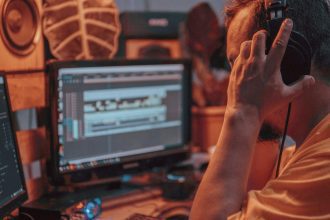
Great music rarely stands still. Even the simplest productions contain subtle motion that keeps the listener engaged from the first bar to the last. This sense of evolution — the feeling that the track is constantly breathing and transforming — is rarely accidental. It is often the result of one of the most powerful tools inside any digital audio workstation: automation. Automation allows producers to control how parameters change over time. Instead of a sound remaining static throughout a track, automation introduces variation, energy shifts, and emotional progression. It is the invisible force that turns loops into living compositions. For…

How to Make Your Drums Punch Through the Mix
In modern music production, drums often define the energy and identity of a track. Whether it’s a house groove, a hip-hop beat, or an electronic drop, the rhythm section drives the movement and keeps listeners engaged. Yet one of the most common issues beginner and intermediate producers face is drums that sound weak, flat, or buried inside the mix. Professional-sounding drums are rarely the result of a single plugin or preset. Instead, they come from a combination of sound selection, layering, transient control, and careful mixing techniques. When these elements work together, drums cut through the mix naturally and deliver…
Stereo Width: How to Make Your Mix Sound Bigger
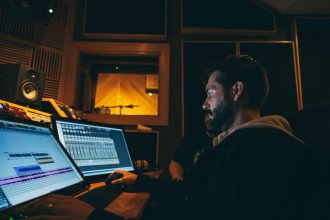
One of the defining characteristics of professional music productions is a sense of space and width. When listening to a well-produced track, instruments feel spread across the soundstage, surrounding the listener rather than collapsing into the center. This spatial dimension creates depth, energy, and immersion. Yet for many beginner and intermediate producers, mixes often sound narrow or crowded. Everything appears stacked in the middle, making the track feel small and lacking the expansive quality heard in commercial releases. The solution lies in understanding stereo width — how sound occupies the left and right channels of a mix — and learning…
EQ Techniques That Instantly Improve Your Mix
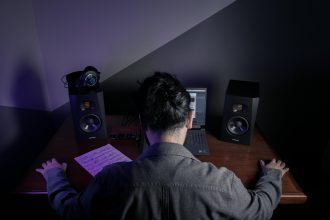
Equalization is one of the most powerful tools in music production. Long before complex mastering chains or advanced sound design enter the picture, EQ decisions shape the clarity, balance, and impact of a mix. In fact, many professional engineers agree that a well-balanced mix is often the result of thoughtful equalization rather than heavy processing. For beginner and intermediate producers, understanding how to use EQ correctly can transform a muddy, cluttered mix into something clean, spacious, and professional. The goal of EQ is not simply to make sounds louder or brighter. It is about creating space, enhancing musical elements, and…
How to Build Your First Home Studio on a Budget
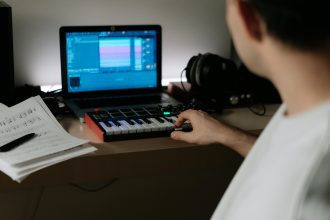
The essential gear and smart setup every beginner music producer should know The idea of building a music studio often conjures images of massive mixing consoles, expensive acoustic panels, and rooms filled with vintage gear. Yet modern music production has changed dramatically. Today, many chart-topping tracks are created in small bedrooms or home offices with surprisingly simple setups. A beginner home studio does not require tens of thousands of dollars in equipment. What it requires is a smart selection of essential tools: a reliable computer, an audio interface, monitoring headphones or speakers, a MIDI controller, and a few basic acoustic…
