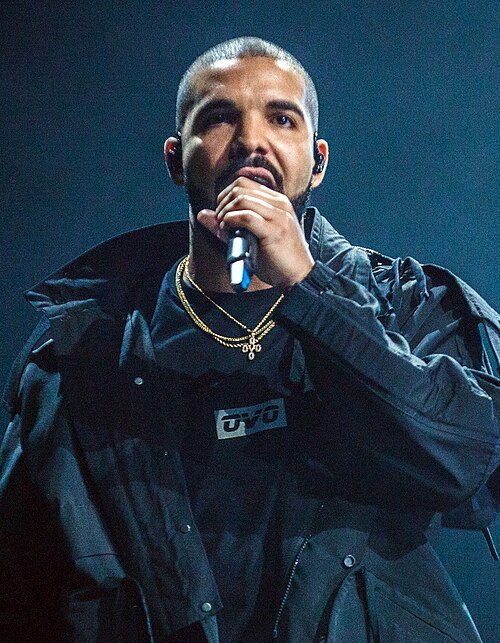

His music speaks the language of late-night texts, private jets, cold cities, crowded clubs, and wounded pride. Drake made vulnerability feel commercial without making it soft. He made rap more melodic without leaving the competitive arena. He turned personal drama into pop architecture, and the world kept pressing play.
This video captures one of the clearest Drake statements: the outsider story rewritten as global domination.
Drake Biography: From Toronto Actor to Global Rap Powerhouse
Drake was born in Toronto, a city that would become more than a hometown in his music. It became an atmosphere, a code, and eventually a brand. Before rap made him a worldwide name, he was known as an actor through Degrassi: The Next Generation. That early visibility could have trapped him in another career. Instead, he used it as a strange advantage.
His first major breakthrough came through mixtapes and the emotional shockwave of So Far Gone. The project introduced an artist who sounded different from the dominant rap voices of the late 2000s. He was sharp, but exposed. Confident, but wounded. Ambitious, but never far from doubt.
That tension became his signature. Drake did not enter hip-hop by pretending to be made of stone. He entered by showing the cracks, polishing them, and turning them into luxury marble.
“Best I Ever Had” helped introduce the early Drake formula: direct melody, intimate writing, and a hook built for instant memory.
The Drake Sound: Melodic Rap, R&B Shadows and Cold Luxury
The sound of Drake is built on contrast. His voice can slide from rap precision to half-sung confession in a few bars. His production often feels spacious, nocturnal, and expensive, shaped by deep bass, minimal drums, atmospheric keys, and the icy touch of longtime collaborator Noah “40” Shebib.
Drake understood early that silence could be as powerful as volume. Many of his most important songs do not explode. They hover. They leave room for emotion, for ego, for regret, for one line to land like a message you should not have opened at 2 a.m.
A Voice Between Rap and R&B
Drake’s greatest musical weapon is his ability to move between identities without making the shift feel forced. He can rap with surgical arrogance, then soften into melody, then return with a caption-ready punchline. That flexibility helped reshape modern rap, especially for artists who no longer feel the need to choose between bars and hooks.
He also absorbed global sounds with unusual commercial instinct. Dancehall, UK rap, Afrobeat, house, trap, New Orleans bounce, and moody R&B have all passed through his catalog. Sometimes the result is subtle. Sometimes it becomes a worldwide hit.
“Hotline Bling” showed how Drake could turn minimalist production and wounded romance into an instantly recognizable pop moment.
Drake Discography: The Albums That Built a Modern Empire
Drake’s discography is not a simple timeline. It is the story of an artist testing how far rap could stretch into pop culture without losing its competitive core.
Thank Me Later introduced him as a major-label force, but Take Care gave him his mythology. That album remains central because it turned sadness, fame, intoxication, distance, and emotional confusion into a polished urban opera. It was intimate, cinematic, and deeply influential.
Nothing Was the Same sharpened the image. The writing became colder, the confidence bigger, the production more architectural. Drake was no longer only the sensitive newcomer. He was becoming the artist everyone had to measure themselves against.
If You’re Reading This It’s Too Late brought the pressure back to rap. It sounded leaner, darker, and more combative, proving that Drake could still dominate without leaning entirely on radio sweetness. Then Views turned Toronto into a global mood, with icy introspection sitting beside Caribbean warmth.
“God’s Plan” became one of Drake’s defining cultural moments, mixing stadium-sized melody with a video built around generosity and public emotion.
Scorpion pushed Drake deeper into blockbuster territory, with hits that moved across rap, pop, bounce, and emotional R&B. Certified Lover Boy extended his luxury-romantic persona, while Honestly, Nevermind surprised listeners with a stronger dance and house influence. It was not just a stylistic detour. It showed his willingness to disturb expectations, even from the top floor of the industry.
Her Loss, his collaborative project with 21 Savage, brought back sharper rap chemistry and a more ruthless tone. For All the Dogs continued his late-career balancing act between dominance, fatigue, melody, and confrontation. Then $ome $exy $ongs 4 U, with PARTYNEXTDOOR, leaned into the R&B side of his identity, reconnecting with the shadowy romantic atmosphere that has followed him since the beginning.
Visual Identity: From Meme Culture to Cinematic Control
Drake’s visual identity is one of the strongest in modern music. He understands the internet not as an accessory, but as part of the release itself. A Drake video is rarely just a video. It is a mood board, a meme engine, a branding move, and sometimes a cultural reset.
“Hotline Bling” became a visual phenomenon because it left space for interpretation, parody, and instant recognition. “God’s Plan” built emotion into spectacle. “Nice for What” placed women at the center of the frame with style, motion, and confidence. “NOKIA” showed a later Drake still playing with scale, black-and-white imagery, and the mythology of Toronto.
“Nice for What” matters because it connects Drake’s hitmaking instinct with a bright, female-centered visual world and a bounce-driven rhythm.
What Drake Brought to Music
Drake changed the emotional rules of rap. Before him, vulnerability existed in hip-hop, but he made it a mainstream operating system. He gave a generation permission to rap about insecurity, romance, resentment, loneliness, ambition, and self-mythology without stepping outside the center of pop power.
His influence can be heard across modern rap and R&B. The melodic flows, the confessional tone, the atmospheric production, the blurred line between singer and rapper, the obsession with lifestyle details, the caption-ready lyric, the late-night emotional temperature, all of it became part of the sound of the 2010s and beyond.
Drake also helped reposition Toronto as a global music capital. Through OVO Sound, his collaborations, and his constant references to the city, he turned local atmosphere into international language.
The Art of Staying Everywhere
Drake’s commercial genius is not only that he makes hits. It is that he knows where culture is moving before many of his rivals do. He can appear in rap battles, R&B playlists, dance spaces, viral challenges, luxury fashion circles, sports culture, and social media conversation almost at the same time.
That omnipresence can create criticism, fatigue, and debate. Yet it also explains why Drake remains impossible to ignore. Even when listeners argue about him, they are still inside the world he helped build.
Why New Listeners Should Discover Drake Today
New listeners should discover Drake because his catalog is one of the clearest maps of modern urban music. It shows how hip-hop became more melodic, how R&B became colder and more atmospheric, how streaming changed song structure, and how personal branding became inseparable from sound.
For fans of sharp rap, there is If You’re Reading This It’s Too Late. For emotional atmosphere, there is Take Care. For global pop gravity, there is Views and Scorpion. For late-night R&B tension, there is $ome $exy $ongs 4 U. Drake’s catalog is not perfect, but it is alive, enormous, and culturally unavoidable.
“NOKIA” shows how Drake’s later era keeps blending nostalgia, club energy, Toronto imagery, and modern pop-rap confidence.
Drake’s Legacy: Still Cold, Still Loud, Still Everywhere
Drake’s legacy is complicated because his career is still moving. He is admired, copied, criticized, streamed, memed, challenged, and studied. That is usually what happens when an artist becomes too large to fit inside one simple opinion.
At his best, Drake writes like someone who knows the victory party and the lonely ride home are part of the same night. He turned emotional contradiction into a global sound. He made Toronto feel like a capital of modern mood music. He changed how rappers sing, how singers rap, and how pop culture listens to both.
Drake did not just dominate an era. He helped design its emotional interface. The screen lights up, the beat drops low, the message arrives too late, and somehow, his voice is already there.