
Eclipsa Audio: Free Open-Source VST3 Tools for Immersive 3D Mixing
Free open-source Element and Renderer plugins for positioning, monitoring and exporting immersive 3D audio in the IAMF format.
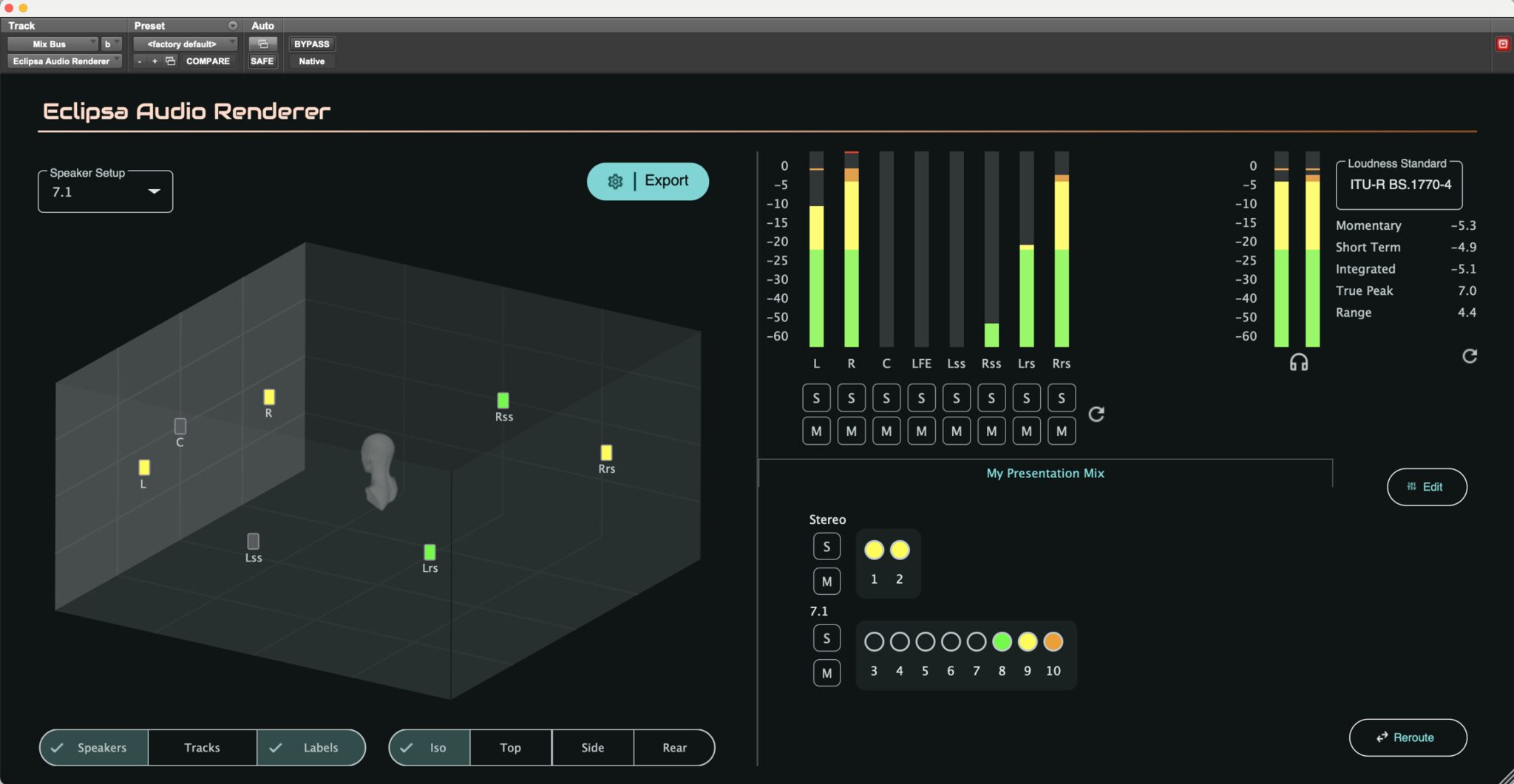
Eclipsa Audio Plugins are free, open-source tools created for immersive audio authoring around the IAMF standard. The system is split into two complementary plugins: an Element Plugin placed on source tracks and a Renderer Plugin that acts as the central hub for speaker configuration, monitoring, mix presentations and final export. For producers and sound designers interested in 3D audio, it provides a no-cost route into a workflow normally associated with specialist post-production software.
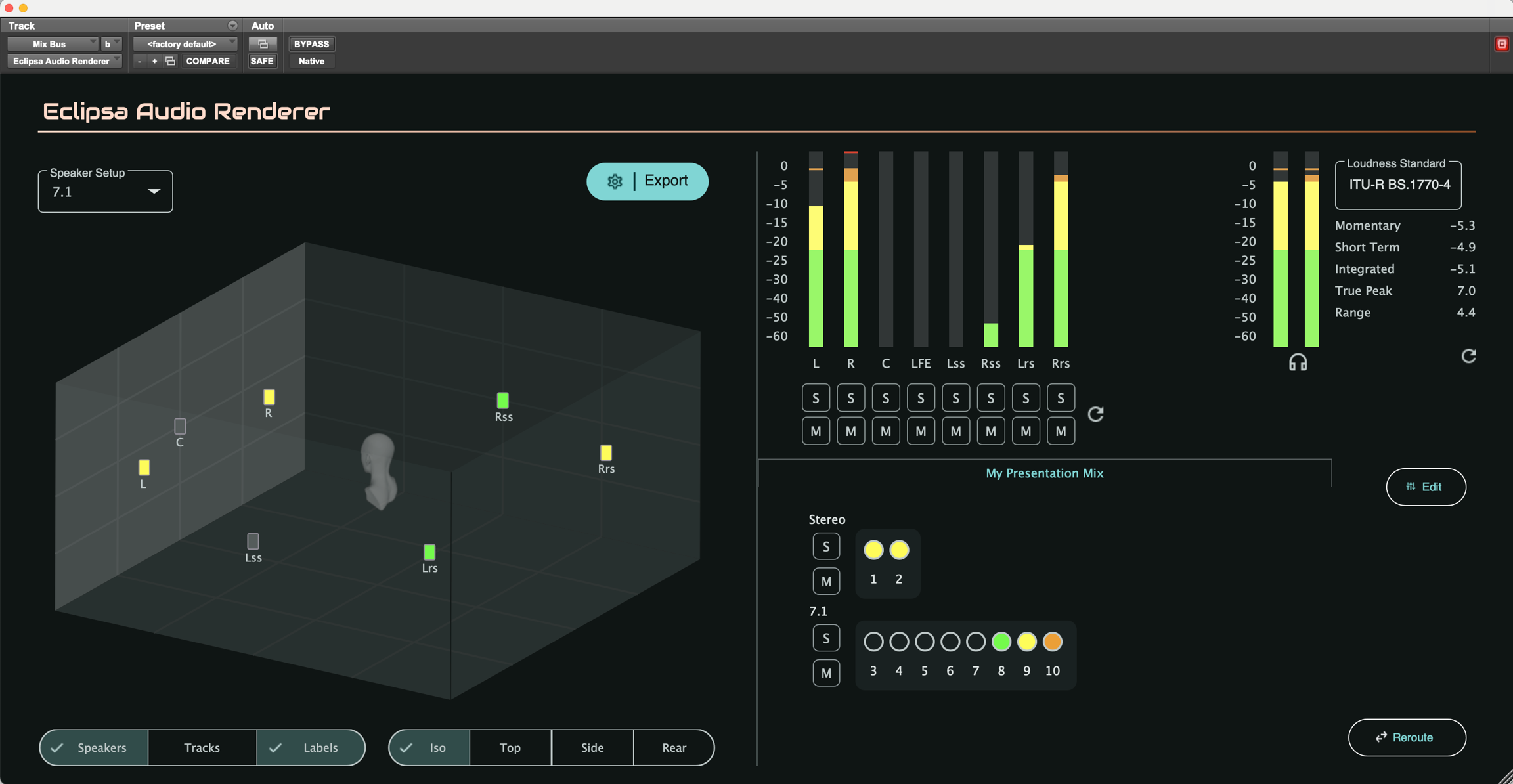
Two Plugins Work Together as One Spatial System
The Eclipsa workflow uses two separate components. The Element Plugin connects source tracks to audio elements and can provide basic panning, while the Renderer Plugin manages the overall spatial mix.
In a typical session, the Renderer is created first and then Element instances are added to the tracks that need to be placed or routed inside the 3D scene.
Position and Monitor Audio in 3D Space
The Element Plugin provides a room-style visualization for spatial positioning, while the Renderer handles playback configuration for compatible speaker layouts and binaural headphone monitoring.
This allows creators to build an immersive mix while still monitoring through practical studio or headphone setups instead of requiring a large multichannel room for every stage of production.
Renderer Handles Mix Presentations and Export
The Renderer Plugin is the central control point for speaker setups, audio elements and Mix Presentations. These presentations can define different playback configurations and metadata for the same immersive project.
Once the mix is ready, the Renderer can export IAMF-based audio and can also combine the final audio with video for an MP4 delivery workflow.

Built Around the Open IAMF Standard
Eclipsa Audio is built on the Immersive Audio Model and Formats specification from the Alliance for Open Media. IAMF can describe channel-based, scene-based and object-oriented immersive audio together with metadata used during playback.
Because the ecosystem is open source, the plugin is also interesting for developers and technically minded producers who want to inspect or extend the workflow rather than rely entirely on a closed proprietary format.
VST3 Support Brings the Workflow to REAPER
Current official documentation provides VST3 builds for macOS and Windows, with REAPER 7.39 or later listed as the officially supported VST3 host. AAX builds are available for Pro Tools, and AU support is provided on macOS for supported applications.
The documentation notes that VST3 or AU versions may load in other hosts, but those combinations are not guaranteed or officially tested.
Who Should Try Eclipsa Audio
This is not a conventional stereo effect. It is aimed at immersive mixing, spatial sound design and delivery workflows where position, speaker layout and playback metadata are part of the creative process.
- Immersive music mixes
- 3D sound design
- Spatial audio experiments
- YouTube-ready IAMF workflows
- Multichannel post-production
- Binaural monitoring and translation
At a Glance
Project: Eclipsa Audio / open-source IAMF ecosystem
Type: Immersive 3D audio authoring and rendering tools
Plugins: Eclipsa Audio Element + Eclipsa Audio Renderer
Spatial standard: IAMF
Monitoring: Speaker layouts and binaural headphone rendering
Export: IAMF audio and MP4 delivery workflows
Formats: VST3, AAX and AU depending on platform/host
VST3 support: macOS and Windows; REAPER 7.39+ officially supported
License: Open source
Price: Free
Download Eclipsa Audio Plugins for Free
Get the current free version directly from the official developer page.
Final Thoughts
Eclipsa Audio is a specialist download, but that is exactly what makes it notable. The Element and Renderer plugins bring serious spatial authoring, monitoring and IAMF export tools into a free open-source package. Producers working only in stereo may not need it, but anyone exploring immersive music, sound design or future-facing delivery formats now has a practical way to experiment without buying a dedicated 3D audio suite.