
This is the moment when an idea can become a track, or collapse into a folder full of loops named “new idea final 3 maybe.” A beginner opens the DAW with good energy, finds a kick, changes the tempo, loads a synth, browses presets, adds a pad, changes the drums, checks a tutorial, downloads a plugin, forgets the original idea, and somehow ends the session with four bars of music and the emotional stability of a crashed hard drive.
The problem is not lack of talent. It is lack of order.
Music production becomes easier when the first part of the session has a clear purpose. You do not need to solve the full mix. You do not need to design every sound from scratch. You do not need to build a perfect arrangement. You need to create momentum. The first 30 minutes should give you the core of the beat: tempo, groove, bass direction, harmonic mood, hook idea, and a simple structure to continue.
This article gives beginners a practical 30-minute workflow for starting a beat without getting lost. It is designed for producers working in any DAW, whether they make hip-hop, trap, house, afro house, lo-fi, pop, synthwave, EDM, or experimental electronic music.
The goal is simple: stop wandering, start building.
Why the First 30 Minutes Matter
The beginning of a session sets the direction for everything that follows. If the first 30 minutes are chaotic, the track often becomes chaotic too. If the first 30 minutes are focused, the track has a better chance of becoming something finished.
Beginners often treat the first minutes like a shopping trip. They browse sounds, compare drums, scroll presets, test plugins, and search for inspiration as if the beat is hiding somewhere inside a folder. Sometimes that works. Most of the time, it drains energy before the music has a shape.
A better approach is to treat the first 30 minutes like a sketch. Painters do not begin by polishing the shadow under the left eye. Filmmakers do not begin by color grading the final scene. Producers should not begin by mixing the hi-hat at 12 kHz while the track has no bassline.
Start with structure. Start with role. Start with energy.
The 30-Minute Rule
For the first 30 minutes, you are not allowed to mix deeply. You are not allowed to master. You are not allowed to spend 15 minutes comparing reverbs. You are not allowed to browse 200 kick drums unless your plan is to produce a documentary called “The Sad Life of an Unfinished Loop.”
The first 30 minutes have one job: build the core loop and turn it into a small arrangement map.
Here is the basic timeline:
- Minute 0 to 3: choose tempo, key, and mood.
- Minute 3 to 8: build the drum pulse.
- Minute 8 to 13: add the bass foundation.
- Minute 13 to 18: add chords or harmonic texture.
- Minute 18 to 23: create a lead, hook, or memorable motif.
- Minute 23 to 27: add one FX or transition idea.
- Minute 27 to 30: duplicate the loop into a rough arrangement map.
At the end of 30 minutes, you should have a musical direction. Not a finished track. Not a final mix. A direction.
Minute 0 to 3: Choose Tempo, Key and Mood
Before loading instruments, define the basic identity of the beat. This takes less than three minutes, but it can save the whole session.
Ask yourself:
- What genre or energy am I aiming for?
- Is the beat dark, warm, energetic, emotional, aggressive, dreamy, club-focused, cinematic, or minimal?
- What tempo range fits the idea?
- Do I want a minor, major, modal, or ambiguous feeling?
You do not need a music theory essay. You need a direction.
For example:
- Afro house, 122 BPM, warm minor mood.
- Lo-fi, 82 BPM, soft nostalgic chords.
- Trap, 145 BPM, dark bell melody.
- House, 126 BPM, bright piano stab energy.
- Synthwave, 100 BPM, night-drive atmosphere.
This small decision prevents random production. If you do not choose a direction, every sound will try to pull the track somewhere else.
Minute 3 to 8: Build the Drum Pulse
The drums do not need to be final. They need to create movement. In most beat-based music, the drum pulse tells the body what to do before the brain starts analyzing chords.
Start with the essentials:
- Kick
- Snare or clap
- Hi-hat or shaker
- One percussion or groove element
Do not overbuild. The goal is to establish pulse and bounce. If you are making house, start with a kick and clap. If you are making trap, start with kick, snare, and hats. If you are making lo-fi, keep the drums soft and slightly loose. If you are making afro house, focus on organic percussion movement without overcrowding the groove.
During these five minutes, avoid detailed mixing. Set rough volume levels only. If the hi-hat is too loud, lower it. If the kick is weak, choose a better kick quickly. Do not open five compressors. The beat is still a baby. Let it crawl before teaching it mastering theory.
Recommended Tool: Sitala
Sitala is a fast drum sampler available as a plugin and standalone app. Its strength is simplicity: pads, sample loading, basic shaping, and a direct workflow. For the first 30 minutes of a beat, that speed matters. You want rhythm quickly, not a spaceship cockpit.
Use it for: drum one-shots, quick kits, beat sketches, simple groove building, fast percussion ideas.
Official website
Download Sitala
Minute 8 to 13: Add the Bass Foundation
Once the drums move, add the bass. The bass should not be an afterthought. It is the foundation of the beat, especially in house, hip-hop, trap, afro house, EDM, synthwave, and modern pop.
Start simple. Use root notes first. Lock the bass rhythm with the kick. Pay attention to note length. A bass note that is too long can cover the groove. A bass note that is too short can lose weight. The right bass often depends less on the plugin and more on timing, envelope, octave, and rhythm.
For the first 30 minutes, your bassline only needs to answer three questions:
- Does it support the drums?
- Does it define the low-end movement?
- Does it create a clear foundation for the rest of the beat?
If the answer is yes, move on. You can refine later.
Bass Workflow by Style
- House: keep the kick stable and make the bass groove around it.
- Afro house: use warmth, rolling movement, and space for percussion.
- Trap: build the 808 around the kick and snare rhythm.
- Lo-fi: keep the bass soft, round, and supportive.
- Synthwave: use a pulsing bass or simple root movement with strong character.
Recommended Tool: Vital
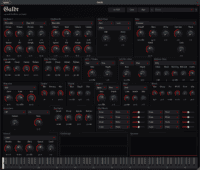
Vital is a visual wavetable synthesizer that can create strong basses, leads, pads, plucks, and textures. For beginners, its visual interface helps connect sound design decisions with what is happening inside the synth.
Use it for: synth bass, plucks, leads, pads, electronic hooks, simple modulation ideas.
30-minute rule: choose one bass patch and write the part. Do not lose the session in preset browsing. The perfect bass is often less useful than the bass that lets you keep writing.
Official website
Download / Get Vital
Minute 13 to 18: Add Chords or Harmonic Texture
The chords give the beat emotional direction. They do not need to be complicated. In fact, beginners often improve faster when they use fewer chords with better rhythm and voicing.
Try one of these approaches:
- A two-chord loop for a hypnotic house or afro house feel.
- A four-chord progression for pop, lo-fi, or emotional trap.
- A single dark pad for atmosphere.
- Short stabs for groove.
- A simple minor progression for cinematic tension.
The most important choice is register. If your chords are too low, they may fight the bass. If they are too wide and wet, they may hide the lead. If they are too busy, they may make the beat feel crowded before the hook even arrives.
During the first 30 minutes, chords should support the beat. They do not need to become a solo piano performance with a complicated emotional backstory.
Minute 18 to 23: Create the Hook or Motif
This is where the beat gets identity. A hook can be a melody, vocal chop, synth phrase, guitar lick, piano motif, bell pattern, bass answer, or rhythmic signature. It does not need to be long. It needs to be memorable.
Beginners often write too much. A strong hook can be very small:
- Three notes with a strong rhythm.
- A repeated vocal texture.
- A simple pluck melody.
- A short piano answer.
- A bass phrase that becomes the signature.
- A synth stab that returns every 4 or 8 bars.
The hook should answer the track, not cover it. If the chords already have a lot of movement, keep the lead simpler. If the beat is minimal, the hook can be more expressive.
Test the hook at low volume. If it still catches the ear, it probably has character. If it only works when it is extremely loud, it may need a stronger shape or better sound choice.
Minute 23 to 27: Add One FX or Transition Idea
Now add one element that helps the loop move toward an arrangement. This could be a reverse cymbal, short noise sweep, delay throw, impact, reverb tail, riser, filtered texture, or atmospheric accent.
The keyword is one.
FX are useful, but they can quickly turn into decoration. In the first 30 minutes, use FX to create direction. You want to know how the loop might enter, leave, rise, or drop.
Good FX questions:
- How does the intro lead into the groove?
- How can I create tension before the hook?
- Can I use silence before the main section?
- What sound can mark the transition without sounding cheap?
- Does the FX support the rhythm or distract from it?
Recommended Tool: Valhalla Supermassive
Valhalla Supermassive is a free reverb and delay plugin known for huge spaces, atmospheric echoes, evolving tails, and creative transition effects. It is excellent for adding depth quickly, but it must be used with taste. A little atmosphere creates emotion. Too much turns the beat into a weather report.
Use it for: delay throws, atmospheric reverb, transitions, breakdowns, wide tails, creative space.
Official website
Download Valhalla Supermassive
Minute 27 to 30: Create a Rough Arrangement Map
The final three minutes are crucial. Do not leave the idea as a loop. Duplicate it across the timeline and create a rough structure.
A simple map could look like this:
- Intro: 8 or 16 bars
- Main groove: 16 bars
- Hook section: 16 bars
- Breakdown: 8 or 16 bars
- Return: 16 bars
- Outro: 8 or 16 bars
You do not need to arrange every detail. Just create the skeleton. Mute elements in different sections. Remove bass from the intro. Bring drums in gradually. Save the full hook for later. Use FX to mark transitions.
This is the difference between a loop and a track. The moment the idea enters the timeline, your brain starts hearing movement.
A Simple 30-Minute Beat Template
To make the workflow easier, create a DAW template with only a few tracks:
- Drums
- Bass
- Chords
- Lead
- FX
- Reference track
- Rough master meter
This keeps the session clean. Beginners often open too many tracks before they have one good idea. A small template encourages decisions.
You can always expand later. The first 30 minutes should be about direction, not complexity.
Using MPC Beats for a Fast Start
MPC Beats is a free beat-making DAW from Akai Professional built around the MPC-style workflow. It can be useful for beginners because it focuses on drums, patterns, samples, and quick beat creation. Even if you later move to another DAW, learning a pattern-based workflow can improve rhythm and arrangement thinking.
Use it for: beat sketches, drum programming, sample-based ideas, pattern writing, beginner beatmaking workflow.
Official website
Download MPC Beats
The Biggest Mistakes Beginners Make in the First 30 Minutes
1. Browsing Sounds Too Long
Sound selection matters, but endless browsing kills momentum. Give yourself a time limit. If you cannot find the perfect sound, choose a close one and keep writing. You can replace it later.
2. Mixing Before the Beat Exists
Mixing too early feels productive, but it often avoids the real work. A perfectly EQ’d hi-hat does not matter if the beat has no hook, no structure, and no bass direction.
3. Adding Too Many Layers
More layers can make a beat bigger, but only when each layer has a role. In the first 30 minutes, keep it lean. Drums, bass, chords, lead, FX. That is enough.
4. Not Saving Versions
Save the project early and name it clearly. A good naming system prevents chaos. Use something like:
- BeatName_120BPM_Aminor_v01
- BeatName_126BPM_House_v01
- BeatName_82BPM_Lofi_v01
Your hard drive should not look like an archaeological dig of forgotten loops.
5. Staying in the Loop Forever
The loop is the start, not the destination. Once the core works, duplicate it into an arrangement. Even a rough arrangement is better than another hour polishing the same eight bars.
The Low-Volume Test
Before moving beyond the first 30 minutes, play the beat at low volume. This simple test reveals whether the main idea is clear.
At low volume, you should still feel:
- The groove
- The bass movement
- The chord mood
- The hook or motif
- The basic direction of the track
If everything disappears except the drums, the musical idea may need more focus. If the hook disappears, simplify the chords or choose a stronger lead sound. If the bass disappears, add midrange character or adjust the rhythm.
Low volume is honest. Sometimes brutally honest, like a friend who has heard too many unfinished beats.
How to Continue After the First 30 Minutes
Once the first 30 minutes are done, take a short break. Then continue with a second phase. This is where you develop the arrangement, improve transitions, refine sounds, and begin rough mixing.
A good next step is a 60-minute development session:
- 15 minutes to improve the arrangement.
- 15 minutes to create transitions.
- 15 minutes to refine the hook and bass.
- 15 minutes to balance volumes and export a demo.
Do not aim for perfection. Aim for progress. Every finished sketch teaches more than an unfinished loop.
Genre-Specific First 30-Minute Examples
House Beat
- Tempo: 124 to 128 BPM
- Start with kick and clap
- Add rolling bass
- Use short piano or synth stabs
- Create one vocal chop or pluck hook
- Add a noise sweep into the main groove
Afro House Beat
- Tempo: 120 to 124 BPM
- Start with kick and organic percussion
- Add warm bass movement
- Use emotional chords or a soft pad
- Create a short melodic call-and-response
- Add atmosphere for transitions
Trap Beat
- Tempo: 130 to 150 BPM
- Start with snare placement and hats
- Add 808 or sub bass
- Use bells, keys, pad, or dark sample
- Create a small melodic motif
- Add riser or impact before the hook
Lo-Fi Beat
- Tempo: 70 to 90 BPM
- Start with dusty drums or soft swing
- Add mellow bass
- Use piano, Rhodes, guitar, or sampled chords
- Create a relaxed lead phrase
- Add room tone or subtle texture
Synthwave Beat
- Tempo: 90 to 110 BPM
- Start with drum machine-style rhythm
- Add pulsing bass
- Use nostalgic pads or analog-style chords
- Create a simple neon-style lead motif
- Add reverb tail or delay for space
The 30-Minute Checklist
Before ending the first session phase, check the essentials:
- Tempo chosen
- Key or tonal center chosen
- Drum pulse created
- Bass foundation added
- Chords or atmosphere added
- Hook or motif created
- One FX or transition idea added
- Rough arrangement map started
- Project saved clearly
- Next step written down
If all of these are done, the session has succeeded. The beat may still need work, but it is alive.
Final Thoughts: Momentum Beats Perfection
The first 30 minutes of a beat should not be a battle against perfection. They should create motion. A beginner producer does not need the perfect plugin chain, the perfect drum kit, the perfect synth patch, or the perfect mix before the track has a shape.
Choose a direction. Build the drums. Add the bass. Support it with chords. Create a hook. Add one transition idea. Stretch the loop into a rough arrangement. Save the project. Move forward.
This simple workflow does not limit creativity. It protects it.
The best producers are not the ones who never get lost. They are the ones who know how to return to the track quickly. The first 30 minutes are your compass. Use them well, and the beat has a much better chance of becoming music instead of another unfinished loop waiting quietly in the hard drive basement.