Some free plugins are simple utilities. ShinRonin by Audio Damage is not one of them. This free VST plugin is a modern rebuild of Ronin, one of Audio Damage’s early effects, first released in 2003. It brings back a strange and flexible architecture built around dual delays, morphing filters, saturation, modulation and patchable routing.
ShinRonin is a free modular filter and delay plugin for producers who want more than a standard echo effect. It can create clean stereo delays, filtered movement, experimental feedback networks, self-oscillating textures, metallic rhythmic effects and unpredictable sound design moments that feel alive inside a DAW.
For electronic producers, sound designers, composers, beatmakers and home studio users, ShinRonin is a serious free audio plugin with an unusually deep concept. It is not built for one-click polish. It is built for exploration, routing and controlled misbehavior, which is usually where the interesting things happen.
What Is ShinRonin?
ShinRonin is a free modular filter and delay plugin developed by Audio Damage. It is a rebuilt version of Ronin, a cult delay and filter effect originally released in 2003. The new version keeps the core idea of the original plugin while updating it for modern operating systems, plugin formats and DAW workflows.
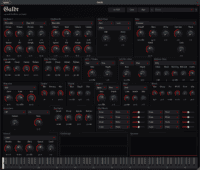
The plugin combines two independent delay lines, two morphing multimode filters, two saturation stages, two LFOs, an envelope follower and two routing matrices. One matrix handles audio routing, allowing signals to be sent between delays, filters, saturation stages and outputs. The other handles modulation routing, letting LFOs, envelope follower and incoming MIDI control many parameters.
That design makes ShinRonin different from a normal delay plugin. Most delay effects give you a fixed signal path. ShinRonin lets you rewire the behavior internally, creating feedback loops, cross-fed delays, stacked filters and evolving movement. It can be gentle, but it clearly enjoys being difficult in the most musical way possible.
Video Demo
Why This Free VST Plugin Matters for Producers Now
Modern production tools are often designed for speed, presets and clean results. That is useful, but it can also make effects feel predictable. ShinRonin matters because it gives producers a more open-ended creative environment inside a free plugin.
A free delay VST plugin can be useful. A free filter plugin can be useful. But a modular effect that combines delay, filtering, saturation, modulation and routing gives producers a larger creative field. It can be used as a delay, a filter bank, a feedback laboratory, a movement generator or a sound design processor.
This is especially valuable in a home studio. Independent producers may already have stock delays and filters inside their DAW, but fewer have a free modular effect that allows feedback routing, envelope-driven movement and complex internal patching. ShinRonin fills that gap with character.
It also arrives at the right time. Electronic music, cinematic sound design, experimental pop, ambient, techno, industrial, synthwave and bass music all reward unusual movement and texture. ShinRonin gives producers a way to make sounds shift, decay, loop, break and evolve without relying only on automation lanes or static presets.
Main Features
- Free modular filter and delay plugin: a modern rebuild of Audio Damage’s Ronin effect.
- Two independent delay lines: each delay includes tempo sync, reverse, looping and feedback behavior.
- Two morphing multimode filters: filters sweep continuously through different filter responses.
- Two saturation stages: add harmonic weight, drive and tone shaping.
- Two LFOs: create rhythmic and evolving modulation inside the plugin.
- Envelope follower: lets the incoming audio shape movement and response.
- Signal routing matrix: routes audio between internal nodes for feedback, cross-routing and stacked processing.
- Modulation matrix: connects LFOs, envelope follower and MIDI to many plugin parameters.
- Clean or experimental behavior: works for stereo delay, filtering, feedback effects and sound design.
- No DRM: no trial, no online activation, no iLok and no expiration.
- Wide platform support: available for Windows, macOS and Linux, with iPadOS AUv3 planned.
Sound, Workflow and Creative Use
ShinRonin can sound clean, wide and controlled when used as a more traditional delay and filter effect. On a synth lead, it can add stereo movement and filtered echo. On a vocal chop, it can create rhythmic repeats and darkening texture. On percussion, it can generate syncopated delay patterns and feedback-driven fills.
But the deeper appeal is its ability to become unstable in useful ways. Once the routing matrix enters the picture, ShinRonin can turn into a feedback machine. Delays can feed filters, filters can feed delay lines, saturation can add grit and modulation can keep the whole patch moving.
For ambient music, this can create evolving drones, smeared textures and long feedback beds. For techno, it can build rhythmic delay systems and dark transitions. For sound design, it can turn a small source into a moving mechanical texture. For synthwave and cinematic production, it can add retro digital movement with a more experimental edge.
The workflow rewards curiosity. ShinRonin is not only about turning one knob and receiving a polite echo. It asks the producer to patch, listen, adjust and occasionally rescue the session before the feedback becomes emotionally independent. That is part of the charm.
The Most Important Controls and Technology Explained
Dual Delay Lines
The two delay lines are the foundation of ShinRonin. Each delay can create time-based repeats, but the real power comes from how the two delays interact through routing.
Used simply, they can produce stereo delay, rhythmic echoes, reverse-style movement and tempo-synced patterns. Used creatively, they can cross-feed each other, create looping structures and become part of more complex feedback networks.
This makes ShinRonin useful for both mix enhancement and creative destruction. A vocal can receive a controlled delay throw, while a synth or percussion loop can become a shifting rhythmic system.
Morphing Multimode Filters
ShinRonin includes two morphing multimode filters. These filters do not simply switch between static modes. They can sweep continuously through different filter responses, including notch, lowpass, bandpass and highpass-style behavior.
This is important because filtering gives delay effects shape. A clean delay can quickly clutter a mix if every repeat has the same full-range tone. Filtering helps repeats move, darken, thin out, open up or become more resonant.
With modulation, the filters become even more useful. An LFO can move the cutoff, an envelope follower can make the filter respond to the input, and the modulation matrix can create more complex movement.
Saturation Stages
The two saturation stages add harmonic color and drive. In a modular delay and filter plugin, saturation is not only a tone control. It can also change how feedback behaves.
A clean feedback path can sound smooth and spacious. A saturated feedback path can become thicker, more aggressive and more unpredictable. That makes the saturation stages useful for sound design, dark electronic music, industrial textures and more character-driven delay effects.
Signal Routing Matrix
The signal routing matrix is one of the defining features of ShinRonin. It allows audio to be routed between internal nodes, making the plugin feel more like a compact modular effect than a fixed delay processor.
This is where producers can create feedback loops, cross-feed the two delays, route filters in different orders and build more unusual processing chains. It gives the plugin its experimental identity.
The matrix also makes ShinRonin more flexible than a standard delay or filter plugin. Instead of accepting one fixed architecture, producers can design the internal flow of the effect. That kind of freedom is rare in a free VST plugin.
Modulation Matrix
The modulation matrix connects modulation sources to plugin parameters. ShinRonin includes two LFOs, an envelope follower and MIDI input as modulation sources.
This allows the plugin to create movement without relying only on DAW automation. A filter can open rhythmically, delay time can shift, output levels can move, panning can change and feedback can evolve over time.
For sound designers, this is one of the most powerful sections. It turns ShinRonin from a static effect into a moving system. That is where drones, rhythmic pulses, chaotic textures and animated delay patches become possible.
LFOs
The two LFOs provide repeating modulation. They can be used to move filter cutoff, delay time, panning, output level and other parameters depending on the routing choices.
In practical production, LFOs are useful for adding motion to long sounds. A pad can slowly shift. A delay tail can pulse. A percussion loop can move in stereo. A synth line can become more animated without manually drawing automation.
Envelope Follower
The envelope follower responds to the level of the incoming audio. This lets the plugin react dynamically to the performance or sound feeding it.
For example, a louder input can open a filter, increase movement or change the behavior of the effect. This can make processing feel more connected to the source, especially on drums, vocals, basses and dynamic synth parts.
Who Should Use ShinRonin?
ShinRonin is best suited to producers who enjoy creative effects, modular thinking and sound design. It is especially useful for electronic producers, ambient composers, techno artists, experimental beatmakers, synthwave producers, cinematic sound designers and anyone who wants delay and filtering to behave less predictably.
Mixing engineers can use it carefully for delay throws, filtered echo and special effects. Sound designers can push it much further into feedback networks, evolving textures and unstable modulation. Home studio producers can use it as a free creative processor that goes beyond basic DAW stock effects.
Beginners can still use ShinRonin, but they should expect a learning curve. The plugin is not difficult because it is badly designed. It is deep because the routing system gives users real options. That depth is the point.
Best Use Cases for Producers and Sound Designers
- Stereo delay: create wide, rhythmic echoes for synths, vocals and guitars.
- Filtered delay throws: build darker or more resonant delay moments in vocal and electronic mixes.
- Feedback sound design: patch internal feedback loops for unstable and evolving textures.
- Ambient drones: use long delay, filtering and modulation to create atmospheric beds.
- Techno transitions: automate feedback, filtering and wet level for rising tension.
- Synth processing: turn static synth parts into animated rhythmic textures.
- Experimental percussion: feed drums through delay, filters and saturation for mechanical movement.
- Cinematic effects: create eerie movement, dark echoes and evolving sound design layers.
- Creative resampling: print ShinRonin output to audio and edit the best accidents into new material.
Compatibility and Download Details
ShinRonin is available as a free download from Audio Damage. The plugin is free on desktop platforms, with no demo timer, no DRM and no expiration.
On Windows, ShinRonin is listed in CLAP, VST3 and AAX formats for Windows 10 or newer, with a 64-bit DAW required. On macOS, it is listed in CLAP, VST3, AU and AAX formats for macOS 10.13 or newer, supporting Intel and Apple Silicon systems. On Linux, it is listed in CLAP, VST3 and LV2 formats for Ubuntu 20 or later. An iPadOS AUv3 version is planned.
Because ShinRonin is available in several plugin formats, producers should choose the version that matches their DAW and operating system. After installation, a plugin rescan may be required if the effect does not appear immediately inside the host.
Official website: Visit the ShinRonin page on Audio Damage
Download link: Download ShinRonin for free
Why This Type of Free Plugin Matters
Free plugins are often judged by price first, but ShinRonin deserves attention because of its architecture. A free modular filter and delay plugin with routing matrices, modulation, saturation and cross-platform support is not a throwaway utility. It is a creative system.
That matters because producers need tools that encourage exploration. Many modern effects are designed to be fast and polished, which is useful, but creative music production also needs instruments of surprise. A plugin like ShinRonin can push producers into unexpected results, especially when feedback, filtering and modulation start interacting.
It also shows why legacy ideas can still matter. Ronin came from an earlier era of plugin design, when developers often built stranger tools with less concern for current interface trends. ShinRonin brings that spirit back while making it usable on modern systems.
For independent producers, this is valuable. A free audio plugin with this level of routing depth gives home studio creators access to a type of processing that usually belongs to paid modular environments, hardware effects or complex DAW racks.
What Happens Next?
ShinRonin has strong long-term potential because it is not limited to one obvious use. Some producers will use it as a delay. Others will use it as a filter effect. Sound designers will probably treat it like a small modular feedback instrument.
The plugin will likely appeal most to users who enjoy experimenting and resampling. ShinRonin can generate moments that are hard to recreate with conventional effects, which makes it useful for printing audio, chopping the best sections and building new textures from the results.
Its future may also benefit from Audio Damage’s wide platform support. With Windows, macOS and Linux builds already listed, and iPadOS planned, ShinRonin has a good chance of reaching producers across very different workflows.
Final Verdict
ShinRonin by Audio Damage is one of the more interesting free VST plugins to appear in the creative effects space. It is a free modular filter and delay plugin with two delay lines, morphing filters, saturation, LFOs, envelope following and two routing matrices that open the door to serious experimentation.
It can produce clean stereo delays and gentle filtering, but its real identity appears when producers start routing signals, building feedback paths and letting modulation push the effect into motion. This is not a plugin for people who only want a safe preset and a friendly knob labelled “nice.” ShinRonin has more personality than that.
For electronic producers, sound designers, composers, beatmakers and home studio users, ShinRonin is easy to recommend. It is free, deep, cross-platform and genuinely creative. Use it for delay, filtering, feedback textures, movement and resampling. Just keep one hand near the output level, because once it starts misbehaving, it misbehaves with confidence.