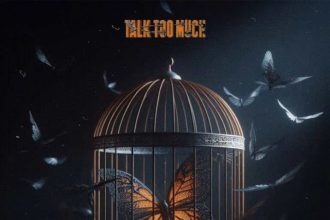

His cinematic music is not designed to stay politely in the background. It moves like a camera, slowly entering a landscape of tension, memory and emotional gravity. Over the years, Bacci has developed a musical language shaped by atmosphere, suspense and wide-screen storytelling, from dark ambient pieces to epic cinematic cues and horror-inspired compositions. His work often sounds like the missing soundtrack to an unseen film, the kind of music that suggests a character, a place, a wound and a final confrontation before a single image appears on screen.
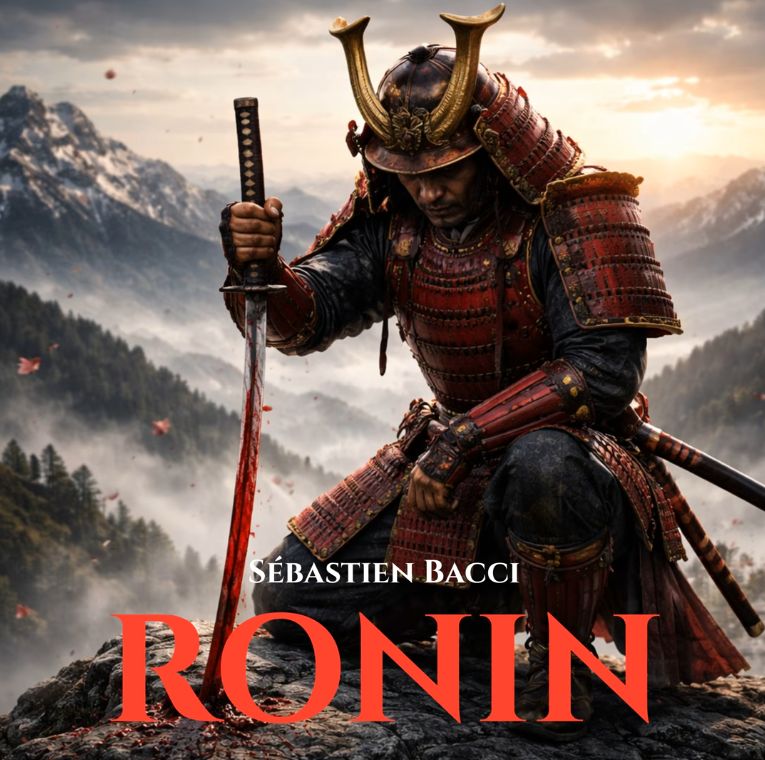
With his latest track, “Ronin,” Sebastien Bacci turns his attention toward the world of Japanese cinema and the symbolic figure of the wandering samurai. The piece is conceived as an homage to Japanese films built around honor, solitude, discipline and revenge. It does not simply borrow an aesthetic. It tries to capture a state of mind: the silence before the duel, the weight of exile, the path of a warrior who has lost his master but not his code.
Traditional instrumental colors play a central role in the atmosphere of “Ronin.” Genzu-inspired textures, cinematic strings, deep percussion and other traditional instruments intertwine to create a dramatic soundscape that feels ancient and modern at the same time. The track moves with patience, allowing each sound to breathe before the tension expands. There is no rush here. The music walks like a samurai entering a misty village at dawn, and yes, it probably already knows how the story ends.
“Ronin”: A Cinematic Tribute to Japanese Samurai Films
“Ronin” stands out as one of Sebastien Bacci’s most visual compositions. The title immediately evokes a powerful image: a lone warrior, stripped of rank, moving through a world ruled by memory, violence and spiritual discipline. In Japanese storytelling, the ronin is never just a fighter. He is a symbol of rupture. He carries the past with him, often in silence, and that silence is exactly where Bacci places the emotional force of the track.
The arrangement is built like a short film. It opens with atmosphere, then slowly reveals its dramatic architecture. The traditional elements bring an organic, almost ritual quality, while the cinematic production gives the piece scale and impact. Strings rise with controlled intensity. Percussive hits feel distant but threatening. Melodic phrases appear like fragments of memory, never overexplaining themselves, always leaving space for imagination.
What makes the piece effective is its balance between elegance and tension. “Ronin” does not fall into the trap of overloading the composition with constant epic explosions. Instead, it relies on contrast: restraint, then pressure; calm, then danger; beauty, then shadow. This is cinematic music with a strong narrative instinct, written for listeners who enjoy soundtracks, trailer music, historical drama, dark fantasy and emotionally charged instrumental storytelling.
After “Revenge,” A Darker Chapter Takes Shape
Before “Ronin,” Sebastien Bacci released “Revenge,” a track that already explored the darker side of cinematic tension. Where “Revenge” carried the feeling of pursuit, anger and dramatic consequence, “Ronin” feels more spiritual, more restrained and more tragic. The two pieces can almost be heard as connected chapters. One burns with the desire to strike back. The other walks through the aftermath, where every step is heavy with memory.
This evolution is important in Bacci’s discography. His cinematic work has often been driven by suspense, fear and emotional escalation, especially through pieces connected to horror and dark cinematic atmospheres. With “Ronin,” he refines that approach into something more poetic. The tension remains, but it is sharpened by discipline. The darkness is still present, but it no longer screams. It waits.
That ability to shape mood without overstatement has become one of Sebastien Bacci’s strongest qualities. Whether he is working on horror-driven soundscapes, epic trailer-style builds or more emotional cinematic cues, his music tends to create a precise atmosphere very quickly. It is immersive, direct and highly visual, but never flat. There is always a feeling of movement underneath the surface.
A Composer Drawn to Cinematic Tension
Sebastien Bacci’s broader catalog shows a composer fascinated by drama, atmosphere and transformation. His previous works have moved through horror, suspense, epic cinematic energy and dark ambient storytelling. Tracks such as “Before the Break” revealed his taste for rising tension and trailer-like emotional payoff, while his Halloween-oriented material explored fear, anxiety and haunted textures with a more disturbing edge.
This background gives “Ronin” a richer context. The track is not an isolated experiment with Japanese-inspired sounds. It is the continuation of a musical identity already built around cinema, tension and image-driven composition. Bacci understands how to use sound as a dramatic tool. He knows that a low drum can suggest danger, that a fragile melodic phrase can suggest loss, and that silence can sometimes be more violent than impact.
His music is particularly suited for film, trailers, documentaries, video games, dark visual projects and narrative content that needs emotional weight. But it also works as pure listening music for anyone who enjoys cinematic atmospheres. You do not need a screen to enter his world. The images arrive on their own.
The Sound of Honor, Exile and Memory
With “Ronin,” Sebastien Bacci captures something that goes beyond genre decoration. The track is not only cinematic music with traditional instruments. It is a study in mood. The composition carries honor without triumphalism, solitude without emptiness, and violence without unnecessary noise. It feels like a story told by someone who understands that the most powerful battles often happen before the sword is drawn.
The traditional colors give the music its cultural shadow, while the cinematic arrangement gives it a modern dramatic frame. This meeting point is where the track finds its identity. It can evoke old Japanese films, samurai myths, mist-covered landscapes and internal conflict, but it also remains accessible to contemporary soundtrack listeners. The production is clean, the atmosphere is strong, and the emotional direction is clear.
For an artist like Sebastien Bacci, this is exactly the right territory. His music has always been drawn to moments of pressure: the second before something breaks, the memory that refuses to disappear, the darkness at the edge of the frame. “Ronin” brings those instincts into a more elegant, ceremonial and cinematic space.
Listen to “Ronin”
“Ronin” by Sebastien Bacci is available on all major streaming platforms. The track confirms his place as a cinematic composer capable of creating immersive, emotional and visually powerful music, with a sound that speaks to fans of film scores, epic music, dark ambient atmospheres and Japanese-inspired storytelling.
Listen here: https://sdz.sh/HfXY5d
Final Thoughts
“Ronin” is a strong addition to Sebastien Bacci’s cinematic universe. After the darker pulse of “Revenge,” this new title opens a more spiritual and atmospheric chapter, shaped by Japanese film imagery, traditional instrumental colors and a deep sense of dramatic restraint.
It is music for lonely warriors, haunted memories and final walks under a grey sky. In other words, not exactly the soundtrack for buying bread on a sunny morning, unless your bakery has a very serious sense of honor.