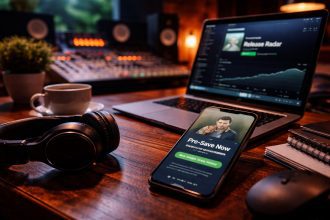

Submitting music to a playlist curator may look simple from the outside: send a link, wait for a reply, hope for the best. In reality, a good submission is not just about sending a song. It is about presenting your music clearly, respecting the curator’s time, and showing that your track belongs in the right listening environment.
Independent artists often lose opportunities not because their music is weak, but because their submission is confusing, incomplete, too aggressive, or simply not adapted to the playlist they are targeting. A curator receives dozens, sometimes hundreds of requests. The artists who stand out are not always the loudest. They are the clearest, the most professional, and the easiest to listen to.
Start With the Right Track, Not Your Whole Catalog
One of the biggest mistakes artists make is sending everything at once: a full album, an EP, a profile link, five unreleased demos, and a message that basically says, “Pick whatever you like.” That may feel generous, but for a curator, it creates extra work.
A strong submission starts with one track. Choose the song that best represents your current artistic direction, the one that sounds finished, focused, and ready for listeners. Do not send a rough demo unless the curator specifically asks for demos. Do not send a full artist profile and expect someone to dig through your catalog like a musical treasure hunt with no map.
The goal is simple: one track, one clear link, one reason to press play.
Send a Direct Link to the Song
A curator should not have to search for the track. Send a direct streaming link to the exact song you want reviewed. Spotify, Apple Music, SoundCloud, YouTube, Bandcamp, or another clean listening link can work, depending on the curator’s requirements.
Avoid sending only an artist profile, a landing page with too many buttons, or a private link that does not open properly. If the curator has to click through several pages before hearing the music, the submission already starts with friction.
Make it easy. The faster the curator can understand what the song is, where it fits, and how it sounds, the better your chances of being considered seriously.
Respect the Playlist’s Style and Audience
Playlist placement is not just about quality. It is also about fit. A great hard rock track will not work in a lo-fi playlist. A deep house track with a dark underground groove may not belong in a mainstream pop selection. A cinematic instrumental may be beautiful, but that does not mean it fits every mood-based playlist.
Before submitting, listen to the playlist. Pay attention to tempo, production style, atmosphere, vocal presence, energy, and overall identity. Ask yourself honestly: does my track belong here?
This step matters because curators are not only judging whether a song is good. They are judging whether it works inside a specific listening experience. A playlist is not a random box of songs. At its best, it is a mood, a flow, a sound universe.
Write a Short, Professional Message
Your message does not need to be long. In fact, shorter is usually better. A good submission message should include your artist name, the track title, the direct link, the genre or mood, and one short sentence about why the song may fit.
Keep the tone human and respectful. Avoid exaggerated claims like “this song will change the music industry” unless you have secretly reinvented electricity in the chorus. Curators appreciate confidence, but they also appreciate clarity.
A simple message can be very effective:
Hello, my name is [Artist Name]. I would like to submit my track “[Song Title]” for your playlist consideration. It is a [genre/mood] track with [short description]. Here is the direct link: [link]. Thank you for listening.
Do Not Spam the Same Track
Sending the same song several times does not increase your chances. It usually does the opposite. Curators remember artists who respect the process, and they also remember artists who send the same request repeatedly with the persistence of a printer jam.
If the curator allows one submission per week, respect that rhythm. If there is no response, it may simply mean the track was not selected, the playlist is full, or the song does not fit the current direction. Silence is frustrating, but it is not always personal.
Instead of resending the same track again and again, focus on improving your next release, refining your mix, building your audience, and choosing better-targeted playlists.
Make Sure the Song Sounds Finished
Curators listen for more than melody. They notice the mix, the vocal balance, the low end, the arrangement, the intro length, the overall energy, and whether the track feels ready for real listeners.
A song does not need to sound expensive, but it should sound intentional. If the vocal is buried, the kick is too weak, the master is harsh, or the arrangement feels unfinished, the track may be rejected even if the idea is strong.
Before submitting, listen to your song on headphones, speakers, a phone, and in the car if possible. Compare it with tracks already placed in similar playlists. If your track feels noticeably weaker in volume, clarity, or balance, fix that before pitching.
Understand That Rejection Is Part of the Process
Not being selected does not mean your music has no value. It may simply mean the song does not fit that playlist. It may mean the curator already has too many tracks in that style. It may mean the production needs more work. It may also mean the timing was not right.
Independent music promotion is a long game. One playlist submission will not build a career by itself. What matters is consistency: releasing better music, improving your presentation, growing your audience, and learning where your sound truly belongs.
The artists who progress are not always the ones who get accepted immediately. They are the ones who keep improving without turning every rejection into a dramatic season finale.
Support Curators Without Expecting Guaranteed Placement
Some platforms and curators allow artists to support their work through donations, memberships, or community links. That support can help maintain playlists, websites, editorial work, listening time, and promotional tools.
However, support should never be confused with guaranteed placement. Ethical curation must remain independent. A real curator should select music because it fits, not because someone paid for a shortcut.
For artists, this is good news. It means the playlist has value. A curated playlist only matters if listeners can trust the selection.
Summary: Submit Your Music to Audiartist
Audiartist offers independent artists a free playlist submission system built around real human curation, careful listening, and playlist compatibility. Artists are invited to send one direct track link, respect the submission rules, and understand that selection depends on quality, originality, emotion, production level, and the right fit with the playlist.
If your music is finished, properly mixed, released, and ready to be heard, you can submit your track here:
Submit your music for free to Audiartist playlists
Final Advice for Independent Artists
A good submission is not complicated. Send the right song, through the right link, to the right curator, with the right attitude. Be clear, be patient, and be professional. Curators are not looking for perfect artists. They are looking for music that feels real, focused, and ready to connect with listeners.
When you respect the process, you give your music a better chance to be heard properly. And in a world where everyone is shouting for attention, clarity can be your quiet superpower.