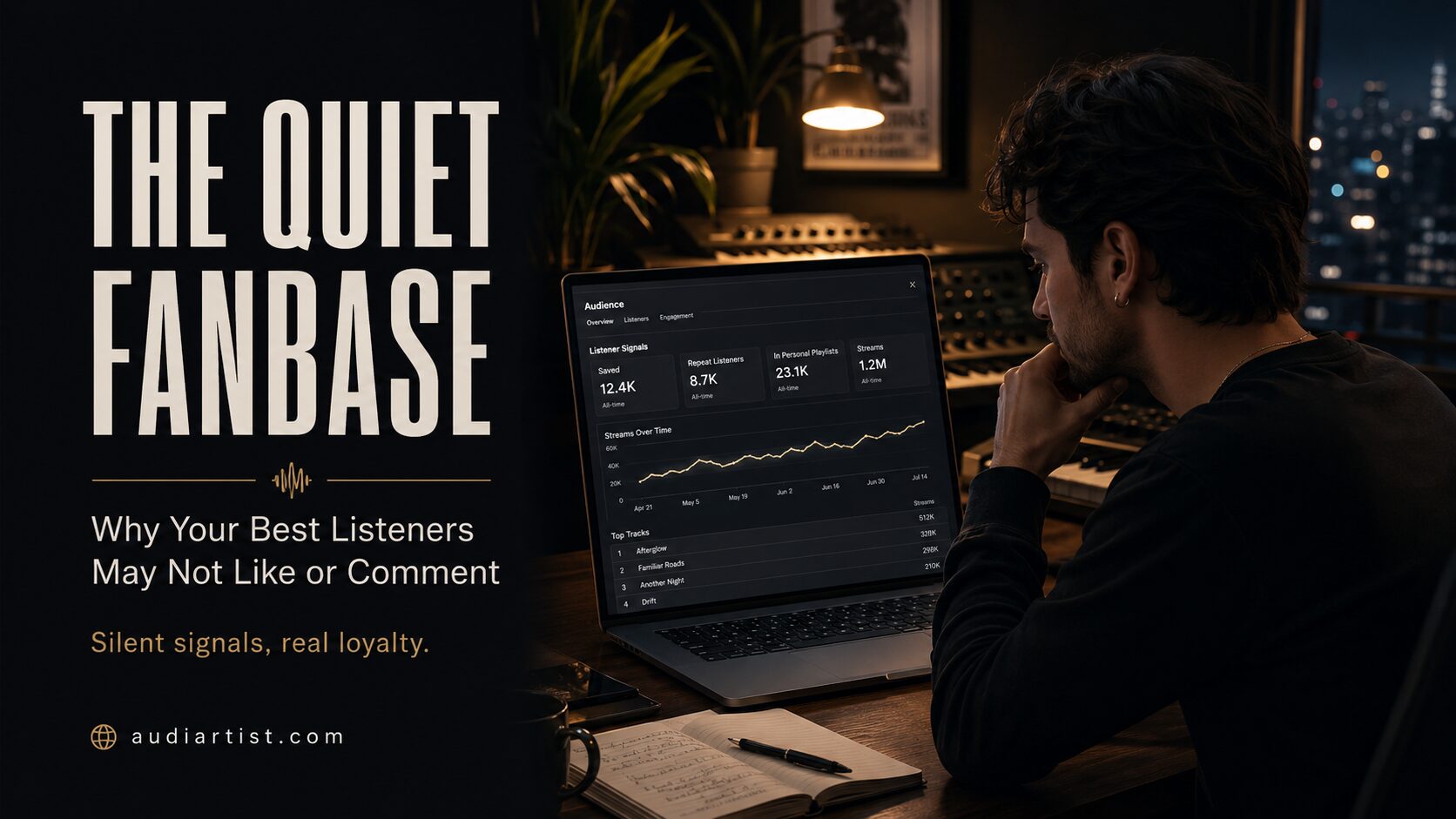

For independent artists, this can be difficult to accept. The modern music world teaches musicians to look for visible signals: hearts, comments, reposts, playlist screenshots, follower counts, public reactions, and social media applause. If a post is quiet, it feels like the audience is absent. If a song receives streams but nobody says anything, it feels like nobody cares. If listeners return but do not engage publicly, the artist may mistake loyalty for silence.
But music does not always create noisy behavior. In fact, some of the strongest listener relationships happen privately. People save songs without commenting. They add tracks to personal playlists without tagging the artist. They replay a song during a night drive, a breakup, a work session, a walk, a gym routine, a train ride, or a quiet morning, and the artist never sees the moment. The connection is real, even if it leaves no public trace.
This is the quiet fanbase. It is one of the most misunderstood forces in independent music promotion. These listeners may not act like superfans on social media, but they can become the foundation of long-term growth. They return. They save. They listen deeply. They recognize the artist’s name. They may not shout, but they stay.
The challenge for artists is learning how to identify these silent signals, respect them, and build a strategy that does not depend only on loud engagement.
The Myth of the Loud Fan
Social media has created a very narrow image of what a fan looks like. A fan likes every post, comments instantly, shares every release, tags friends, sends messages, joins live streams, and publicly supports the artist at every opportunity. These fans exist, and they are valuable. But they are not the only kind of fan.
Many listeners are private by nature. They do not comment often. They may not want their music taste displayed publicly. They may use streaming platforms more than social media. They may listen during personal moments they do not want to explain. They may support the music quietly because that is simply how they consume art.
This matters because artists can become discouraged when public engagement does not match private listening. A song may be doing meaningful work in people’s lives while the artist’s Instagram post receives only a handful of likes. The silence can feel like failure, but the deeper signals may tell another story.
The loudest fans are easy to notice. The quiet fans are easier to miss. Yet for many independent artists, the quiet fanbase can be larger, more stable, and more emotionally connected than the visible audience suggests.
Streams Without Comments Do Not Mean Empty Attention
A common mistake is assuming that if people do not comment, they are not engaged. That logic works poorly for music. Listening is not the same as watching a funny video or reacting to a public debate. Music often becomes part of private life. It enters headphones, cars, kitchens, bedrooms, workouts, study sessions, and emotional routines.
When someone listens to a song repeatedly without commenting, that can still be a strong signal. The listener may not feel the need to announce the connection. They may simply return to the track because it fits a mood or moment. In many cases, repeated listening is more valuable than a quick public reaction.
A comment can be impulsive. A save can be intentional. A like can be casual. A replay can be personal. A share can be performative. A private playlist add can mean that the song has entered someone’s daily life.
Artists need to stop treating public interaction as the only proof of impact. In streaming culture, some of the most meaningful behaviors happen where nobody else can see them.
The Save Is Often Louder Than the Comment
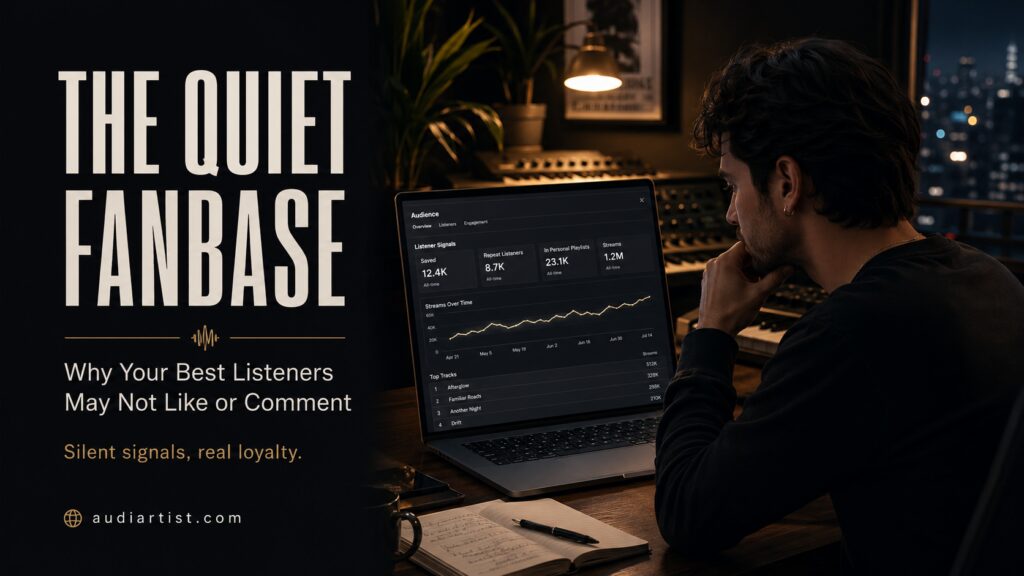
For music promotion, saves are one of the clearest signs of silent attachment. When a listener saves a track, they are saying they want access to it again. That action may not flatter the artist publicly, but it matters strategically.
A listener who saves a song may be more valuable than someone who likes a release post without ever pressing play. This is where artists need to separate social activity from music behavior. The audience that reacts to content is not always the same audience that becomes loyal to the catalog.
A strong save rate can reveal that the song is connecting even when the comments section is quiet. It suggests that listeners are not only passing through. They are keeping the track. They may return later, add it to playlists, or recognize the artist on the next release.
For independent artists, saves are a quiet vote of confidence. They do not create the dopamine hit of a public compliment, but they may carry more long-term value.
Personal Playlists Are Private Fan Rooms
One of the most powerful silent signals is the personal playlist add. When a listener adds a song to their own playlist, the track enters a private environment. That playlist might be for driving, studying, heartbreak, workouts, late nights, parties, meditation, travel, romance, nostalgia, or focus. The artist may never know the exact context, but the action is meaningful.
A personal playlist add is different from passive playlist exposure. It means the listener made a choice. They gave the song a place. It is no longer only part of an algorithmic feed or curator selection. It has become part of someone’s personal listening architecture.
This is why artists should track playlist adds carefully after a release. A song that continues to enter personal playlists after the first week may have catalog potential. It may be finding listeners who do not post publicly but still want the track close.
In a culture obsessed with visible engagement, personal playlists are quiet rooms where real fan relationships often begin.
Repeat Listening Is a Deeper Signal Than First Attention
First attention is easy to overvalue. A listener clicks once. A post gets a spike. A video performs well. A playlist placement creates a sudden jump. These moments feel exciting, but they do not always create lasting movement.
Repeat listening is different. It shows that the song has survived the first encounter. The listener came back. That return is one of the strongest signs that a track is doing its job.
Artists should pay attention to whether streams continue after the initial campaign slows down. If a song keeps receiving small but stable plays, it may be building quiet retention. If listeners return across several weeks, the track may have a stronger emotional or functional role than the public reaction suggests.
Some songs are not explosive. They are durable. They do not create loud reactions in the first 24 hours, but they stay in people’s lives. For independent artists, durability can be more important than a short flash of attention.
Why Quiet Fans Often Matter More Than Casual Followers
Follower count can be misleading. An artist may have thousands of social followers who rarely listen, and a smaller group of quiet streaming listeners who return often. The first group looks impressive. The second group may be more valuable.
A casual follower can like a post because the image looks good, because the caption is funny, or because they know the artist personally. That does not mean they listen. A quiet fan may never interact on social media, but they may play the artist’s music every week.
This distinction is essential for long-term music promotion. Artists should not ignore social growth, but they should not confuse visibility with loyalty. The real question is not only “How many people follow me?” It is also “How many people return to the music?”
The quiet fanbase may not inflate public confidence, but it can create a stronger foundation for future releases. These listeners are already connected to the sound. They may be easier to activate when the next single arrives, especially if the artist learns how to reach them more directly.
The Silent Listener Still Needs a Path
Quiet fans may not comment, but they still need a clear path to stay connected. If an artist relies only on social media engagement, many silent listeners will remain invisible and unreachable. The challenge is to create low-pressure ways for them to continue the relationship.
This can happen through artist profiles, playlists, YouTube subscriptions, email lists, Bandcamp follows, website updates, private communities, or direct fan channels. The key is to give listeners options that do not require public performance.
Not everyone wants to comment under a post. Some people would rather save a playlist, subscribe quietly, receive occasional updates, or follow the artist on a streaming platform. Artists should respect these different levels of engagement.
A smart fanbase strategy does not force every listener to behave the same way. It creates several doors, from quiet listening to deeper support.
Why Some Genres Naturally Create Quiet Fanbases
Not all genres produce the same type of public engagement. Some styles are built for social expression, dance trends, identity signaling, or visual performance. Others live more privately. Lo-fi, ambient, cinematic music, deep electronic tracks, instrumental music, study music, intimate singer-songwriter releases, and certain forms of underground electronic music often generate quieter behavior.
A listener may use lo-fi music to focus, but not comment on every post. They may listen to cinematic music while writing, working, or imagining scenes. They may play deep house or techno during late-night routines without publicly discussing it. They may return to ambient music during private emotional moments.
This does not mean these genres cannot build strong communities. It means the engagement signals may look different. The artist should not judge a quiet genre by the social behavior of a highly performative one.
Understanding genre behavior helps artists avoid false disappointment. A quiet reaction may be normal for the type of music being released.
How to Identify a Quiet Fanbase
A quiet fanbase leaves patterns rather than noise. Artists should look for stable daily streams, repeat listening, saves, personal playlist adds, profile visits, follower growth on streaming platforms, return listeners, email signups, YouTube watch time, and countries or cities that keep appearing across releases.
The pattern matters more than one isolated number. A song that receives steady plays every day from the same territories may be building a base. A track that continues gaining personal playlist adds after release week may be finding real listeners. A small but consistent rise in artist profile streams can suggest that people are exploring beyond one song.
Artists should also compare quiet signals across releases. If the same type of song repeatedly generates saves, that is important. If one country keeps responding, that is worth studying. If one playlist mood consistently creates listener retention, that can guide future pitching.
The quiet fanbase is not invisible. It simply speaks through behavior rather than applause.
Do Not Punish Listeners for Being Quiet
Artists sometimes express frustration publicly when people do not like, comment, share, or support visibly. The frustration is understandable, but the message can backfire. A listener who enjoys the music privately may feel pressured, judged, or unwelcome.
Music fans do not owe public performance. Support can take different forms. A person who listens every week is supporting the artist, even if they never write a comment. A person who saves a song is supporting the artist. A person who adds a track to a private playlist is supporting the artist. A person who quietly sends the song to a friend is supporting the artist.
Instead of scolding quiet listeners, artists should invite deeper connection gently. They can thank people for listening, explain how saves help, encourage playlist adds, ask thoughtful questions, or offer direct ways to stay updated. The tone should feel welcoming, not accusatory.
Fans are more likely to move closer when they feel appreciated, not when they feel guilty.
Create Content for Quiet Listeners Too
Much music content is designed to provoke visible reaction. That can be useful, but it is not the only approach. Quiet listeners may respond better to content that deepens the experience rather than demands interaction.
This could include the story behind the track, a calm studio note, a lyric explanation, a mood visual, a playlist built around the song’s atmosphere, a short production breakdown, a personal reflection, an alternate version, or a listening recommendation such as “play this late at night” or “for headphones and quiet rooms.”
Content for quiet fans should make the music feel more meaningful. It should give listeners a reason to return, save, or understand the track differently. It does not always need to chase comments.
A post that creates five saves may be more valuable than a post that creates twenty casual likes. The artist has to decide what kind of action matters most.
Use Playlists to Serve Silent Listening Habits
Playlists are one of the best tools for quiet fanbases because they fit how many people actually listen. A fan may not comment, but they may follow a playlist. They may use it while working, driving, studying, relaxing, or discovering similar music. This creates a softer, more natural relationship.
Artists can build playlists around moods connected to their sound. A lo-fi artist can create study or night playlists. An electronic producer can build late-night club, deep focus, or sunrise sets. A cinematic composer can build atmospheric, trailer-style, or emotional instrumental collections. A singer-songwriter can create intimate acoustic playlists.
These playlists help quiet listeners stay close without needing constant social interaction. They also position the artist inside a broader listening world, which can make the project easier to understand.
For independent artists, playlists are not only promotional tools. They can become quiet community spaces.
The Quiet Fanbase Can Power Long-Term Catalog Growth
One of the strongest advantages of a quiet fanbase is catalog behavior. Loud attention often focuses on the latest release. Quiet listeners may move through older songs slowly. They discover one track, save it, then explore another weeks later. Over time, they can create deeper catalog activity than a short promotional spike.
This is why artists should make older songs easy to discover. Artist playlists, pinned tracks, YouTube organization, website pages, smart links, and clear release descriptions can guide quiet listeners through the catalog. A person who likes one song should have an obvious next step.
Catalog growth is especially important for independent artists. A career does not depend only on the newest single. It depends on whether each song strengthens the world around the artist. Quiet fans often understand that world gradually.
A listener who explores the catalog in private may become more loyal than someone who reacts loudly once and disappears.
How to Speak to Quiet Fans Without Making It Awkward
Artists can encourage silent listeners to take helpful actions without sounding desperate. The key is to be direct, respectful, and specific.
Instead of demanding comments, an artist can explain that saving the track helps them understand which songs are connecting. Instead of asking people to “support the movement” in vague terms, the artist can invite them to add the song to a playlist if it fits their mood. Instead of complaining about the algorithm, the artist can thank listeners who keep returning.
The language should feel calm and human. “If this track has a place in your night playlist, save it for later” is more natural than “Please like, comment, share, and stream now.” The first sentence understands listening behavior. The second sounds like a checklist shouted into the wind.
Quiet fans often respond to invitations that respect their privacy. They do not need pressure. They need a simple next step.
Measure the Right Kind of Growth
If an artist has a quiet fanbase, the scoreboard needs to change. Public engagement remains useful, but it should not be the only measure of success. The artist should watch saves, repeat listeners, playlist adds, profile streams, catalog plays, direct traffic, email growth, watch time, and long-term streaming stability.
These metrics may feel less glamorous than viral comments, but they reveal something deeper: whether the music is becoming part of real listening habits.
A release that creates a modest number of loyal listeners may be more important than a post that generates temporary attention. Over time, those loyal listeners can become the base that supports new releases, merchandise, live shows, crowdfunding, direct sales, and word of mouth.
The quiet fanbase does not always create the fastest growth. It often creates the most stable growth.
Do Not Confuse Silence With Absence
Independent artists need encouragement, and visible engagement can provide it. A comment can lift the whole day. A share can create hope. A message from a listener can remind the artist why the work matters. But the absence of these signals does not automatically mean the absence of impact.
Some songs travel quietly. Some listeners care privately. Some fan relationships develop slowly, without public performance. This is not a weakness. It is part of how music lives.
The artist’s job is to learn how to read both worlds: the visible audience and the silent one. The visible audience creates public momentum. The quiet audience creates private depth. A strong career needs both.
When artists understand this, they stop chasing only applause and start building around real behavior.
The Quiet Fanbase Is Still a Fanbase
A quiet fanbase may not give the artist instant validation, but it can give something more durable: repeated attention. In a music landscape overflowing with releases, repeated attention is precious. It means the song was not only heard. It was kept.
For independent artists, this changes the way promotion should be judged. The question is not only “Did people react?” It is also “Did people return?” Not only “Did they comment?” but “Did they save?” Not only “Did the post look active?” but “Did the music become part of someone’s life?”
The best listeners are not always the loudest. Some will never announce themselves. They will simply keep listening.
And sometimes, that quiet loyalty is the beginning of everything.
Discover more independent music promotion strategies, artist resources, and playlist insights on Audiartist.