
That world has not completely disappeared, but it has become much rarer. In 2026, labels are no longer looking only for talent. They are looking for proof. A strong voice still matters. A great song still matters. A distinctive sound still matters. But the question behind the meeting has changed.
Labels now want to know what already exists around the music.
Is there a real audience? Are people engaging? Does the artist post consistently? Do the visuals make sense? Is there a clear identity? Are the streaming numbers organic? Does the artist understand release strategy? Can they move people without a major marketing budget? Are they building momentum, or simply uploading songs into the void and hoping someone important gets emotional in a conference room?
The modern label is not only signing songs. It is signing systems. And independent artists who already know how to promote themselves are becoming far more attractive than artists who arrive with talent alone.
The Label Business Has Become More Risk-Aware
Signing an artist has always involved risk. Labels invest time, money, staff, marketing attention and reputation into artists who may or may not connect with the public. What has changed is the amount of data available before a deal is even discussed.
In the past, an A&R team had to rely heavily on instinct, live shows, demos, local buzz, radio response, press coverage and industry relationships. Those signals still matter, but now they sit alongside streaming analytics, social engagement, playlist activity, short-form video performance, audience geography, save rates, follower growth, content frequency and direct fan behavior.
This does not mean labels have stopped caring about taste. Good A&R still requires ears, cultural instinct and the ability to recognize something early. But labels are less willing to develop artists from absolute zero when so many independent musicians are already building their own audience.
From the label’s point of view, an artist with traction lowers the risk. The music has already shown signs of connection. The audience is not theoretical. The artist has already demonstrated effort, consistency and some level of market awareness.
In a crowded music economy, that matters.
A Great Song Is No Longer Enough
This is the sentence many artists hate, and understandably so. Music should be about music. A great song should be enough. In a fairer universe, perhaps it would be. Unfortunately, the modern industry is not a poetry workshop with better lighting.
A great song can still open doors, but it rarely carries the whole weight of an artist project by itself. Labels need to understand whether the song belongs to a larger identity. Is there a world around it? Is the artist visually recognizable? Does the audience know what the project stands for? Is the sound repeatable without becoming predictable?
One good track can attract attention. A coherent artist project attracts investment.
This is why labels look beyond the audio. They are not ignoring the music. They are asking whether the music can travel. A track may be strong, but if the artist has no visual direction, no content rhythm, no audience interaction, no release history and no clear positioning, the label has to build everything from scratch.
Some labels can still do that. Most prefer not to unless the music feels impossible to ignore.
Fanbase Has Become a Form of Evidence
Labels are interested in fanbases because a fanbase reveals something a stream count cannot always show. It suggests connection. It shows whether people are willing to return, comment, share, save, follow, buy, attend or talk about the artist without being pushed every time.
A fanbase does not need to be huge to matter. In fact, a smaller but active audience can be more convincing than inflated numbers with no visible relationship behind them. A thousand real supporters may be more valuable than fifty thousand passive followers who behave like decorative furniture.
Labels look for signals of loyalty. Do people comment with genuine interest? Do they ask about upcoming releases? Do they share the music? Do they recognize the artist’s visual world? Do they respond to stories, live sessions, behind-the-scenes moments or personal updates?
These details help labels understand whether the artist has a foundation. A fanbase is not only an audience. It is early proof that the artist can create emotion beyond the song file.
Numbers Matter, But Context Matters More
Streaming numbers, social views and follower counts can attract attention, but labels know that numbers can be misleading. A viral clip may not create long-term listeners. A playlist spike may not generate fans. A large follower count may hide weak engagement. A sudden jump in streams may come from a context that does not translate into real career growth.
This is why labels look at patterns, not just peaks.
They want to see whether the audience is growing consistently. They want to know if listeners save songs, return to the catalog, follow the artist and engage with new releases. They look at where the audience is coming from, which platforms are driving discovery, whether the artist has traction in specific cities or scenes, and whether the numbers make sense when compared across platforms.
An artist with modest but healthy growth can be more appealing than one with one explosive moment and no follow-up. Sustainability matters. Labels are not only asking, “Did this artist get attention?” They are asking, “Can this artist keep attention?”
Visual Identity Has Become Part of the Deal
Music may be the heart of the project, but visual identity is often the first handshake. Before a label representative listens deeply, they may see the artist’s profile photo, cover art, live clip, Reel, press shot, YouTube thumbnail or website banner. The visual world speaks quickly.
Labels are drawn to artists who already understand how they want to be seen. That does not mean every artist needs expensive photography or cinematic videos. It means the project should feel intentional.
A strong visual identity tells the industry that the artist has self-awareness. The colors, styling, artwork, typography, locations, video tone and profile presentation all help define the artist’s world. When those elements are coherent, the music feels easier to position. When they are chaotic, the artist can feel unfinished.
This matters because labels are not only selling songs. They are developing stories, campaigns and identities. An artist who already brings a recognizable visual direction gives the label something to amplify rather than invent.
Consistency Is Now a Professional Signal
Labels pay close attention to consistency because consistency reveals discipline. It shows whether the artist can maintain energy beyond one release, one viral post or one inspired week.
Consistent artists release with intention. They communicate regularly. They keep their profiles alive. They create content around the music. They interact with listeners. They show progress. They do not disappear for eight months, return with one dramatic announcement, then wonder why the algorithm has moved on and changed the locks.
Consistency does not mean posting every hour or turning art into a factory. It means showing up with rhythm. It means building familiarity. It means giving the audience reasons to remain connected between releases.
From a label perspective, this is important because marketing works better when the artist is active. A label can support a campaign, but it cannot fully replace the artist’s presence. The strongest campaigns happen when the artist and the team move together.
Labels Want Artists Who Understand Campaigns
A song release is not just a date on a distributor dashboard. It is a campaign. Labels know this. Increasingly, they expect artists to understand it too.
An artist who knows how to build a release campaign is immediately more valuable. They understand pre-release teasing, visual rollout, short-form video, playlist pitching, behind-the-scenes content, press angles, fan communication, release-week momentum and post-release follow-up.
This knowledge changes the conversation. Instead of arriving with only a track and asking for exposure, the artist arrives with a project that already has movement. The label can then ask how to scale it, not how to rescue it from silence.
In 2026, campaign awareness is part of artist development. Labels are looking for musicians who can think beyond the upload button. The artists who understand that every release needs a story, a schedule and several points of contact with the audience are easier to develop, easier to market and easier to believe in.
Short-Form Video Has Changed A&R Discovery
Short-form video has transformed the way artists are discovered, evaluated and discussed. A song can now gain attention through a performance clip, a studio moment, a lyric fragment, a fan reaction, a live take, a visual trend or a deeply personal story attached to the track.
Labels are watching these signals because they show how music behaves in public. Does the hook catch quickly? Does the artist have camera presence? Does the track inspire people to use it, share it or comment on it? Does the artist understand how to translate sound into a visual moment?
This does not mean every artist must become a comedian, influencer or professional trend chaser. In fact, forced content often has the emotional depth of a wet napkin. But artists do need to understand how video can open doors for their music.
A strong short-form presence gives labels more material to evaluate. It reveals personality, work ethic, audience response and creative flexibility. It also shows whether the artist can help keep a campaign alive once the song is released.
Playlist Activity Still Matters, But It Is Not the Whole Story
Playlist placements remain useful because they show that a song can fit into listening behavior beyond the artist’s existing audience. A good playlist add can bring new listeners, increase saves, support discovery and create momentum around a release.
But labels know the difference between playlist activity and real fan growth. A track can perform well in playlists without anyone remembering the artist. Passive streams may look impressive, but they do not always translate into followers, ticket buyers or long-term audience value.
This is why the best playlist results are connected to broader signals. Are listeners saving the track? Are they visiting the artist profile? Are they exploring the catalog? Is the artist using the placement as part of a wider campaign? Does the playlist fit the artist’s genre, mood and audience?
Labels are not simply looking for playlist adds. They are looking for evidence that playlist exposure can become real momentum.
The Artist Profile Is Now a Business Card
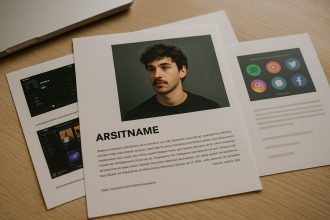
When labels evaluate an artist, the profile matters. Streaming platforms, Instagram, TikTok, YouTube, Bandcamp, SoundCloud, websites and press pages all contribute to the first impression. If those spaces feel abandoned, confusing or inconsistent, the artist appears harder to develop.
A strong artist profile should communicate quickly. Who is this artist? What kind of music do they make? What is the visual identity? What is the latest release? Where is the audience most active? Is there a clear story? Are there quality visuals? Are the links updated?
This is not superficial. It is professional presentation. Labels need to imagine how the artist will look inside a campaign, a pitch deck, a playlist submission, a press article, a festival application or a brand partnership. If the artist’s public presence already works, the label has more confidence in the project.
Artists should treat their profiles like living press kits. Every page should make discovery easier.
DIY Promotion Shows Work Ethic
Promotion is not only about results. It also reveals character. Labels notice artists who are proactive, organized and willing to support their own releases. They notice who builds content, communicates clearly, follows up professionally and learns from each campaign.
This matters because the modern label relationship is not a rescue mission. A label does not want to drag an artist into visibility while the artist sits in the back seat complaining about the route. The best partnerships happen when both sides bring energy.
An artist who already promotes themselves shows that they understand the work required. They may not have a huge budget. They may not have perfect execution. But they have momentum, initiative and a sense of responsibility for their own career.
That is attractive. Talent gets attention. Work ethic builds trust.
Artists Who Build Their Own Audience Have More Leverage
There is another important reason independent artists should learn promotion before dealing with labels, leverage. An artist with an audience has more options. They can negotiate better. They can choose partners more carefully. They can avoid desperate deals built on the fear of being invisible.
When artists arrive with fanbase, data, visuals, content and release momentum, they are not asking a label to create their value from nothing. They are asking the label to expand what already exists.
That changes the balance. The conversation becomes less about permission and more about partnership. What can the label add? Marketing budget? International reach? Playlist relationships? Radio support? Press strategy? Sync opportunities? Tour development? Brand connections? Better infrastructure?
An artist who has already proven demand can ask those questions with more confidence.
The New Label Deal Is Often About Scaling, Not Starting
Modern labels increasingly operate as accelerators. They look for artists who already have a spark, then provide resources to scale that spark into a larger fire. The early development stage often happens independently, through home studios, social platforms, digital distribution, playlisting, community building and self-managed campaigns.
This does not mean labels no longer develop artists. It means development has shifted. Artists are now expected to do more of the early groundwork themselves. By the time a label becomes interested, the artist may already have a sound, a visual identity, a content rhythm and an audience profile.
For some musicians, this feels unfair. They are not wrong. It is demanding. It asks artists to carry creative and promotional responsibilities at the same time. But it also creates power. Artists who learn these skills are not entirely dependent on label approval.
The label is no longer the only possible beginning. It is one possible amplifier.
Authenticity Still Wins, But It Needs Structure
There is a dangerous misunderstanding in modern music promotion. Some artists believe strategy makes them less authentic. They fear that planning content, reading data or building a campaign will turn the music into a product and drain the soul from it.
But authenticity without structure often disappears. A powerful song still needs a path to reach people. A sincere artist still needs clear presentation. A strong identity still needs consistency. Strategy does not have to fake emotion. It can protect it.
The best artists do not promote themselves by pretending to be someone else. They promote themselves by making their real artistic world easier to discover, understand and remember.
Labels want artists who know the difference. Forced virality fades quickly. Real identity, repeated with intelligence, builds careers.
What Labels Are Really Looking For
When labels look at self-promoting artists, they are not only checking numbers. They are reading the whole picture.
They want music with identity. A fanbase with signs of life. Visuals that feel intentional. Content that appears regularly. Streaming data that suggests real engagement. Playlist activity that makes sense. Short-form videos that show potential. A public profile that looks professional. A release history that proves consistency. An artist who understands their own audience.
Most importantly, they want evidence that something is already happening.
The artist does not need to be famous. They do not need perfect numbers. They do not need a giant team. But they need signs of movement. Labels are drawn to momentum because momentum can be developed.
The Independent Artist as a Small Media Company
In 2026, independent artists are often small media companies, whether they like the phrase or not. They create audio, visuals, stories, videos, posts, campaigns, live moments, newsletters, playlist pitches and direct fan communication. The artist project is no longer only a collection of songs. It is a living channel of culture.
This does not mean artists should lose themselves in marketing. The music must remain the center. But around that center, there needs to be movement.
A label looking at an artist today is often asking a simple question, if we add resources to this, will it grow?
The artists who already know how to promote themselves make that answer easier.
The Future Belongs to Artists Who Build Before They Are Chosen
The old dream was to be discovered. The new reality is to become discoverable.
That difference is crucial. Being discovered suggests waiting for someone powerful to notice. Becoming discoverable means building enough music, content, audience activity, visual identity and release momentum that the industry can see the signal clearly.
Labels are still important. They can provide scale, expertise, funding, infrastructure and access that most independent artists cannot easily create alone. But they are increasingly looking for artists who have already done the early work.
For independent musicians, this is both pressure and opportunity. It means the artist must think more strategically from the beginning. But it also means they can build value before anyone signs them. They can grow leverage. They can learn their audience. They can prove their identity. They can decide whether a label is truly useful, rather than treating any offer as salvation.
In 2026, labels are not only asking whether the music is good. They are asking whether the artist knows how to move.
The artists who understand promotion, fanbase, visuals, numbers and consistency are no longer just easier to sign. They are harder to ignore.