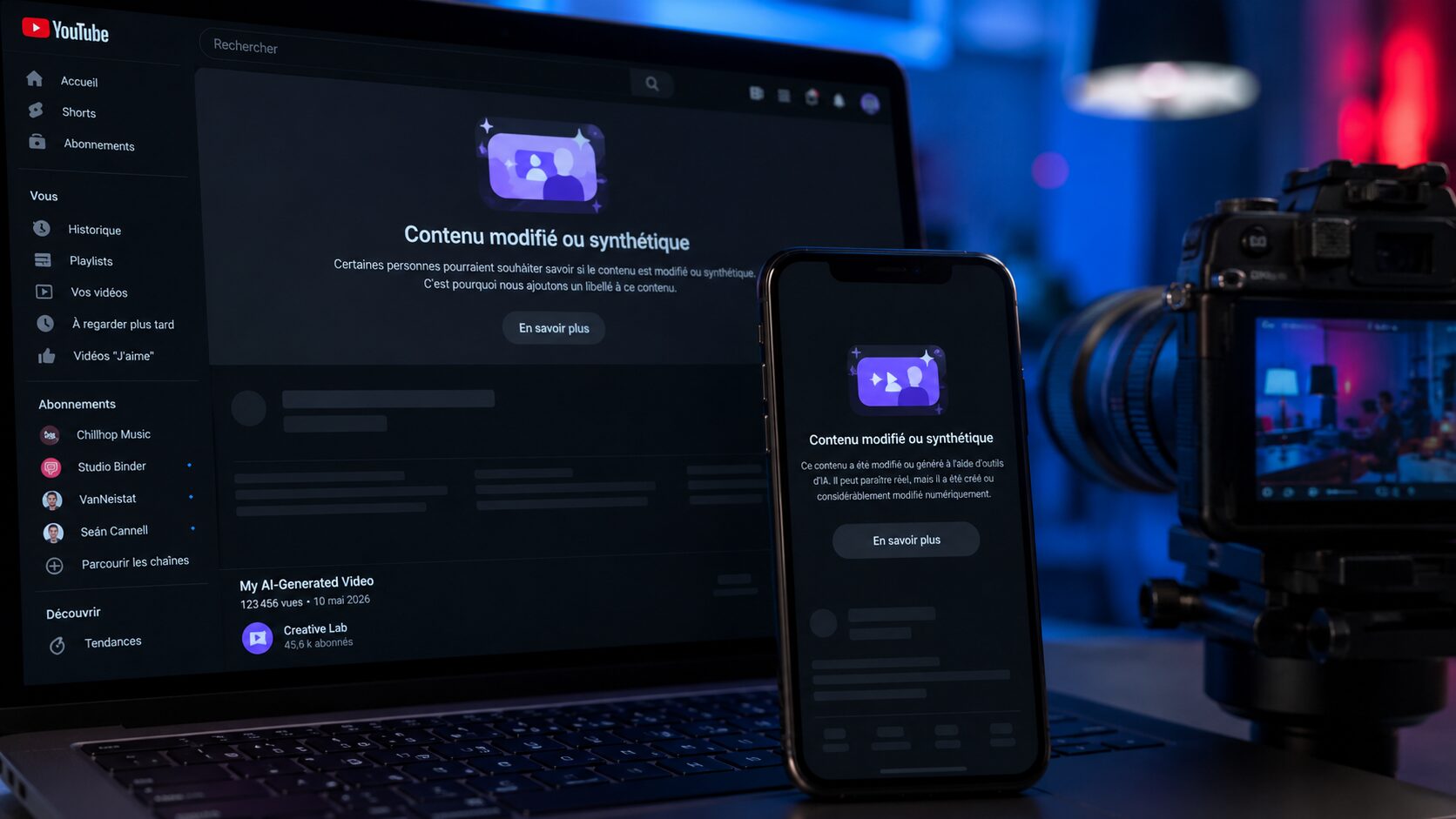

YouTube is moving deeper into AI transparency. The platform is strengthening its labeling system for realistic AI-generated content, using internal signals to automatically apply labels when significant photorealistic AI use is detected, even if the creator has not disclosed it manually.
YouTube’s latest move shows that the platform wants to reduce ambiguity around synthetic realism. The key issue is not whether a creator uses AI. The real issue is whether viewers could reasonably believe that a realistic AI-generated person, place, event, or scene is real.
A New Layer of Transparency for Realistic AI Content
YouTube already requires creators to disclose when they use altered or synthetic content that appears realistic. This includes content that could mislead viewers into thinking they are watching a real person, real location, real scene, or real event. The new step is automatic detection.
Instead of relying only on creator honesty, YouTube can now use internal signals to identify significant photorealistic AI use and apply a label automatically. This changes the balance of responsibility. Creators still need to disclose realistic AI content, but YouTube is making it harder for undisclosed synthetic realism to pass quietly through the system.
For viewers, the goal is simple: more context. For creators, the message is equally clear: if a video uses realistic AI in a meaningful way, transparency is becoming less optional.
Why Music Videos Are Directly Concerned
Music videos are one of the most exposed formats in this debate. Artists increasingly use AI-generated visuals for cinematic storytelling, fake locations, digital characters, surreal performances, fictional crowds, synthetic dancers, stylized cityscapes, and imaginary live sessions. Some of these visuals are obviously artistic. Others are close enough to reality to raise questions.
A music video showing a fictional animated world is unlikely to be treated the same way as a photorealistic video that appears to show a real artist performing in a real location. The distinction is crucial. YouTube is not targeting creativity itself. It is targeting realistic synthetic content that may confuse the viewer about what is real.
This is especially relevant for independent artists who use AI visuals because of budget limitations. A full professional music video can be expensive. AI tools offer a cheaper way to create cinematic content, promotional clips, and visual storytelling. But the more realistic the result, the more important disclosure becomes.
Photorealistic AI Is the Main Red Flag
The strongest focus is on photorealistic AI. This includes visuals that look like real footage, real people, real events, or real-world documentary material. A synthetic singer, a fake interview, an AI-generated crowd, a realistic but fictional concert, or a deepfake-style appearance can all create confusion if they are presented without context.
For music creators, this means the visual strategy matters. A clearly illustrated, animated, manga-inspired, cartoon, surreal, abstract, or stylized video is generally easier for viewers to understand as creative fiction. A realistic AI video that looks like live footage may trigger more scrutiny.
This does not mean artists should stop using AI visuals. It means they need to be smarter about how they use them. The more a video imitates reality, the more disclosure becomes part of responsible publishing.
The Difference Between AI Assistance and AI Realism
One important point should not be misunderstood. AI-assisted production is not automatically the same as realistic synthetic content. A creator may use AI to upscale a video, clean noise, generate subtitles, help with editing, create moodboards, test concepts, or support production workflow. These uses do not necessarily create a realistic synthetic scene that viewers could mistake for reality.
The main concern is meaningful alteration or generation that changes what viewers believe they are seeing. A realistic fake location, a synthetic person presented as real, or a fabricated event created through AI sits in a different category from a basic production tool.
For artists, this distinction is useful. It allows modern tools to remain part of the creative process while reinforcing the need for honesty when AI becomes visible, realistic, and potentially misleading.
Why Labels Could Affect Audience Perception
An AI label does not automatically mean a video is bad, fake in a harmful way, or artistically weak. It simply tells viewers that artificial generation or significant alteration is involved. But perception matters.
Some viewers may appreciate the transparency. Others may become more critical of visuals that feel too synthetic. In music, where emotional connection is essential, audience trust can influence how a project is received. A beautiful AI-generated video may still work if it is presented as an artistic choice. A fake realistic performance may create frustration if viewers feel misled.
This is why disclosure should be seen as part of brand strategy, not only platform compliance. Artists who are clear about their creative process can turn transparency into credibility. Artists who try to hide synthetic realism may risk damaging trust.
What This Means for Independent Artists
Independent artists should take this update seriously, especially if they use AI-generated visuals for music promotion. The safest approach is to separate stylized creativity from realistic simulation.
If the visual universe is clearly illustrated, animated, dreamlike, surreal, or graphic, the audience usually understands that it belongs to an artistic world. If the video looks like real camera footage, shows realistic humans, or simulates real events, the creator should expect closer platform attention.
This is not necessarily a disadvantage. Many artists already build strong visual identities through non-photorealistic styles: animation, manga, 3D stylization, lo-fi illustration, abstract motion design, collage, retro aesthetics, VHS textures, lyric videos, and graphic art direction. These approaches can feel more distinctive than fake realism, and they reduce the risk of confusing the viewer.
Music Marketing Needs a New Visual Discipline
The rise of AI video tools has created a temptation: generate everything, publish quickly, and chase attention. But serious artist development requires more discipline. Visuals should support the music, not turn the project into a synthetic content machine.
A music video should strengthen the artist’s identity. It should communicate mood, genre, emotion, and intention. If AI is used, it should serve the concept, not replace it. A cinematic visual without artistic direction is just decoration. A realistic AI video without transparency can become a trust problem.
For musicians, the best strategy is to think like a creative director. Choose a visual language. Keep it coherent. Be honest about synthetic elements when needed. Avoid fake documentary realism unless the concept clearly requires it and the disclosure is handled properly.
Why Platforms Are Moving Toward AI Disclosure
YouTube’s update is part of a wider industry shift. Streaming platforms, social networks, distributors, and video services are all facing the same problem: generative AI can create realistic media at massive scale. Without labels, viewers may struggle to distinguish real footage from synthetic material.
This has consequences for news, politics, celebrity culture, advertising, music promotion, fan engagement, and artist branding. A fake performance, fake public appearance, fake quote, or fake collaboration can spread quickly if it looks convincing enough.
Music is not isolated from this risk. Artists already deal with impersonation, fake profiles, AI-generated tracks, voice cloning, and misleading uploads. Visual AI adds another layer. Labels are one way platforms try to rebuild context around what viewers are watching.
The Smart Path for Artists Using AI Visuals
Artists should not panic. AI visuals can still be powerful when used with taste and direction. The key is to avoid confusion.
Use stylized visuals when possible. Make the artistic universe obvious. Keep branding consistent. Avoid presenting synthetic realism as documentary reality. Do not use AI to imitate real people without permission. Be careful with fake live performances, fake interviews, fake crowds, and fake locations that could mislead viewers.
Most importantly, treat transparency as part of professionalism. The artists who will benefit most from AI are not those who hide it. They are those who use it intelligently, creatively, and responsibly.
A Turning Point for AI in Music Video Culture
YouTube’s stronger AI labeling system marks a turning point for visual music promotion. The platform is not closing the door on AI creativity. It is drawing a line around realistic synthetic content and viewer transparency.
For artists, this creates a new creative rule: if your AI visual looks like fantasy, make it beautiful. If it looks like reality, make it clear.
The future of music videos will not be defined only by technology. It will be defined by taste, trust, identity, and creative honesty. In a world where almost anything can be generated, the most valuable thing an artist can offer may still be a clear human intention.