
A Free Wah Effect With Modern Control and Dirty Character
Some effects have a sound that instantly changes the attitude of a track. A wah pedal is one of them. It can make a guitar talk, give a synth a vocal movement, add funk to a rhythm part, or turn a simple loop into something more expressive. Dystopian Waves Wah Pedal brings that classic filter movement into the DAW with a modern, flexible workflow built for producers, guitarists, beatmakers, and sound designers.
This is not only a digital version of a foot-controlled wah. It is a creative filter effect with manual movement, LFO modulation, adjustable sweep range, resonance control, distortion options, dry/wet balance, and preset management. For a compact Windows VST3 plugin, it offers enough control to move between subtle groove, aggressive tone shaping, rhythmic automation, and experimental sound design.
What Is Dystopian Waves Wah Pedal?
Dystopian Waves Wah Pedal is a wah-style audio effect plugin inspired by classic filter pedal behavior. It was originally developed as a Max for Live device, then released as a Windows VST3 plugin so producers could use it in a wider range of compatible DAWs.
At its core, the plugin uses a resonant moving filter. The user can control the sweep manually, like a traditional wah pedal, or let the plugin move automatically with an LFO. This gives it two personalities: performance-style expression and rhythmic modulation.
A Wah Effect Designed for More Than Guitar
The obvious place to start is guitar. Wah effects have been part of guitar tone for decades, from funk rhythm parts to psychedelic leads and aggressive rock solos. Dystopian Waves Wah Pedal can bring that expressive sweep into a DAW-based setup without needing an external pedal chain.
But the plugin becomes more interesting when used outside the usual guitar context. On synths, it can create vowel-like movement and animated filter sweeps. On drums, it can turn loops into rhythmic, talking grooves. On bass, it can add growl and movement. On vocals, chops, atmospheres, and FX buses, it can become a tool for transitions, tension, and sound design.
Manual Mode for Performance Feel
Manual mode gives the plugin its classic wah personality. Instead of relying only on automatic movement, producers can control the sweep directly and automate it inside the DAW. This is useful for expressive passages where the movement needs to follow the performance, not simply lock to a fixed pattern.
For guitars and synth leads, manual control can make a part feel more alive. Small movements can add emotion, while larger sweeps can create dramatic emphasis before a drop, hook, fill, or transition.
LFO Mode for Rhythmic Movement
LFO mode turns Wah Pedal into an auto-wah and rhythmic filter modulator. This is where electronic producers and beatmakers will probably have the most fun. Instead of drawing filter automation by hand, the plugin can create repeated movement that locks into the groove of the track.
Used subtly, it can make a sound pulse and breathe. Pushed harder, it can create sharp rhythmic filter movement, almost like a hybrid between wah, tremolo energy, and modulation effect.
Sound and Character
Dystopian Waves Wah Pedal has a direct, animated, and slightly gritty character. It can be smooth when the resonance is controlled, but it can also become sharp and expressive when pushed harder. The filter movement has the familiar vocal quality that makes wah effects so recognizable, especially when sweeping through midrange-heavy material.
The addition of distortion types gives the plugin more personality. A clean wah can be useful, but distortion before or after filter movement can make the effect feel more aggressive, dirty, and present. This is especially useful on guitars, synth basses, acid-style lines, drum loops, and experimental textures.
Adjustable Sweep Range and Resonance
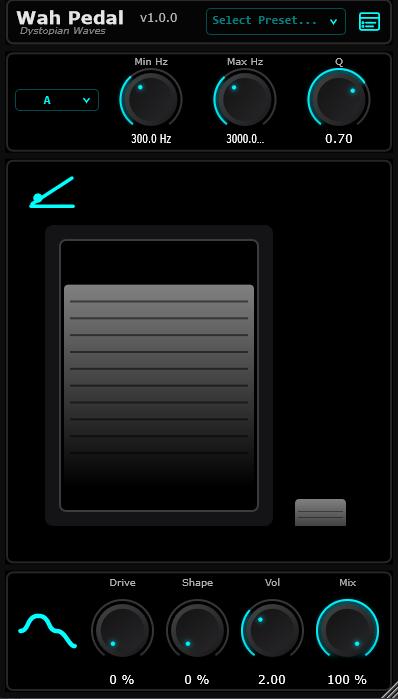
The sweep range controls allow producers to decide where the wah movement happens in the frequency spectrum. A lower range can create darker, throatier movement, while a higher range can sound brighter and more cutting. The Q control adjusts the resonance, making the wah effect smoother or sharper depending on the production context.
This is important because not every source needs the same wah behavior. A guitar may need a vocal midrange sweep. A drum loop may need a more controlled range to avoid harshness. A synth may benefit from a wide, exaggerated movement. The plugin gives enough control to make those decisions by ear.
Creative Uses in Music Production
Guitar and Bass Processing
Wah Pedal can add expression, movement, and bite to guitar and bass tracks. It is useful for funk rhythm parts, rock leads, psychedelic textures, and aggressive filtered tones.
Synths and Electronic Music
On synths, the plugin can create talking filter movement, rhythmic sweeps, acid-inspired motion, and animated lead textures. It works well in house, techno, electro, synthwave, and experimental electronic production.
Drum Loops and Percussion
Placed on drum loops, Wah Pedal can add groove and movement. LFO mode can turn static percussion into a rhythmic filter pattern, while dry/wet balance keeps the original impact under control.
Vocal Chops and Transitions
For vocal chops and FX transitions, the plugin can create movement before a chorus, drop, or breakdown. Automating the sweep manually can make transitions feel more performed and less mechanical.
Why Wah Pedal Is Worth Trying
Dystopian Waves Wah Pedal is worth trying because it takes a familiar effect and gives it enough modern control to be useful beyond traditional guitar processing. Manual control gives it performance character, LFO mode gives it rhythmic energy, and distortion options add bite when a sound needs more attitude.
It is also a focused plugin. It does not try to become a giant modulation suite. It does one job clearly: create expressive wah-style movement. In a production workflow, that kind of focus can be refreshing. Load it, set the sweep, adjust the resonance, choose the movement mode, and the sound immediately starts behaving differently.
Who Is Dystopian Waves Wah Pedal Best Suited For?
Dystopian Waves Wah Pedal is best suited for Windows-based producers, guitarists, beatmakers, and sound designers who want a quick way to add expressive filter movement to audio tracks.
It will be especially useful for guitar processing, synth sound design, funk-inspired rhythms, electronic music, hip-hop loops, rock production, psychedelic textures, cinematic transitions, and experimental audio effects. If a sound feels too static, Wah Pedal can give it motion, bite, and a more animated personality.
Compatibility and Workflow
Dystopian Waves Wah Pedal is available as a Windows VST3 plugin. It can be used inside compatible Windows DAWs such as FL Studio, Studio One, Cubase, Reaper, Ableton Live, Cakewalk, and other hosts that support VST3 audio effects.
The workflow is simple: insert the plugin on an audio track, set the minimum and maximum sweep frequencies, adjust the Q resonance, choose manual or LFO control, add distortion if needed, then balance the dry/wet mix and output gain. Preset saving and recall also make it easier to keep favorite settings for future sessions.
Official Website and Download Link
Dystopian Waves Wah Pedal is available from the official Dystopian Waves Gumroad page.
Official product page:
https://dystopianwaves.gumroad.com/l/mwahpedal
Conclusion: A Classic Wah Idea Rebuilt for Modern DAW Sessions
Dystopian Waves Wah Pedal brings a familiar sound into a flexible modern workflow. It can behave like a classic expressive wah, an auto-wah, a rhythmic modulation effect, or a gritty sound design processor depending on how it is used.
For producers who want movement, attitude, and filter-based expression without building complicated automation chains, this plugin is a strong little tool to keep nearby. Try it on a guitar first, then break the rules. Put it on drums, synths, vocal chops, basslines, and FX transitions. That is where the wah starts having fun.
Product Description
Dystopian Waves Wah Pedal is a free Windows VST3 wah-style audio effect plugin inspired by classic filter pedal behavior. It features manual and LFO-controlled wah modes, adjustable sweep range, Q resonance control, four distortion types, output gain, dry/wet mix, preset saving and loading, and real-time filter movement for guitars, synths, drums, bass, vocals, and creative sound design.
Official website or download link:
https://dystopianwaves.gumroad.com/l/mwahpedal