
Lumen by pixelsncodes: A Free Wavetable Synth VST3 That Turns Images Into Sound
Lumen by pixelsncodes is a free VST plugin with a concept that instantly stands out: it turns images into playable wavetable sounds. Drop a photo into the instrument, play a note, and the synth reads visual data as sound material, creating timbres that feel somewhere between visual art, wavetable synthesis and experimental sound design.
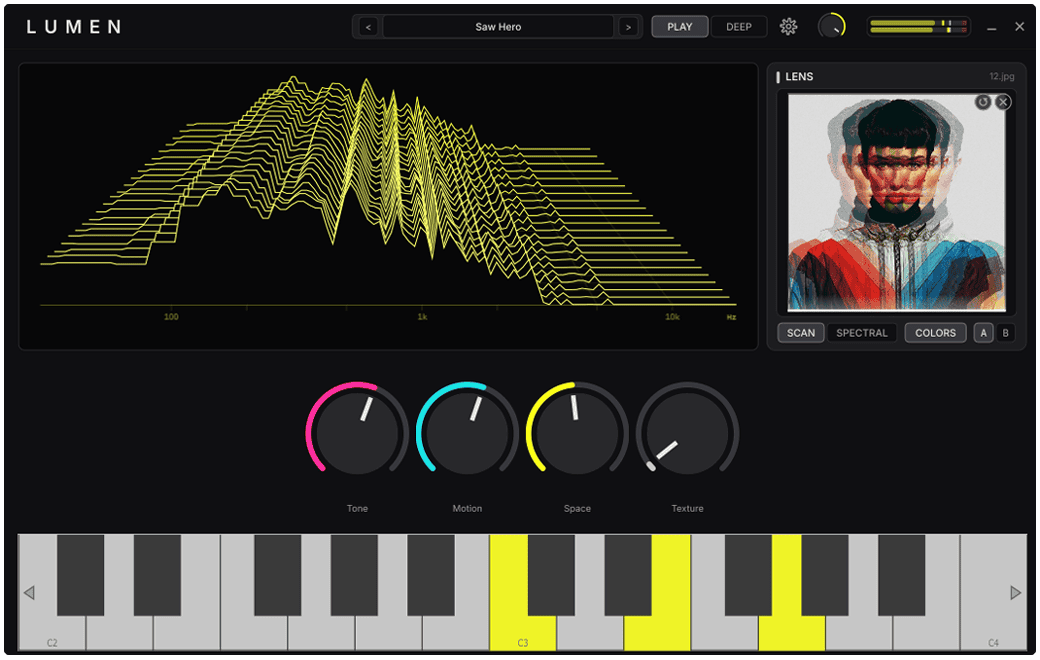
This is not another basic subtractive synth with a new logo and three suspiciously familiar presets. Lumen is a free wavetable synth VST3 for Windows, built around an image-to-tone engine called the Lens, two wavetable oscillators, macro-driven performance controls, modulation, effects and a live spectral waterfall display.
What Is Lumen by pixelsncodes?
Lumen is a free open-source wavetable synthesizer created by pixelsncodes, the project name used by Kazi Ahmed. The plugin is designed to make images playable. Its Lens engine reads picture data and converts it into wavetable movement, harmonic behavior and macro changes.
The synth is available for Windows as a VST3 plugin and standalone app. It is currently listed as version 1.0.0, with macOS in development but not yet released. That distinction matters: at the moment, Lumen is a Windows tool, not a cross-platform plugin.
Official website: Visit the Lumen official page
Download: Download Lumen from the official page
Core Concept
The main idea behind Lumen is simple and unusual: a picture becomes part of the sound. The Lens reads an image and uses its brightness, color and detail to shape the synthesizer engine. The same image produces the same result, which means the process is creative but still recallable.
This gives producers a different way to design sounds. Instead of starting with only classic waveforms, wavetables or samples, you can start with a photograph, graphic, artwork, texture or abstract image. The result is not meant to be predictable in a traditional synth-programming sense. It is meant to invite exploration.
For sound designers, that is the appeal. Lumen encourages happy accidents, but gives enough control to shape them into basses, leads, pads, keys and textures.
Main Features
- Free wavetable synth VST3 for Windows
- Standalone Windows app included
- Image-to-tone Lens engine for turning images into sound
- Two wavetable oscillators with morphing
- Sub oscillator for extra weight
- Noise generator for texture and air
- State-variable filter with drive
- Three ADSR envelopes
- Three LFOs
- Modulation matrix with per-route depth
- Four performance macros: Tone, Motion, Space and Texture
- Drive, chorus, delay and reverb in the FX chain
- Built-in limiter on the output
- Live spectral waterfall display
- 32 factory presets across bass, leads, pads, keys and textures
Sound and Creative Direction
Lumen is made for producers who like modern wavetable synthesis but want a more visual and experimental route into sound creation. Its personality is digital, colorful and animated, with a strong focus on motion.
The factory bank covers basses, leads, pads, keys and textures. That makes it more immediately usable than a pure sound design experiment. You can load it, play it and get musical results quickly, then go deeper when the image engine starts whispering “drop a weird photo in here” like a polite little goblin.
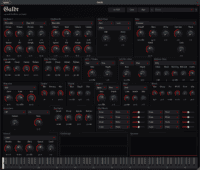
The Play view keeps the workflow simple, with four macro controls and the Lens panel visible. The Deep view opens the full synth engine, including oscillators, filter, envelopes, LFOs, modulation and effects.
The Lens: Image-to-Wavetable Sound Design
The Lens is the most distinctive part of Lumen. It turns image data into synthesis material. According to the official page, it reads the actual bytes of a picture and converts that information into a wavetable, harmonic structure and macro gesture.
The process is deterministic, so the same image creates the same result. That is important for serious production because it means an image-based patch can be saved and recalled reliably, even if the original image file is later moved or deleted.
The Lens offers different ways to interpret the image. Scan mode reads the picture as waveform material, while Spectral mode treats it more like a spectrogram-style source. The Colors option lets the overall color character of the image influence the four macros.
Oscillators and Synthesis Engine
Lumen includes two wavetable oscillators with smooth morphing between frames. These oscillators are the core sound generators, and the image engine can feed them with new material.
The synth also includes a sub oscillator and a noise source. This makes the engine more practical for real music production, because image-driven wavetables can be exciting but sometimes need low-end support or additional texture.
The voice section includes poly, mono and legato modes, with glide for sliding basses and leads. That makes Lumen useful for more than atmospheric pads. It can handle melodic lines, mono synth basses, evolving chords and playable performance sounds.
Macros and Performance Control
Lumen’s four macros are Tone, Motion, Space and Texture. They are designed to shape several parts of the patch at once, giving producers a faster way to perform or automate sound changes without opening every deep parameter.
This is a smart design choice. Image-based synthesis can become complex very quickly, and too many controls can turn creativity into menu archaeology. The four macro system keeps the instrument playable while still giving access to deeper programming when needed.
For DAW automation, these macros are especially useful. A pad can slowly open, a texture can become more unstable, or a lead can move from clean to strange across a section of a track.
Modulation and Movement
Lumen includes three ADSR envelopes, three LFOs and a modulation matrix. The modulation system connects envelopes, LFOs, MIDI sources and macros to synth parameters, allowing patches to move in more detailed ways.
This is important because wavetable synthesis often shines when it evolves. A static wavetable can be interesting, but a moving wavetable can become a full musical texture. Lumen’s modulation setup gives producers the tools to create that motion without needing external plugins.
MIDI Learn is also included, allowing hardware controls to be mapped directly to parameters. That makes the synth more performance-friendly, especially for producers who prefer twisting knobs instead of drawing automation like a sleep-deprived accountant.
Effects and Output Stage
The built-in FX chain includes drive, chorus, delay and reverb, followed by a limiter. These effects are practical rather than decorative. They help turn raw wavetable material into finished synth sounds that can sit more easily in a track.
Drive can add edge to basses and leads. Chorus can widen pads and keys. Delay can create rhythmic movement. Reverb can push image-based tones into ambient and cinematic spaces.
The limiter acts as a safety ceiling on the output. That is useful for experimental synthesis, where unpredictable timbres can create sudden peaks. Still, producers should control gain properly instead of treating the limiter as a magic helmet.
Factory Presets
Lumen includes 32 factory presets grouped into bass, leads, pads, keys and textures. The official page lists presets such as Sub Zero, Rubber, Neon Growl, Laser, Saw Hero, Slow Aurora, Choir Ghost, Marble Pluck, Pixel Pluck, Static Bloom and Photograph.
The presets help show what the synth can do before users start importing their own images. They also make Lumen more approachable for producers who want to write music quickly and explore the Lens engine later.
- Bass presets for low-end and mono synth parts
- Lead presets for melodic hooks and sharper tones
- Pad presets for evolving atmospheres
- Key presets for plucks, digital keys and melodic layers
- Texture presets for ambient, glitch and sound design work
Compatibility and Technical Requirements
Lumen is currently available for Windows 10 and Windows 11, 64-bit only. The official page provides one ZIP file containing the VST3 plugin and standalone app.
The VST3 file should be copied into the standard Windows VST3 folder, then the DAW must rescan plugins. The standalone version can be launched directly and supports WASAPI out of the box, with ASIO also supported.
- Plugin type: wavetable synthesizer instrument
- Format: VST3
- Standalone app: included for Windows
- Operating system: Windows 10/11, 64-bit
- macOS: in development, not available yet
- Linux: not listed for version 1.x
- Install path: C:\Program Files\Common Files\VST3
Who Should Use Lumen?
Lumen is best suited to producers who enjoy sound design and want a free synth plugin with a genuinely unusual creative angle. It is not the most traditional choice for someone who only needs standard piano, brass or analog bass presets.
- Electronic producers looking for unusual wavetable sounds
- Sound designers who want image-based timbre generation
- Ambient producers creating evolving pads and textures
- Game composers looking for distinctive digital atmospheres
- Cinematic producers building visual, sci-fi or abstract layers
- Glitch, IDM and experimental artists who enjoy unpredictable sources
- Home studio users looking for a free synth VST3 with real personality
Creative Applications
For ambient music, Lumen can turn photos into long evolving pads. Load a landscape or abstract image, use a slow envelope and let Motion control how the tone moves over time.
For bass design, start with one of the factory bass presets, then use the Deep view to control glide, filter movement and drive. The image engine can add movement, but the sub oscillator helps keep the low end grounded.
For cinematic scoring, use Lumen to create tension beds, sci-fi pulses, uneasy drones and digital harmonic layers. Its image-based engine can produce sounds that feel less like ordinary synth presets and more like designed audio objects.
For beatmaking, use shorter pluck or key sounds as melodic hooks. Resample them, chop them, pitch them and layer them with drums. Lumen’s more unusual tones can help a beat stand out without relying on the same recycled loop folder.
Download and License Details
Lumen is available from the official project page with no account and no email capture. The download is provided as a Windows Win64 ZIP file.
The project is open source, and the GitHub repository lists the MIT license. The official page also states that Lumen is free for any use, including commercial music.
Official page: https://www.kaziahmed.net/lumen
Source and releases: https://github.com/pixelsncodes/lumen
Audio Preview
The official Lumen page includes interactive audio previews for the factory presets and the Lens section. Producers can audition basses, leads, pads, keys and textures directly from the page before downloading the plugin.
Listen to the official Lumen audio previews
Production Tips
Start with the factory presets before importing your own images. This helps you understand how Lumen responds musically before the Lens engine sends you into the beautiful swamp of endless experimentation.
Use images with strong contrast if you want more dramatic timbral movement. Smooth images can create softer transitions, while busy or high-detail images can lead to more complex tones.
For pads, increase attack and release, then automate Motion and Space. This can create evolving textures that sit well in ambient, cinematic and electronic arrangements.
For basses, keep the sub oscillator controlled and check the low end in mono. Image-based movement can be exciting, but bass still needs discipline. The low frequencies are not a playground, they are a court of law.
For leads and hooks, automate the four macros instead of constantly changing deep parameters. This keeps the performance musical and easier to arrange inside a DAW.
Development Context
Lumen is also notable because its official page describes it as a project built by a human designer working with an AI coding agent. The developer presents the human role as design, taste and final judgement, with the code and verification process assisted by Claude Code.
That makes Lumen part of a new wave of independent audio tools where software development itself is changing. The important point for producers is that the result is a real VST3 instrument, open source, downloadable, playable and testable inside a DAW.
For music creators, the plugin’s value is not only in how it was built, but in what it allows: a visual route into wavetable synthesis, free access, and a workflow that can generate sounds from personal images, artwork or visual references.
Industry Context
Wavetable synthesis is already one of the dominant sound design methods in modern electronic music. Serum, Vital, Pigments and many other instruments have made moving waveforms central to contemporary production.
Lumen enters that space from a different angle. Instead of focusing only on imported wavetable files or factory shapes, it lets producers use images as sound sources. That gives the synth a more visual identity and makes it especially interesting for artists who think across music, design, games, visuals and multimedia.
This type of free VST plugin matters because it expands what independent producers can explore without a paywall. Not every free synth needs to imitate vintage hardware. Some can open a weirder door and then politely refuse to explain the wallpaper.
Final Verdict
Lumen by pixelsncodes is a highly original free wavetable synth VST3 for Windows producers who want image-based sound design, evolving digital textures and a playful approach to synthesis.
Its strongest feature is the Lens engine, which turns images into playable sound material while still allowing patches to be saved and recalled. The two wavetable oscillators, sub, noise, filter, modulation, macros and effects make it more than a novelty.
The main limitation is platform support. Lumen is currently Windows-only, with macOS still in development. For Windows users, however, it is a fascinating free synth plugin, especially for sound designers, ambient producers, electronic musicians and anyone looking for a free VST plugin that does something genuinely different.