
MonkSynth by JonET is a free open-source vocal synthesizer released in 2026 for Windows, macOS and Linux.
The instrument uses Formant Wave Function synthesis to generate expressive vowel sounds, robotic voices and monk-like vocal tones. Its XY performance pad, unison engine, ADSR envelope and stereo delay make it a distinctive free VST3 plugin for electronic music, experimental production and creative sound design.
What Is MonkSynth?
MonkSynth is a monophonic virtual instrument inspired by the workflow of the classic Delay Lama vocal synthesizer.
Rather than playing conventional sampled vocals, the plugin generates synthetic vocal formants in real time. MIDI notes determine the musical pitch, while the vowel and voice controls shape the perceived vocal character.
The result can range from soft chant-like tones to exaggerated robotic vowels, nasal leads and unusual synthetic voices.
Formant Wave Function Synthesis
The sound engine is based on Formant Wave Function synthesis, commonly shortened to FOF synthesis.
This technique generates groups of resonant frequencies that resemble the formants found in the human voice. Changing the relationship between these resonances creates different vowel sounds and vocal colors.
MonkSynth uses this approach to produce vocal tones without requiring recorded samples or an external voice library.
XY Pad for Pitch and Vowel Control
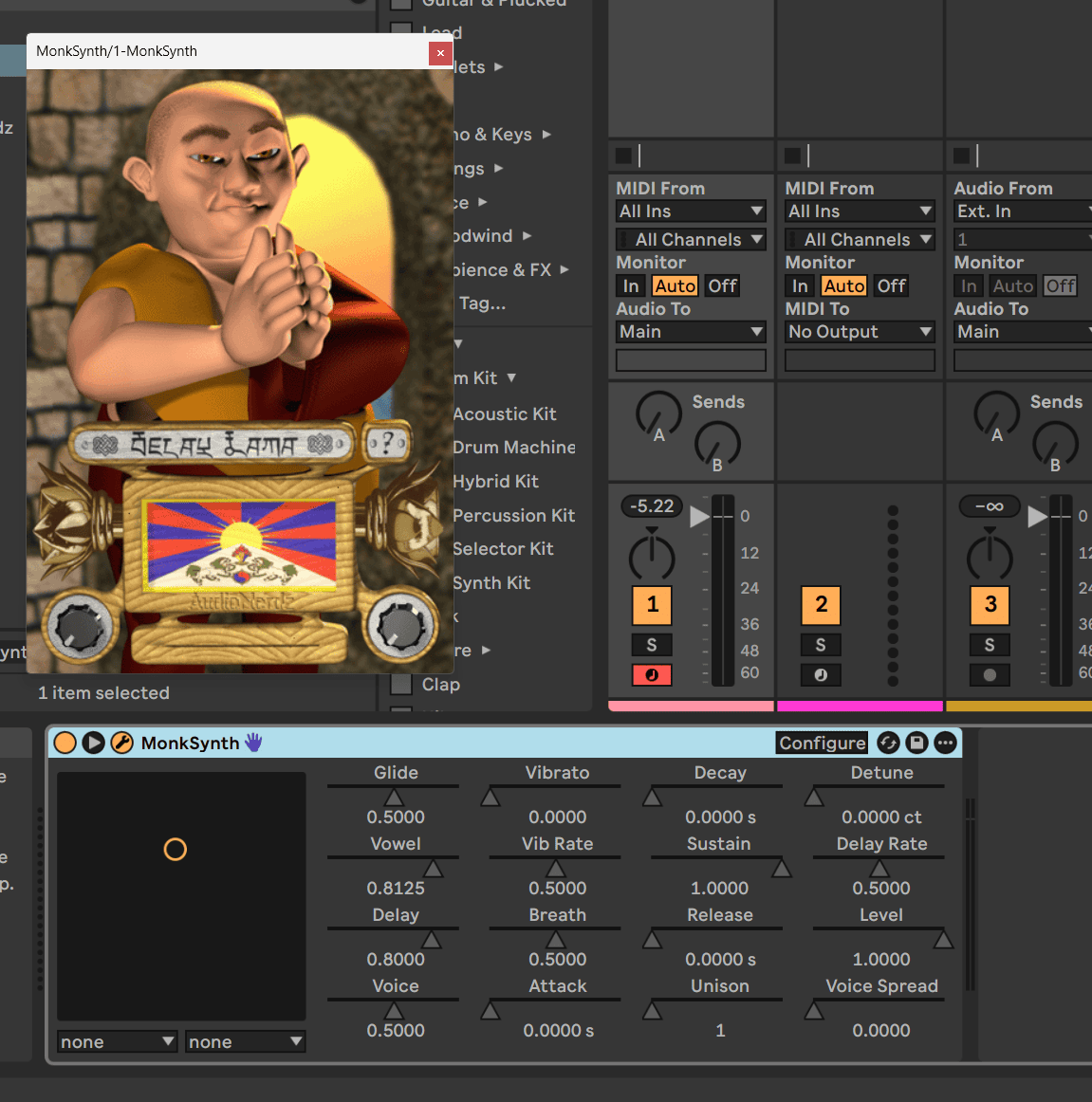
The central XY pad provides direct control over pitch and vowel movement.
Dragging across the pad creates smooth transitions between vowel positions, making it possible to perform vocal phrases and evolving formant movements in real time.
The XY controls can also be recorded as DAW automation, allowing producers to recreate detailed vocal movements inside an arrangement.
ADSR Envelope and Unison
MonkSynth includes a complete ADSR envelope with attack, decay, sustain and release controls.
Short attack and release settings produce sharp vocal plucks, while longer envelope values create sustained chants, drones and atmospheric textures.
The unison section supports up to ten detuned voices. Voice spread and detuning can transform the original monophonic tone into a wider and denser vocal texture.
Glide, Vibrato and Voice Character
Glide creates smooth transitions between MIDI notes, making the instrument suitable for expressive leads and sliding vocal effects.
Vibrato depth and rate controls introduce pitch movement, while the voice character parameter changes the size and tonal identity of the generated vocal sound.
These controls can move MonkSynth from a relatively focused synthetic vowel to a broader and more animated vocal effect.
Built-In Stereo Delay
A stereo delay is integrated directly into the instrument.
The delay can add space, rhythmic repetition and width without requiring an additional effect plugin. It is particularly useful for electronic leads, ambient chants and psychedelic vocal textures.
More extreme delay settings can turn short notes into repeating phrases and evolving sound design layers.
MIDI Control and Automation
MonkSynth supports MIDI notes, pitch wheel data and several MIDI Continuous Controller assignments.
- CC1 for vibrato
- CC5 for glide
- CC7 for volume
- CC12 for delay
- CC13 for voice character
- Automatable pitch bend
- Automatable XY pad movement
The hardware pitch wheel can be assigned to vowel movement or conventional pitch bending, depending on the selected configuration.
Factory Presets
The plugin includes five factory presets that provide starting points for different vocal tones and performance styles.
Presets and plugin settings are stored with the DAW session, allowing projects to reopen with the correct MonkSynth configuration.
Custom Theme System
MonkSynth includes a flexible theme system, but it does not currently ship with a complete built-in visual theme.
On first launch, users are presented with a setup screen. A compatible theme can be imported from an original Delay Lama installation, or a custom theme folder can be loaded through the plugin’s contextual menu.
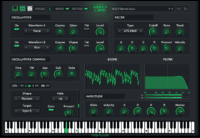
This means the interface may initially appear different from the promotional screenshot, which shows the classic theme already imported.
Best Uses for MonkSynth
- Experimental vocal leads
- Robotic vowel sounds
- Electronic monk chants
- Ambient drones
- Psychedelic electronic music
- Techno and Electro effects
- Video game and animation audio
- Creative vocal resampling
The instrument can also be recorded as audio and processed with distortion, reverb, granular effects or pitch shifting to create more complex vocal textures.
Plugin Formats and Compatibility
- Windows: VST3
- macOS: VST3 and Audio Unit
- Linux: VST3
- macOS architecture: Apple Silicon and Intel
- Plugin type: Monophonic virtual instrument
A compatible DAW or plugin host supporting VST3 is required. Audio Unit is also available for compatible macOS hosts.
No AAX, VST2 or CLAP version is currently listed by the developer.
Installation
Windows users can run the provided installer, which places the VST3 plugin in the standard system directory.
The macOS package installs both the VST3 and Audio Unit versions. The current macOS build is signed, notarized and compatible with Intel and Apple Silicon systems.
Linux users can extract the downloaded archive and copy the MonkSynth VST3 bundle into their local VST3 directory.
Free and Open Source
MonkSynth is distributed as free open-source software under the MIT license.
No account, subscription, license manager or online activation is required. The source code and compiled installers are available through the official GitHub repository.
Visit the official MonkSynth GitHub repository
Important Beta Limitations
MonkSynth is still officially distributed as beta software.
Users may encounter compatibility issues or unfinished interface elements. The lack of a complete default theme also means some initial configuration is required before the plugin resembles the official screenshot.
Producers working on important projects should test the plugin carefully before depending on it inside a final production session.
Final Verdict
MonkSynth is one of the most unusual free synthesizer plugins released in 2026.
Its FOF vocal synthesis, XY vowel control, unison engine, MIDI automation and built-in delay provide a creative alternative to conventional analog-style synthesizers.
The beta status and theme installation process make it slightly less immediate than a polished commercial instrument, but its distinctive sound and open-source availability make it worth exploring.
For experimental electronic music, ambient production, robotic voices and creative vocal sound design, MonkSynth is a memorable free VST3 instrument with plenty of personality.