puffer:fish by sonible is a free saturation VST plugin designed for producers, beatmakers, mixing engineers and home studio creators who want fast harmonic color without a technical learning curve. Built around a playful visual interface and three distinct saturation characters, the plugin gives users a simple way to add warmth, density, grit and movement to vocals, drums, bass, synths, guitars, loops and buses.
The release is interesting because sonible is best known for intelligent mixing tools and polished audio processing. With puffer:fish, the company takes a lighter, more immediate approach: one main control, three sonic personalities and a design that encourages producers to push the sound until it reacts. It looks playful, but the goal is serious enough: make tracks feel richer, fuller or more aggressive inside the DAW.
What Is puffer:fish by sonible?
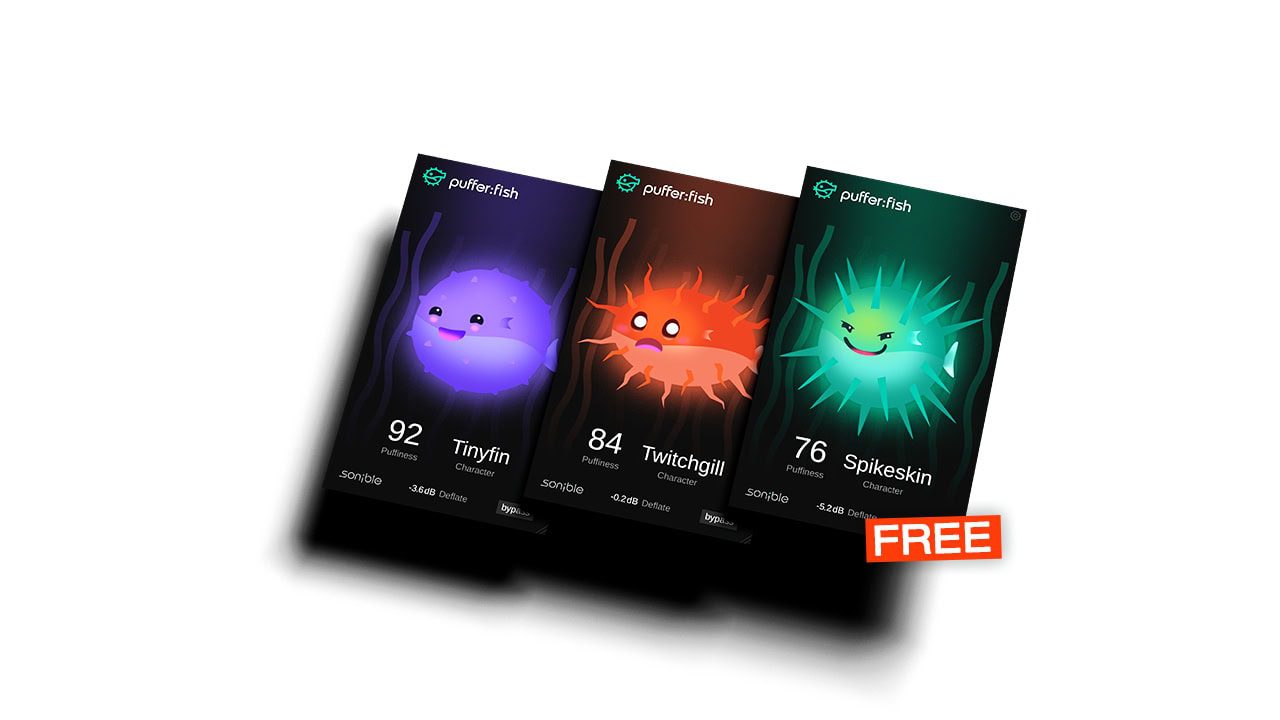
puffer:fish is a free saturation plugin from sonible. It is built for quick tone shaping, harmonic enhancement and creative distortion. Instead of presenting the user with a traditional saturation interface full of technical controls, it uses three animated characters to represent different saturation behaviors.
The plugin includes one main intensity control called Puffiness. As Puffiness is increased, the signal becomes denser, richer and more saturated. The selected character defines how that saturation behaves, from gentle warmth to more aggressive distortion.
puffer:fish is available for macOS and Windows. On macOS, it supports VST, VST3, AU and AAX. On Windows, it supports VST, VST3 and AAX. Authorization is machine-based, and the plugin supports sample rates from 44.1 kHz to 192 kHz.
Why This Free Saturation VST Plugin Matters
The free saturation VST plugin category is crowded, but puffer:fish stands out because it removes almost all friction from the saturation process. Many distortion and saturation plugins ask users to think in terms of drive, tone, input, output, bias, oversampling, asymmetry, clipping curves and gain compensation. Those controls are powerful, but they can slow down the creative process.
puffer:fish takes a different route. Choose a character, turn up Puffiness and listen. This makes it useful during writing, beatmaking and fast mixing sessions, where the producer needs a sound to feel better quickly rather than spending ten minutes negotiating with a waveform.
The plugin also helps newer producers understand saturation as a musical effect rather than a technical mystery. By giving each mode a clear sonic identity, it makes the decision more intuitive: warmth, aggression or unpredictable texture.
Main Features
- Free saturation plugin from sonible.
- One-knob workflow centered around the Puffiness control.
- Three saturation characters: Tinyfin, Spikeskin and Twitchgill.
- Animated visual feedback that reacts as saturation intensity increases.
- Tinyfin mode for gentle harmonics, warmth, density and subtle glue.
- Spikeskin mode for gritty, aggressive distortion and stronger impact.
- Twitchgill mode for more dynamic, textured and unpredictable saturation.
- Useful on vocals, drums, basses, synths, loops, guitars, keys, pads and buses.
- Supports sample rates from 44.1 kHz to 192 kHz.
- VST, VST3, AU and AAX support on macOS.
- VST, VST3 and AAX support on Windows.
- Native Apple Silicon support.
- Machine-based authorization.
- Windows 10 64-bit and macOS 10.14 or higher support.
A Saturation Plugin Built for Speed
The strongest part of puffer:fish is its speed. Saturation is one of those effects that producers often reach for when a sound feels too clean, too thin or too polite. In that moment, a simple tool can be more useful than a deep processor with twenty controls.
puffer:fish works especially well when the goal is fast character. A vocal can gain thickness. A drum loop can become more exciting. A bassline can gain edge. A synth can become more present. A bus can feel slightly more glued together. The producer does not need to build a complex processing chain to hear a difference.
The interface also makes the plugin less intimidating. It is bright, animated and slightly ridiculous in the best possible way. Underneath that cartoon energy, the workflow remains practical: pick a flavor, set the amount, compare, keep it or move on.
Tinyfin: Gentle Warmth and Subtle Glue
Tinyfin is the softest character in puffer:fish. It is designed for gentle saturation, extra body and musical density. This mode is useful when a track already works but needs a little more life.
On vocals, Tinyfin can add warmth and perceived fullness without pushing the sound into obvious distortion. On pads, keys and guitars, it can bring subtle richness. On buses, it can help elements feel more connected, especially when used with restraint.
Tinyfin is the safest starting point for mixing. It supports the sound rather than taking over the arrangement. If puffer:fish were a studio assistant, Tinyfin would be the one quietly making coffee and fixing the gain staging before anyone notices.
Spikeskin: Grit, Bite and Aggressive Distortion
Spikeskin is the aggressive character. It is built for sounds that need bite, edge and more obvious harmonic pressure. This mode can push drums, basses and synths forward in a mix when clean processing feels too polite.
On drums, Spikeskin can add impact and sharper transient attitude. On bass, it can help a part cut through smaller speakers by adding upper harmonic content. On synths, it can create more aggressive leads, harsher textures and stronger movement.
This is the mode to use when the track needs attitude rather than subtle warmth. It can be heavy, so careful level matching is important. Saturation has a habit of sounding better simply because it gets louder, the little trickster.
Twitchgill: Texture and Unpredictable Movement
Twitchgill sits between warmth and chaos. It starts with a more moderate saturation character, but becomes increasingly textured and reactive as the Puffiness control is pushed higher.
This makes Twitchgill useful for loops, synths, sound design and experimental processing. It can add presence at lower settings, then become more animated and unstable when pushed. For producers who want saturation that feels alive rather than static, this mode is often the most creative option.
Twitchgill works well on drum loops, bass layers, synth phrases, background textures and resampled material. It is the character most likely to produce unexpected results, which is exactly why it can become useful in a creative session.
Sound and Creative Use
puffer:fish is not designed for surgical tone shaping. It is a character tool. Its job is to make audio feel warmer, thicker, rougher or more energetic with minimal effort.
On vocals, it can add body and presence. On drums, it can increase excitement and perceived punch. On bass, it can add harmonic information that helps the sound translate on smaller speakers. On synths, it can bring edge and density to clean digital tones. On loops, it can add color before chopping, resampling or further processing.
The plugin can also be used on buses, but subtle settings usually work best there. Saturation on a bus can make multiple elements feel more cohesive, but too much can blur detail and reduce punch. The fish may look friendly, but it still has teeth.
Why Saturation Still Matters in Modern Production
Saturation remains one of the most important tools in mixing because it changes how a sound feels, not only how loud it is. It can add harmonics, increase perceived density, improve translation and make digital sources feel more physical.
In modern home studio production, many sounds begin clean. Virtual instruments, samples, loops and direct recordings can be technically good but emotionally flat. Saturation helps add personality. It can make a vocal feel more intimate, a bass feel more present, a drum bus feel more exciting or a synth feel less sterile.
puffer:fish matters because it makes that process approachable. It gives producers a free audio plugin that can deliver quick harmonic color without requiring advanced mixing knowledge.
Who Should Use puffer:fish?
puffer:fish is ideal for producers, beatmakers, vocal producers, electronic musicians, content creators and home studio users who want a fast free music production plugin for saturation and tone shaping.
Beginners will appreciate the simple interface and clear character choices. Experienced producers may use it as a quick color tool during writing or sound design. Mixing engineers can use it when they need fast warmth, grit or energy without opening a heavier saturation processor.
It is less suited to users who want detailed saturation control, multiband processing, precise gain compensation, tone shaping or deep clipping options. puffer:fish is not a laboratory. It is a fast, playful processor with one clear mission: make the sound puffier.
Best Use Cases for Producers
Vocal Warmth
Use Tinyfin on vocals to add gentle body, warmth and perceived density before or after compression.
Drum Bus Energy
Use Spikeskin on drum buses or parallel drum tracks to add grit, impact and extra excitement.
Bass Translation
Apply saturation to basslines so they carry more harmonic detail on laptops, phones and small speakers.
Synth Character
Use Twitchgill or Spikeskin on clean synths to create stronger edge, movement and presence.
Loop Processing
Process loops with puffer:fish before resampling, chopping or arranging them into a beat.
Guitar and Keys Body
Use Tinyfin to add subtle thickness to guitars, electric pianos, organs or soft keys.
Creative Sound Design
Push Twitchgill harder on FX, risers, vocal chops and samples to create more unpredictable textures.
Compatibility and Download Details
puffer:fish is available as a free download from sonible. The plugin supports macOS and Windows, with machine-based authorization and modern plugin formats for major DAWs.
- Official website: puffer:fish by sonible
- Download: Download puffer:fish for free
Industry Impact: Free Plugins Can Be Serious and Playful
puffer:fish is a reminder that free plugins do not need to look boring to sound useful. In a plugin market often dominated by black panels, vintage screws and endless fake rack shadows, sonible has released a saturation tool that deliberately feels light, visual and playful.
That design choice matters. Music production can become overly technical, especially for newer producers. A plugin like puffer:fish lowers the emotional barrier to experimenting with saturation. It invites users to listen, push the sound and react creatively.
At the same time, it still comes from a developer with a strong reputation for audio quality. That combination gives the plugin a useful position: friendly enough for beginners, polished enough to be taken seriously in real sessions.
What Happens Next
puffer:fish will likely become a popular entry-level saturation tool for producers who want fast harmonic color without technical friction. Its long-term value will depend on how often users reach for it in real mixes, especially when they need quick warmth, grit or character.
The best way to test it is simple: place it on a vocal, drum loop, bassline or synth, choose a character, turn up Puffiness and level-match the result. If the sound feels richer, fuller or more alive without breaking the mix, the plugin has earned its place.
Final Verdict
puffer:fish by sonible is a smart and useful free saturation VST plugin for producers who want warmth, grit, density and creative tone shaping without a complicated interface.
With three characters, Tinyfin, Spikeskin and Twitchgill, plus a single Puffiness control, it gives users a fast way to move from subtle harmonic enhancement to more aggressive distortion. It is simple, visual and surprisingly practical.
For vocals, drums, bass, synths, loops, guitars, buses and creative sound design, puffer:fish is absolutely worth downloading. It may look like a cartoon sea creature, but it can still bring serious character to a mix, which is more than can be said for many plugins wearing fake vintage screws.
« `