
Songwriting Guitars by Soundpaint: A Free Acoustic Guitar VST
Trigger authentic acoustic strums, clean electric chords, distorted rhythms and melodic guitar licks from a single MIDI note.
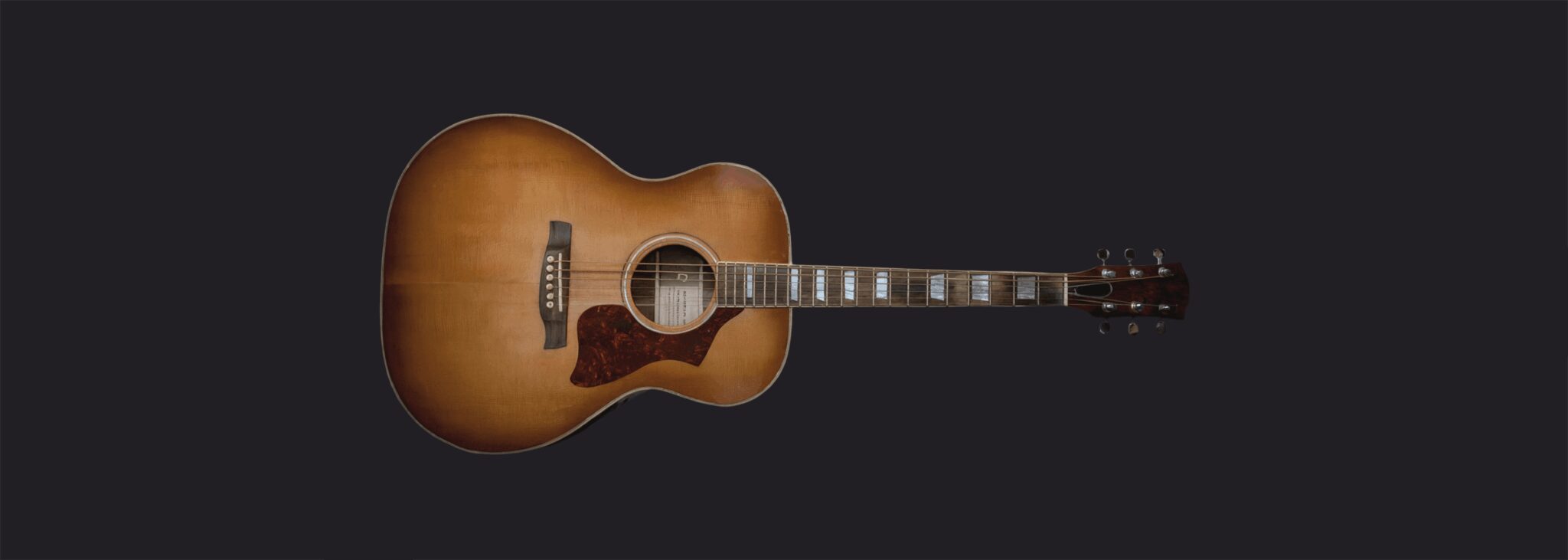
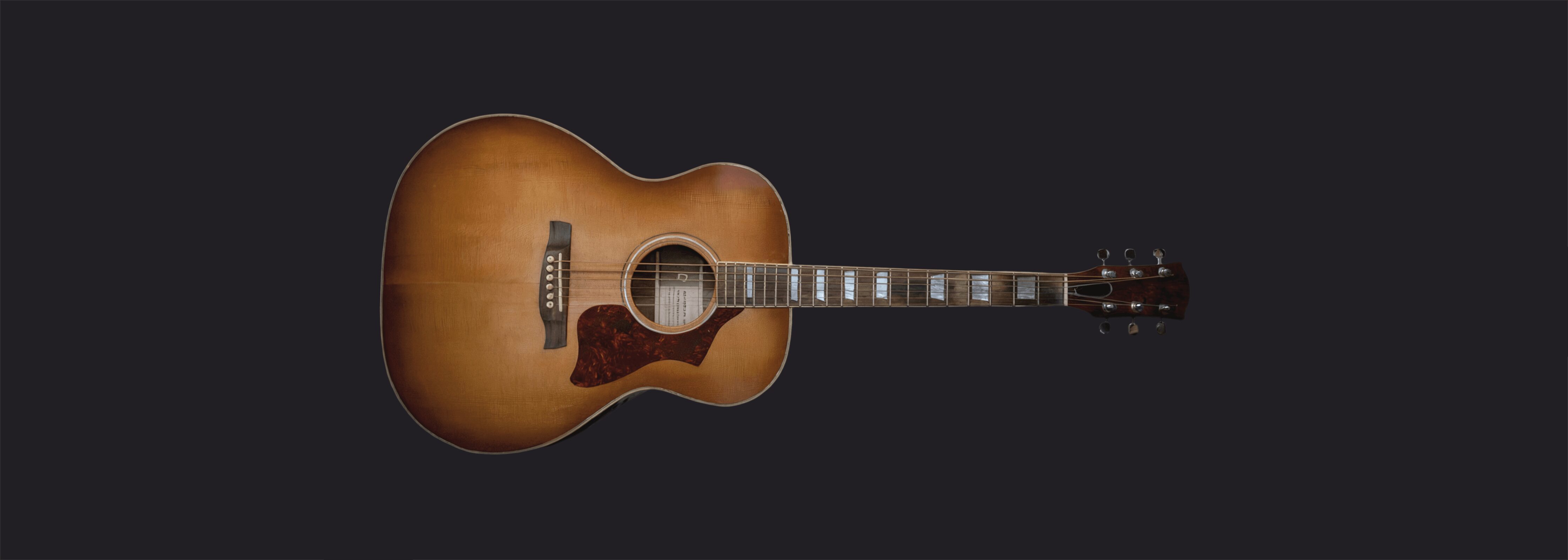
Songwriting Guitars is a free virtual guitar instrument created by Soundpaint for songwriters, composers and producers who need playable guitar ideas without recording a complete live performance.
The library combines acoustic guitar strums with clean and distorted electric guitar parts. Its one-finger chord system can trigger complete major or minor guitar performances from a single MIDI key, making it particularly useful for sketching songs quickly.
The included performances were recorded at 120 BPM, but Soundpaint’s time-stretching system allows them to follow several different project tempos without manually editing every audio file.
Completely free: Songwriting Guitars is listed at $0 on the official Soundpaint website. A free Soundpaint account and the free Soundpaint engine are required to install and use the library.
What Is Songwriting Guitars?
Songwriting Guitars is a sample-based instrument designed around common chord progressions, guitar rhythms and melodic phrases used in Pop, Rock, Indie and singer-songwriter productions.
Instead of asking the producer to program every individual guitar string, the instrument provides pre-recorded performances that can be triggered from a MIDI keyboard or piano roll.
Holding one MIDI note can play the corresponding guitar chord. This allows producers with limited guitar-playing experience to build convincing harmonic sketches without attempting to reproduce realistic strumming through dozens of individual notes.
Main advantage: Songwriting Guitars focuses on complete musical performances rather than isolated guitar notes, making it faster to move from a chord progression to a usable arrangement.
Three Guitar Characters
The free library provides three complementary guitar sounds that can cover several stages of an arrangement.
Acoustic guitar: Natural strummed chords for singer-songwriter tracks, Pop arrangements, Folk, Indie and softer cinematic music.
Clean electric guitar: Clear rhythmic parts that can support Pop, Alternative Rock, Funk and atmospheric productions.
Distorted electric guitar: Stronger chord performances for Rock, heavier choruses and layered guitar arrangements.
The three guitar types can be used separately or layered. An acoustic performance can provide the main rhythmic detail, while a quieter electric layer adds width and energy during the chorus.
Major and Minor Guitar Strums
Songwriting Guitars includes separate major and minor strumming parts for its acoustic, clean electric and distorted guitar sounds.
This allows producers to build complete progressions directly from MIDI notes. A single note does not simply trigger an isolated sample. It recalls a pre-recorded chord performance related to that key.
The system is designed for fast composition rather than detailed virtual-guitar programming. It works particularly well when the goal is to establish the harmony, rhythm and emotional direction of a song before adding vocals, bass and drums.
Songwriting tip
Begin with a simple four-chord progression and test several guitar types before adding more instruments. A good progression rarely improves because the project contains fourteen additional pads holding a meeting behind it.
Four Common Songwriting Rhythms
The guitar performances are based on four common rhythms frequently heard in Pop and Rock songwriting.
These patterns provide different levels of movement and energy without forcing the producer to create the strumming rhythm manually.
A simpler pattern may work during the verse, while a more active rhythm can support the pre-chorus or chorus. Switching between performances can create arrangement development while preserving the same chord progression.
Arrangement idea: Use acoustic strums during the intro, introduce clean electric guitar in the verse and add the distorted layer only when the chorus arrives.
Included Guitar Parts
- Acoustic major strums at 120 BPM
- Acoustic minor strums at 120 BPM
- Clean and crunch electric major strums
- Clean and crunch electric minor strums
- Distorted electric major strums
- Distorted electric minor strums
- Solo licks in C major
- Solo licks in C minor
- Solo licks in G major
- Solo licks in G minor
The solo licks provide shorter melodic phrases that can be used between vocal sections, during transitions or as starting points for guitar hooks.
18 Programs and Additional Presets
The library includes 18 main programs, with two additional Hidden Gem presets available inside the Soundpaint ecosystem.
Some programs combine several guitar types through keyswitches, while others focus on one specific performance style.
All Guitars keyswitch program: Access several guitar types from one instrument.
Acoustic Major and Minor: Focused acoustic songwriting patch.
Electric Crunch Major and Minor: Clean-to-driven electric rhythm guitar.
Electric Distortion Major and Minor: Heavier guitar chords for Rock arrangements.
One Finger Power: Fast power-chord style performance.
Arpeggiated programs: Alternative rhythmic movement for acoustic and electric guitar sounds.
Tempo Control and Time Stretching
The source performances were recorded at 120 BPM. Soundpaint includes a high-resolution time-stretching system that can adapt the guitar parts to different project tempos.
- 60 BPM: Set the Time control to 50%
- 90 BPM: Set the Time control to 75%
- 120 BPM: Set the Time control to 100%
- 150 BPM: Set the Time control to 125%
- 180 BPM: Set the Time control to 150%
This makes the instrument more flexible than a folder of fixed audio loops. Producers can keep the musical performance while adapting its speed to a ballad, mid-tempo Pop track or faster Rock production.
Official Songwriting Guitars Walkthrough
The official Soundpaint video below demonstrates the included guitar performances, one-finger chord workflow and tempo-based songwriting tools.
Soundpaint Songwriting Guitars Walkthrough
Best Uses
Pop songwriting: Create immediate chord foundations for verses, pre-choruses and choruses.
Singer-songwriter production: Build acoustic arrangements before recording final live guitars.
Indie and Alternative Rock: Combine acoustic and electric layers for wider arrangements.
Lo-fi music: Process the acoustic performances with filtering, tape saturation and room ambience.
Cinematic music: Use slower acoustic strums and melodic licks beneath emotional scenes.
Demo production: Create realistic guitar sketches before inviting a guitarist to record the finished performance.
How to Make the Guitars Sound More Natural
Avoid placing every chord at exactly the same velocity. Small differences can help the performance feel less mechanical, even when the main rhythm is already sampled.
Leave small spaces between sections rather than allowing every guitar layer to play continuously. Real arrangements often become more effective when the guitar stops briefly before an important vocal phrase or transition.
For acoustic guitar, use light compression and avoid removing too much midrange. The body of the instrument often sits between the lower mids and presence range.
When layering clean and distorted guitars, check their timing and frequency balance. A large number of similar strums can quickly make the arrangement sound cloudy.
Mixing reminder: Three guitar layers can sound larger than one. Nine guitar layers can sound like the entire band arrived early and all plugged into the same paragraph.
Soundpaint Engine Requirement
Songwriting Guitars does not run as an independent plugin file. It loads inside the free Soundpaint engine.
The engine can run as standalone software or as a plugin inside compatible DAWs. The library is connected to the user’s Soundpaint account and downloaded through the Soundpaint application.
Important: A Soundpaint account and the free Soundpaint engine are required. Songwriting Guitars is free, but it is not supplied as a completely separate VST instrument.
Technical Specifications
- Programs: 18, plus two additional Hidden Gems
- Instrument parts: 10
- Library size: Approximately 2.18 GB
- Samples: 648 Real-Time Samples
- Audio resolution: 48 kHz, 24-bit stereo
- Source format: WAV PCM and Soundpaint RTS format
- Original tempo: 120 BPM
- Soundpaint engine: Required
- Account registration: Required
Compatibility
- Windows: Windows 10 or later
- macOS: macOS 10.14 or later
- Mac processors: Intel and Apple Silicon
- Plugin formats: VST, VST3, AU and AAX
- Standalone application: Included through Soundpaint
- Minimum processor: Intel Core i5 or equivalent
- Recommended memory: 16 GB RAM or more
- Storage: SSD recommended
- Linux: No official version listed
How to Download Songwriting Guitars
- Open the official Songwriting Guitars product page.
- Create or sign in to a free Soundpaint account.
- Add Songwriting Guitars to the account for $0.
- Download and install the free Soundpaint engine.
- Open Soundpaint and sign in.
- Locate Songwriting Guitars in the instrument library.
- Download the approximately 2.18 GB sound collection.
- Open Soundpaint as standalone software or inside the DAW.
Final Verdict
Songwriting Guitars is a practical free instrument for musicians who need playable guitar rhythms without programming every string manually.
The acoustic strums are particularly useful for singer-songwriter, Pop, Indie and cinematic production, while the clean and distorted electric parts make it possible to develop a complete arrangement inside one library.
Its one-finger workflow and tempo controls are designed for speed rather than detailed guitar simulation. Producers who need individual fret positions, advanced articulations and complete control over every string may require a more specialised guitar instrument.
For writing songs, producing demos and building quick guitar-backed arrangements, however, Songwriting Guitars provides considerably more musical value than another folder of isolated chord loops.
Download Songwriting Guitars for Free
Get the free guitar instrument and Soundpaint engine directly from the official developer website.