
For years, independent artists were told that distribution was the key. Get your music on every platform, write a decent biography, upload a cover, share the link, and wait for the streams to arrive. That model is now outdated. Being available on streaming platforms is no longer a strategy. It is only the starting point.
In 2026, the real challenge is not simply to be distributed. The real challenge is to be identifiable, credible, active, well presented, and emotionally recognizable. In an ocean of tracks uploaded every day, including a growing amount of AI-generated music, artistic identity is becoming one of the most powerful assets an independent artist can build.
Streaming Platforms Are Becoming Full Audio Ecosystems
The major streaming platforms are expanding far beyond traditional music listening. They are no longer competing only on catalog size or audio quality. They are competing for attention, daily usage, subscriptions, user loyalty, and cultural influence.
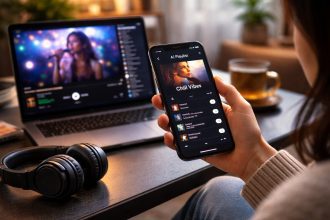
This is why music now exists beside podcasts, interviews, live sessions, audiobooks, video formats, algorithmic playlists, short-form discovery tools, spoken-word content, and AI-powered recommendations. The listener does not open a streaming app only to play an album anymore. They may open it to discover a podcast, follow a creator, listen to a narrated article, watch a performance, or let an algorithm decide the next hour of their listening experience.
For independent artists, this creates a more competitive environment. A new release is not only competing against other songs in the same genre. It is competing against every other form of audio attention inside the platform. Music discovery is now part of a much wider content economy.
This does not mean independent artists are powerless. It means they need to understand the new rules. The artists who win attention will not always be the ones who upload the most music. They will be the ones who create a clear world around their music and give listeners a reason to remember them.
Distribution Is No Longer Enough
One of the biggest mistakes independent artists still make is confusing access with visibility. Having a song available on Spotify, Apple Music, Deezer, YouTube Music, and Amazon Music does not mean that the song has an audience. It only means that the song exists in the system.
Streaming platforms contain millions of tracks, and the number continues to grow every day. Low-cost distribution, home studios, sample packs, AI tools, automated mastering services, beat marketplaces, and social media have made music creation more accessible than ever. This is positive for creativity, but it also creates saturation.
A good song can disappear if it arrives without context. A strong production can be ignored if the artist has no identity. A professional mix can remain invisible if the release strategy is weak. In the current streaming environment, music needs more than availability. It needs direction.
Independent artists must now think like media brands, not only musicians. The song is still the center, but it must be supported by visuals, storytelling, social presence, release planning, playlist strategy, audience engagement, and a coherent artistic universe.
The Rise of AI Music Is Changing the Value of Human Identity
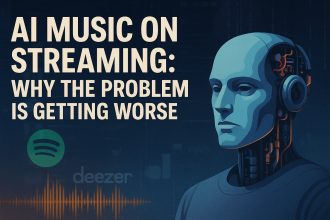
Artificial intelligence is one of the biggest disruptions in the streaming economy. AI-generated tracks, synthetic vocals, automated covers, fake artist profiles, and mass-uploaded instrumental catalogs are forcing platforms to rethink how they define originality, quality, fraud, and value.
For independent artists, this creates both a threat and an opportunity. The threat is obvious: the market is becoming flooded with generic content produced at industrial speed. When thousands of tracks can be generated quickly, the overall volume of music increases dramatically. This makes discovery harder, especially for serious artists who spend time writing, producing, mixing, mastering, and building a real creative direction.
But there is also an opportunity. As platforms become more aware of AI-generated saturation, they will likely become stricter with low-value content, fake engagement, artificial streaming behavior, and weak catalog uploads. Recommendation systems will need to protect listener trust. Platforms cannot afford to become endless warehouses of anonymous, disposable audio.
This is where human artists can stand out. A real story, a real voice, a real personality, a real creative process, and a real audience relationship are becoming stronger signals. In a world where music can be generated instantly, being human becomes a competitive advantage.
Identity Is Becoming a Strategic Asset
In 2026, artistic identity is not a luxury. It is a survival tool. Independent artists need to be recognizable across every touchpoint: sound, artwork, biography, social media, visuals, playlist pitching, live content, interviews, short videos, and release communication.
A listener should be able to understand quickly what the artist represents. Is the project dark and cinematic? Is it nostalgic and lo-fi? Is it club-focused? Is it emotional pop? Is it underground house? Is it experimental electronic music? Is it guitar-driven alternative rock? The clearer the identity, the easier it becomes for listeners, curators, bloggers, and algorithms to place the music in a meaningful context.
Many independent artists release tracks without building a world around them. They change visual direction every release, write vague biographies, post randomly, pitch to the wrong playlists, and communicate only when a song is out. This weakens recognition. Listeners need repetition, consistency, and emotional cues. They remember atmosphere. They remember tone. They remember images. They remember stories.
A strong identity does not mean being fake or overdesigned. It means being intentional. It means knowing what the music says, who it speaks to, and how the artist wants to be perceived.
Algorithms Reward Real Listener Behavior
Streaming algorithms are often described as mysterious, but they are mainly built around listener behavior. Platforms analyze what people do with music. Do they skip the song quickly? Do they save it? Do they replay it? Do they add it to playlists? Do they follow the artist? Do they listen to another track after the first one? Do they return to the artist later?
This means that independent artists should stop chasing streams without considering quality of engagement. A thousand passive plays from the wrong audience may be less valuable than a smaller number of listeners who save, replay, share, and follow.
Bad promotion can hurt a release. Sending a track to the wrong audience, pitching to irrelevant playlists, or generating low-quality traffic can create weak behavioral signals. If listeners skip quickly or do not engage, the platform may understand that the track is not relevant.
Smart promotion is about precision. Independent artists should focus on genre fit, mood alignment, audience relevance, and authentic engagement. It is better to reach fewer people who genuinely connect with the music than to reach many people who do not care.
Presentation Is Now Part of the Music Product
The quality of the song matters, but presentation now plays a major role in how music is perceived. Cover art, artist photos, biography, video snippets, canvas visuals, press materials, social media posts, and playlist pitches all influence credibility.
A curator, blogger, journalist, or listener often forms an opinion before pressing play. If the artwork looks careless, the biography says nothing, the artist profile is empty, and the communication feels rushed, the music starts with a disadvantage.
This does not mean every independent artist needs a huge budget. It means every artist needs coherence. A simple but strong visual identity is better than a random collection of images. A short but well-written biography is better than a generic paragraph. A focused pitch is better than a desperate message sent to every curator on the internet.
Professional presentation creates trust. It shows that the artist takes the project seriously. In a saturated market, trust matters.
Independent Artists Need a Long-Term Release Strategy
The old release method was simple: finish the track, upload it, announce it, and move on. That approach is no longer enough. Independent artists need a longer strategy that begins before the release and continues after the first week.
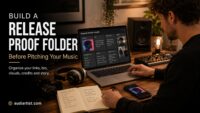
Before release, artists should prepare the artwork, metadata, short description, press text, playlist pitch, social media assets, video snippets, mailing list message, and promotional calendar. They should know who the track is for, which playlists make sense, what story surrounds the release, and how they will keep the song alive after launch.
During release week, the objective is not only to get streams. It is to create signals. Saves, shares, comments, playlist adds, profile visits, follows, and repeat listens all matter. After release week, the artist should continue producing content around the track: behind-the-scenes posts, acoustic versions, remix ideas, production breakdowns, lyric explanations, visual clips, and targeted outreach.
Many tracks do not explode on day one. Some grow slowly through playlist support, word of mouth, social content, blog coverage, and niche communities. A song can still find its audience weeks or months after release if the artist continues to support it intelligently.
Community Is More Valuable Than Artificial Reach
As platforms become more aggressive against fake streams, suspicious activity, and low-value content, real community becomes more important. Independent artists should focus less on inflated numbers and more on meaningful relationships.
A small audience that listens, saves, comments, and shares is more powerful than artificial reach that disappears overnight. Real fans create long-term value. They come back. They follow the artist across platforms. They support new releases. They help songs travel naturally.
Community does not require millions of followers. It requires consistency, honesty, and interaction. Artists should show their process, talk about their influences, share their progress, explain their creative choices, and invite listeners into their world.
In a streaming economy shaped by automation, personal connection is becoming rare. That rarity gives it value.
The Future Belongs to Recognizable Artists
The next phase of streaming will be more competitive, more filtered, and more intelligent. Platforms will continue to expand into new formats. AI will become more present. Fraud detection will become stricter. Listener attention will become harder to capture.
Independent artists who rely only on distribution will struggle. Independent artists who build identity, trust, consistency, and real audience engagement will have a much stronger chance of standing out.
The question is no longer: is your music available on streaming platforms?
The real question is: can listeners recognize you, remember you, trust you, and come back?
That is the new challenge for independent artists in 2026. It is also the new opportunity. In an ocean of automated tracks and endless uploads, the most powerful thing an artist can become is unforgettable.