TAL-NoiseMaker: A Free Virtual Analog Synth VST With 256 Presets
Three oscillators, self-resonating filters, flexible modulation and built-in effects for classic and modern electronic sounds.
TAL-NoiseMaker is a free virtual analog synthesizer developed by TAL Software for producers who want a direct and flexible instrument without a complicated multi-page workflow.
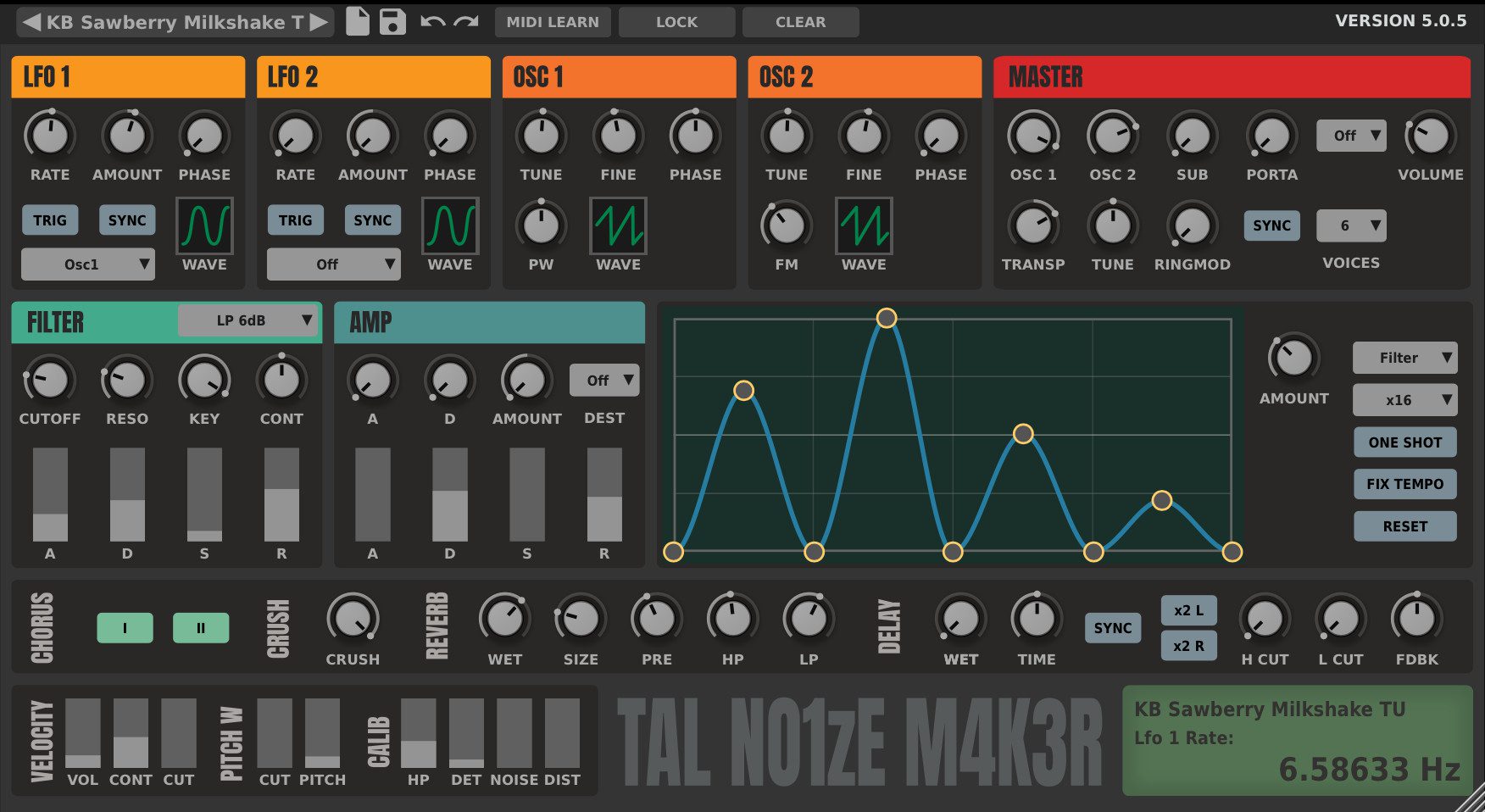
The plugin combines three oscillators, several filter models, two LFOs, multiple envelopes and a practical selection of built-in effects. It can create basses, leads, pads, plucks, sequences and experimental electronic textures while remaining relatively light on CPU resources.
TAL-NoiseMaker also includes 256 factory presets, making it accessible to beginners while still providing enough synthesis control for producers who prefer to design their own sounds.
Completely free: TAL-NoiseMaker can be downloaded directly from the official TAL Software website. No paid expansion, subscription or temporary trial is required.
What Is TAL-NoiseMaker?
TAL-NoiseMaker is a virtual analog synthesizer built around a familiar subtractive synthesis workflow. Its oscillators generate the initial tone, which is then shaped through filtering, envelopes, modulation and effects.
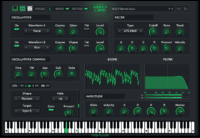
The interface places the most important parameters on one main panel. There are no deeply nested synthesis pages or hidden routing screens, making it possible to understand the structure of a sound quickly.
This straightforward design makes TAL-NoiseMaker suitable for learning synthesis, but the instrument is not limited to basic sounds. Oscillator synchronisation, frequency modulation, ring modulation and flexible envelope routing provide enough depth for more advanced patches.
Main advantage: TAL-NoiseMaker combines an accessible one-panel workflow with modulation and sound-shaping features normally associated with more complex synthesizers.
Three Oscillators
The sound engine contains two main oscillators and one sub oscillator.
Oscillator 1 provides saw, pulse and noise waveforms, while Oscillator 2 includes saw, rectangle, triangle and sine options. Both main oscillators offer tuning, fine-tuning and phase controls.
The sub oscillator generates a rectangular waveform that can reinforce the fundamental frequency of basses, leads and other sounds requiring additional weight.
- Two main oscillators
- One rectangular sub oscillator
- Independent tuning and fine-tuning
- Phase control
- Pulse modulation for Oscillator 1
- Frequency modulation between the oscillators
- Oscillator synchronisation
- Ring modulation
- Master transpose and tuning controls
FM, Sync and Ring Modulation
TAL-NoiseMaker can move beyond conventional virtual analog tones through several oscillator interaction modes.
Frequency modulation allows Oscillator 1 to influence Oscillator 2, producing brighter harmonics, metallic textures and more aggressive digital-style tones.
Oscillator synchronisation can create sharp lead sounds and animated timbral movement. The result becomes especially expressive when oscillator pitch or modulation depth is controlled by an envelope or LFO.
Ring modulation multiplies the two oscillator signals together, generating additional frequencies that can produce bells, metallic percussion and experimental effects.
Sound-design tip
Start with a simple oscillator combination before activating FM, synchronisation and ring modulation. Adding every interaction at once can produce interesting results, but it may also leave the patch sounding like three synthesizers discussing different songs.
Self-Resonating Filters
The filter section contains several low-pass, high-pass, band-pass and notch models.
Available low-pass slopes include 6, 12, 18 and 24 dB per octave. Producers can also select 12 dB high-pass and band-pass modes, along with a notch filter.
The filters are four-times oversampled and capable of self-resonance. At higher resonance settings, the filter can generate a pitched tone even when the oscillator signal is reduced.
A filter drive control adds additional saturation before or around the filtering stage, helping basses, leads and sequences sound more aggressive.
24 dB low-pass: Useful for classic basses, darker leads and warm analog-style pads.
12 dB low-pass: Preserves more high-frequency information and works well for open polyphonic sounds.
High-pass: Removes low frequencies from pads, effects and layered sounds.
Band-pass: Isolates a narrower frequency area for sequences and resonant effects.
Notch: Creates moving cancellations that can produce phaser-like tonal changes when modulated.
Flexible Envelope Control
TAL-NoiseMaker includes separate ADSR envelopes for amplitude and filter movement, along with an additional routable envelope.
The filter envelope can apply both positive and negative modulation. Positive settings open the filter after a note is played, while negative settings move it in the opposite direction.
The additional envelope can be routed to filter cutoff, oscillator pitch, pulse width and FM depth. This makes it useful for pitch drops, evolving timbres, rhythmic plucks and animated attack transients.
Practical idea: Route the additional envelope to FM depth with a fast decay. The sound begins with a brighter digital transient before settling into a smoother sustained tone.
Two LFOs
The two low-frequency oscillators can operate freely, synchronise to the host tempo or restart whenever a MIDI note is played.
Available modulation shapes include sine, triangle, saw, square, sample and hold, and noise.
The LFOs can control oscillator pitch, filter cutoff, pulse width, FM depth, panorama, volume and even the speed of another LFO.
These routing options make it possible to create tremolo, vibrato, rhythmic filtering, stereo movement and more complex evolving patches.
Tempo-sync tip: Synchronise an LFO to the project and route it subtly to filter cutoff or volume. This can add rhythmic movement without programming additional MIDI notes.
Polyphonic and Monophonic Modes
TAL-NoiseMaker supports up to six voices of polyphony. It can therefore produce chords and pads as well as monophonic basses and leads.
The portamento section includes off, automatic and permanent glide modes. Automatic portamento only glides between overlapping notes, while the permanent mode applies glide more consistently.
The detune function introduces small random pitch differences between notes, helping polyphonic sounds feel less static and mechanically identical.
Built-In Effects
The instrument contains several integrated effects for completing a sound without immediately opening external plugins.
Juno-style chorus: Adds width and modulation to pads, keys and basses through two selectable modes.
Reverb: Creates space and depth directly inside the instrument.
Delay: Adds tempo-related echoes for leads, plucks and rhythmic sequences.
Bitcrusher: Reduces resolution before the filter stage for rougher digital textures.
Filter drive: Introduces additional saturation and harmonic density.
The effects are simple enough for quick adjustments but remain useful for shaping factory presets and creating finished sounds.
256 Factory Presets
TAL-NoiseMaker includes 256 presets created by TAL and several independent sound designers.
The library covers basses, leads, pads, keys, sequences and sound effects. A built-in preset browser makes it easier to move through the collection and save custom sounds.
The presets also provide a useful way to learn the synthesizer. Loading a patch and examining its oscillator, filter and modulation settings can reveal how a finished sound has been constructed.
Learning method: Load a preset you like, disable its effects and modulation, then reactivate each element separately. This makes it easier to understand which section is responsible for the character of the sound.
Official TAL-NoiseMaker Demo
The demonstration below was created by one of the sound designers who contributed presets to TAL-NoiseMaker and is linked directly from the official TAL Software product page.
TAL-NoiseMaker Preset Demo
Best Uses
House and Techno: Create basses, plucks, sequences and filtered chord sounds.
Synthwave: Use the virtual analog oscillators and chorus for retro pads, leads and basses.
EDM: Build layered leads, rhythmic plucks and effect sounds using FM, sync and modulation.
Ambient music: Combine slower envelopes, filter movement, chorus and reverb for evolving textures.
Hip-hop and Trap: Design basses, bells, atmospheric keys and dark melodic layers.
Learning synthesis: Explore oscillators, filters, envelopes and LFOs through a clear one-panel interface.
Production Tips
For a warm bass, begin with a saw or rectangle waveform, add the sub oscillator and select a 24 dB low-pass filter. Use a short filter envelope and moderate drive to create more attack.
For pads, increase the amplifier attack and release, use several voices and add a small amount of random detuning. Chorus and reverb can then widen the result.
For sharper leads, activate oscillator sync or FM and use the additional envelope to create movement at the beginning of each note.
When using TAL-NoiseMaker inside a dense mix, reduce its built-in reverb and delay before adding more EQ. A sound that is impressive in isolation may require considerably less space inside a complete arrangement.
Mixing reminder: Keep bass patches close to mono and check wide chorus settings on several playback systems. A large stereo sound is less helpful when its centre disappears as soon as the speakers begin cooperating.
Compatibility
- Current version: 5.0.6
- Plugin formats: VST, VST3, AU, AAX and CLAP
- Windows: Windows 7 or later, 64-bit host
- macOS: macOS 10.9 or later, 64-bit host
- Apple processors: Native Intel and Apple Silicon support
- AAX: Pro Tools 10.3.6 or later
- Linux: 64-bit, Ubuntu 18 or comparable distribution
- Linux formats: VST2 and VST3
- Factory presets: 256
- Maximum polyphony: Six voices
How to Download TAL-NoiseMaker
- Open the official TAL-NoiseMaker product page.
- Select the Windows, macOS or Linux archive.
- Download and extract the supplied installer or archive.
- Install the required VST3, AU, AAX or CLAP format.
- Open the DAW and rescan the plugin folders if necessary.
- Load TAL-NoiseMaker as a virtual instrument.
Final Verdict
TAL-NoiseMaker remains a highly useful free synthesizer for producers who value clear controls, low CPU usage and traditional virtual analog sound design.
Its three oscillators, self-resonating filters, flexible envelopes and two LFOs provide enough depth for basses, leads, pads and experimental textures.
The built-in chorus, delay, reverb and bitcrusher make the instrument immediately productive, while the 256 factory presets provide a strong starting library.
It may not include the enormous modulation matrix or multiple synthesis engines found in newer commercial instruments. Its strength is precisely the opposite: TAL-NoiseMaker makes it possible to build a useful sound without turning the session into a postgraduate course in blinking arrows.
Download TAL-NoiseMaker for Free
Get the latest Windows, macOS or Linux version directly from the official TAL Software website.