
Tyga Defends AI Use on $TARFACE as Doja Cat Backlash Intensifies
Tyga has openly defended using artificial intelligence as a production tool on his new album $TARFACE, saying the writing and vocals remain his while AI was used for selected 1980s-style synths and guitar parts.
The argument over AI music is no longer limited to anonymous streaming uploads and virtual artists. It is now happening around major-name releases in real time.
Tyga’s new 10-track project $TARFACE, released July 31, has become one of the most visible recent examples. After speculation about the album’s unusually retro synth-pop production, Tyga acknowledged that artificial intelligence was used during the creative process.
Key Facts
- Tyga says AI was used as a production tool on $TARFACE.
- He says the lyrics were written by him and the vocals are his own.
- Tyga specifically cited 1980s-style synths and some guitar solos as examples of AI-assisted elements.
- He compared the controversy to early resistance to Auto-Tune.
- Doja Cat publicly criticized his use of AI during an August livestream.
- The debate follows wider scrutiny of AI-assisted releases connected to artists distributed through EMPIRE.
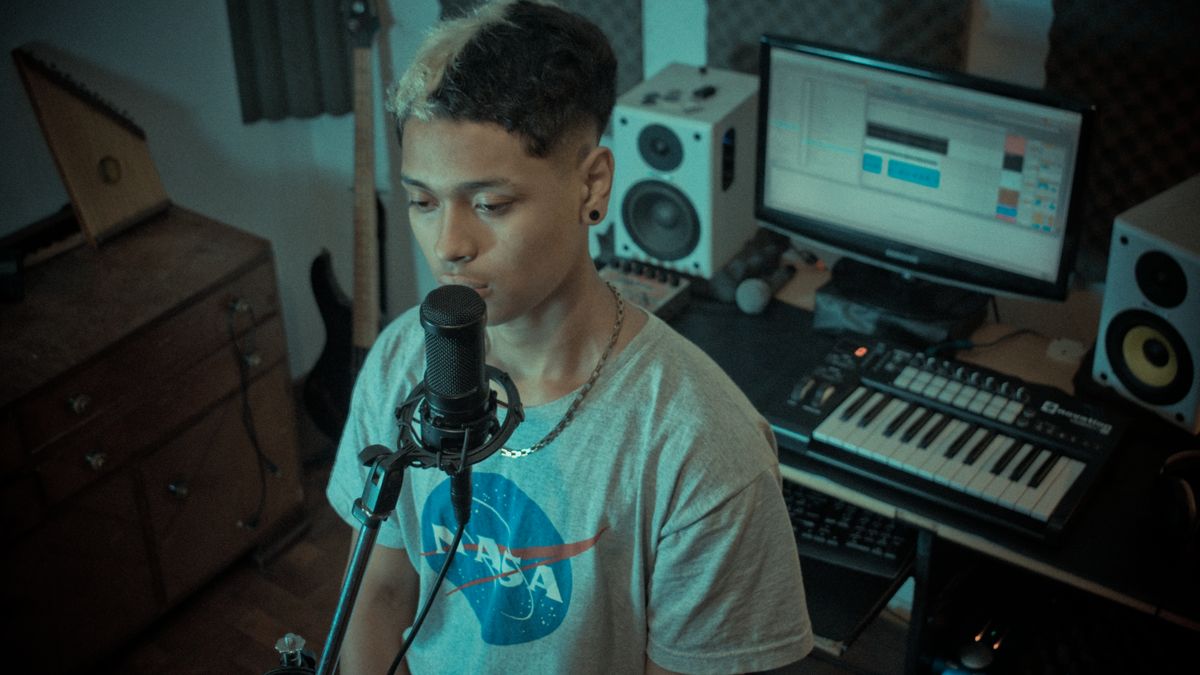
Photo: Gastón Holt / Pexels
Tyga Is Not Calling the Album Fully AI-Generated
The distinction matters. Tyga has not said he typed a prompt and released a finished generated album without human involvement.
In interviews following the controversy, he said the writing and vocal performances are his. The AI use, according to his own description, happened in parts of the production where he wanted specific retro sounds quickly, including synth textures and guitar solos.
That puts $TARFACE in the increasingly complicated category of AI-assisted music rather than an obviously fully generated release.
The Album’s 1980s Sound Triggered Suspicion
$TARFACE is a major stylistic shift for Tyga. The project leans into synth-pop, new wave and polished 1980s production rather than the rap sound most listeners associate with him.
That sudden shift helped fuel online speculation before Tyga spoke publicly about the production process. Producer Medasin and others had already raised questions around the use of generative tools on recent retro-styled releases.
Treblo, an AI music platform previously known as Sonauto, also became part of the wider debate after its detector flagged music connected to the controversy. Detection results by themselves are not definitive proof, but they increased pressure for artists to explain their workflows.
Audiartist Analysis
Tyga’s case is more important than the celebrity argument around it. It shows why the music industry needs better language than simply “AI” or “not AI.” A human-written, human-sung record with generated production elements raises very different questions from a fully prompt-generated song.
Doja Cat Turned the Debate Personal
Doja Cat added fuel to the controversy during an August 12 livestream, sharply criticizing Tyga for using AI on the album.
Tyga later responded by defending the technology and reiterating that he sees it as a creative tool. His central argument is that artists have always adopted new technologies that initially make other musicians uncomfortable.
He has repeatedly compared the current AI backlash to the early reaction to Auto-Tune.
The Auto-Tune Comparison Is Powerful but Imperfect
There is some logic to Tyga’s comparison. Auto-Tune was widely mocked when it became highly audible in popular music, then evolved into a normal production tool and an intentional creative effect.
Generative AI, however, creates additional questions that pitch correction did not. A model may have been trained on copyrighted material. It can generate instrumental performances rather than merely process an existing performance. It can also replace work that would otherwise have been done by musicians, producers or session players.
That is why two artists can both use “AI” while engaging with very different ethical and economic issues.
EMPIRE Is Now Caught in a Wider Conversation
San Francisco-based music company EMPIRE has been pulled into the public debate because recent AI controversies have involved artists or releases connected to its distribution ecosystem.
That does not mean EMPIRE created the AI-assisted material or directed artists to use generative systems. The company has not publicly taken responsibility for the creative decisions behind the projects discussed in recent reporting.
But distributors and labels are increasingly being asked to decide how much disclosure they require from artists before delivering music to platforms with different AI policies.
Platform Rules Are Becoming the Real Pressure Point
Tyga’s case arrives at the same moment Beatport is rejecting fully AI-generated music, Deezer is expanding detection and labeling, Tidal is withholding royalties from fully generated tracks, and industry groups are developing chart and metadata rules around AI.
The central question may therefore become less about whether an artist personally approves of AI and more about how the release is classified by platforms, charts and rights organizations.
A song can be artistically accepted by fans while still creating complicated questions about metadata, rights and eligibility.
Disclosure Could Defuse Some of the Backlash
One reason the $TARFACE story became so heated is that listeners first had to speculate about how the music was made.
If AI-assisted elements were consistently disclosed in release metadata, artists could explain their creative choices before a detector or social-media investigation defines the story for them.
That would not end arguments over whether generative tools should be used, but it would make the debate more factual.
Human Authorship Is Becoming a Spectrum
Modern music production already mixes human performance, software processing, sampled material, virtual instruments and algorithmic assistance. Generative tools add another layer.
Tyga’s description of $TARFACE places him in a hybrid category: human writing and vocals, with AI contributing selected production elements.
That middle ground is likely to become much more common than either extreme of “100% human” or “100% AI.”
The Controversy Is Bigger Than Tyga
Whether listeners like $TARFACE or not, the project has forced a mainstream artist to explain exactly where AI entered the process.
That may be the most useful part of the controversy. As more artists experiment with generative tools, audiences, distributors and platforms will need more precise definitions of authorship, assistance and generation.
The future of AI music may not be decided by one dramatic ban or one celebrity feud. It may be decided track by track, credit by credit, and production decision by production decision.
Sources: Tyga interviews reported by VIBE, ABC Audio and PEOPLE in August 2026; SFGATE reporting on EMPIRE and AI music controversies; WIRED reporting on Treblo detection and recent AI-assisted releases.