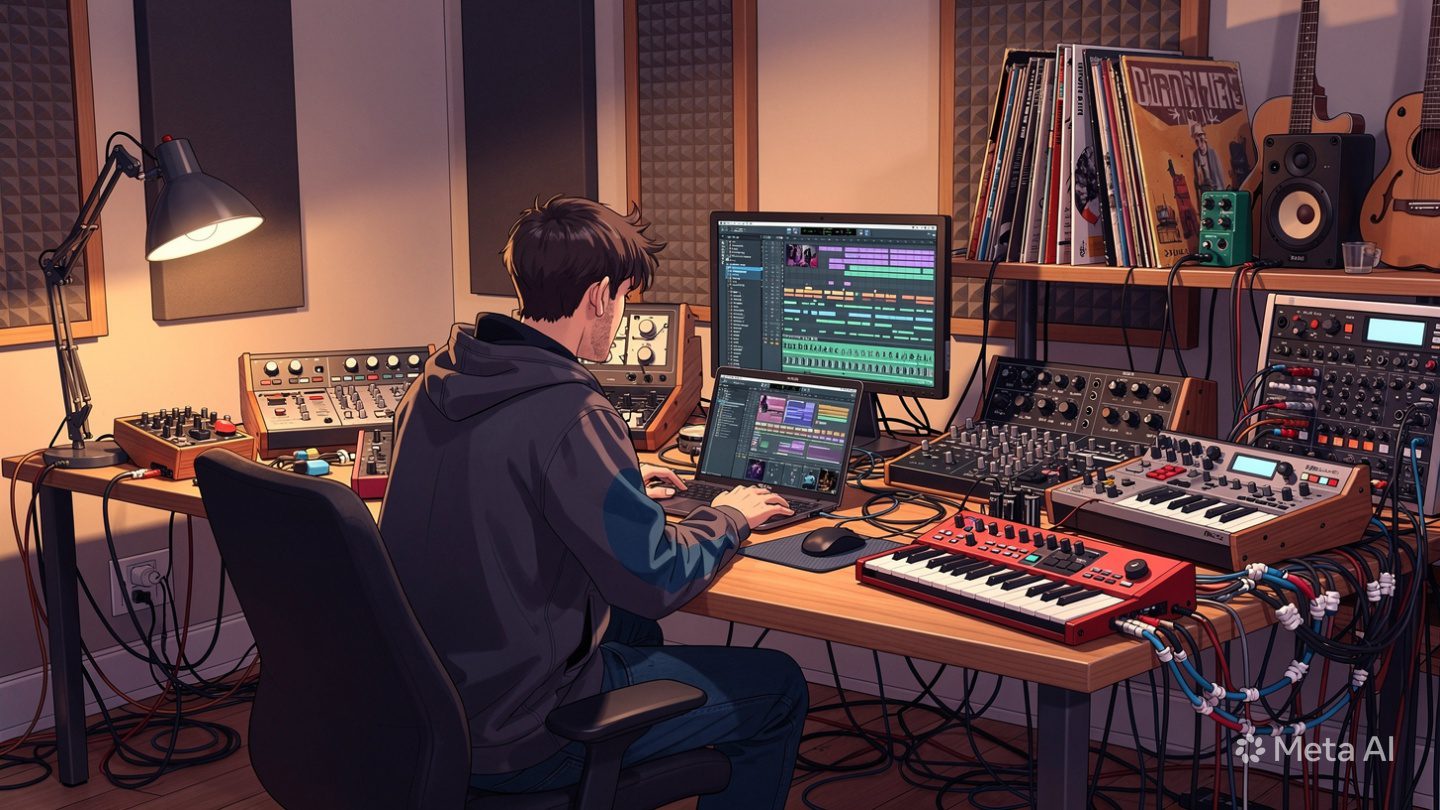

The modern beginner faces a strange problem. There has never been more access to professional sound, but too much choice can kill creativity before the first chord is played. A good VST instrument should not feel like homework. It should help you write, build, experiment, and finish music with confidence.
This guide focuses on the best VST instruments in 2026 for producers who want to start seriously, whether they make house, hip-hop, lo-fi, pop, synthwave, cinematic music, ambient, trap, R&B, or electronic music. The selection mixes free and paid instruments, not as a shopping list, but as a practical toolkit for building a solid production setup from the first beat to the final arrangement.
What Makes a Great VST Instrument in 2026?
A great VST instrument in 2026 is not only about sound quality. Of course, it needs to sound good. That is the entry ticket. But the best instruments also understand the way modern producers work. They load quickly, offer inspiring presets, allow deeper editing when needed, and do not punish beginners with an interface that looks like a spaceship manual written by a nervous engineer.
The strongest tools share a few important qualities: a clear sound identity, stable performance, flexible preset browsing, strong modulation options, and enough depth to grow with the user. A beginner should be able to open the plugin and play immediately, while an experienced producer should still find room for sound design, layering, and detailed control.
That is why the best starter setup should include different types of instruments: a wavetable synth, a sample-based instrument, a piano or organic sound source, a drum or loop-friendly tool, and at least one deeper creative synth for long-term exploration.
Best Free VST Instruments to Start Music Production in 2026
Vital, The Free Wavetable Synth That Still Feels Serious
Vital remains one of the most important free synths for new producers because it gives access to advanced wavetable synthesis without forcing users to pay before they understand what they need. It is visual, flexible, and powerful enough for basses, pads, plucks, leads, experimental textures, and electronic sound design.
For beginners, Vital is especially useful because it makes modulation easy to understand. You can see movement, drag sources to destinations, and learn how envelopes, LFOs, filters, effects, and wavetables interact. That visual feedback matters. It turns synthesis from an abstract theory lesson into something musical and immediate.
Vital is not only a free alternative to paid wavetable synths. It is a serious learning instrument. A producer who understands Vital will understand a large part of modern electronic sound design.
Surge XT, The Free Synth for Producers Who Want Depth
Surge XT is one of the most complete free synthesizers available, and in 2026 it still deserves a place in any serious beginner toolkit. It is not the simplest plugin on this list, but that is exactly why it matters. Surge XT gives producers access to a wide range of synthesis engines, filters, modulation tools, effects, and performance options.
Where Vital feels direct and modern, Surge XT feels like a full laboratory. It can cover classic analog-style tones, digital textures, wavetable sounds, FM-style colors, evolving pads, aggressive basses, and strange experimental patches. For a beginner, it may take more time to understand. For someone willing to learn, it offers a huge amount of creative power without any cost.
Surge XT is best used as a second synth after a producer has learned the basics. It rewards curiosity. Open a preset, move slowly, study the modulation, change one thing at a time. This is not a quick preset machine, it is a long-term sound design education disguised as a free plugin.
Spitfire Audio BBC Symphony Orchestra Discover, A Free Gateway to Orchestral Writing
Spitfire Audio BBC Symphony Orchestra Discover gives new producers something essential: access to orchestral colors without needing a large budget or a complicated scoring template. Strings, brass, woodwinds, percussion, and piano can instantly change the emotional weight of a track.
This is not only for film composers. A house producer can use soft strings under a breakdown. A lo-fi producer can add a delicate orchestral layer behind dusty drums. A pop producer can sketch emotional chords before replacing them with another sound. Orchestral instruments teach arrangement, space, and dynamics in a way that synth presets often do not.
The strength of this instrument is accessibility. It gives beginners a musical palette that feels bigger than a bedroom setup. Used with restraint, it can add cinematic depth without turning every beat into the trailer for a dragon movie.
Decent Sampler, The Free Instrument Platform for Organic Sounds
Decent Sampler is one of the smartest free tools for producers who want access to characterful sample-based instruments. It is less about massive commercial polish and more about discovery. Through Decent Sampler libraries, producers can explore pianos, strings, pads, guitars, experimental textures, found sounds, and handmade instruments.
For beginners, this is valuable because it opens the door to more personal sounds. Not every track needs the same glossy synth preset. Sometimes a fragile piano, a strange tape-textured pad, or a small sampled instrument can make a production feel more human.
Decent Sampler is also a useful bridge between sampling and composition. It helps producers understand how sampled instruments behave, how velocity changes expression, and why organic imperfection can make a song feel alive.
Best Paid VST Instruments Worth Considering in 2026
Xfer Serum 2, The Modern Wavetable Standard Rebuilt for a New Era
Xfer Serum 2 is one of the biggest names in modern synthesis, and in 2026 it remains a serious choice for producers who want a polished, fast, and highly flexible sound design instrument. Serum shaped a generation of electronic music production, and Serum 2 expands that identity with a deeper engine, broader oscillator options, stronger routing, and a more complete creative workflow.
The appeal is simple: Serum 2 is immediate but not shallow. It can produce huge basses, bright leads, atmospheric pads, digital bells, cinematic textures, and complex movement with a level of control that suits both beginners and advanced producers. Its visual interface helps users understand what is happening inside the sound, which makes it easier to learn synthesis while actually making music.
For producers making EDM, bass music, trap, hyperpop, synthwave, melodic house, techno, or any style that relies on strong synthetic identity, Serum 2 is a premium instrument that can become a long-term centerpiece.
Arturia Pigments 7, A Creative Synth for Producers Who Want Color and Movement
Arturia Pigments 7 is one of the most elegant modern synths for producers who want versatility without losing visual clarity. It combines multiple synthesis engines, strong modulation, premium effects, sequencing tools, and a colorful interface that encourages exploration.
Pigments 7 is especially strong for producers who want atmosphere, movement, and hybrid textures. It can handle wavetable sounds, granular layers, analog-style tones, harmonic colors, samples, and evolving soundscapes. That makes it useful across genres: electronic music, pop, cinematic scoring, ambient, indie, house, and experimental production.
The real advantage is workflow. Pigments makes complex sound design feel readable. You see what is moving, where it is going, and how the sound reacts. For a producer still learning synthesis, this can make the difference between frustration and discovery.
u-he Zebra 3, A Deep Synth for Sound Designers and Ambitious Producers
u-he Zebra 3 is not the most obvious first purchase for a beginner, but it is one of the most important instruments for producers who want to grow beyond preset browsing. Released after years of expectation, Zebra 3 continues the modular spirit of the Zebra line with a modernized engine, deep sound design options, and a serious factory library.
This is the kind of synth that can stay in a studio for years. It is built for producers who enjoy shaping sound from the inside: oscillators, curves, modulation, routing, textures, movement, detail. It can be lush, strange, cinematic, aggressive, delicate, or futuristic depending on the hands using it.
For beginners, Zebra 3 may be too deep as a first synth. As a second or third serious instrument, it makes more sense. Once the basics are understood, Zebra 3 becomes a creative playground for producers who want signature sounds rather than familiar presets.
Native Instruments Kontakt 8, The Sample Instrument Hub for Serious Production
Native Instruments Kontakt 8 remains one of the most important sample-based platforms in music production. It is not just one instrument. It is an ecosystem for pianos, strings, drums, guitars, cinematic textures, ethnic instruments, sound design tools, experimental libraries, and professional scoring collections.
Kontakt 8 is particularly valuable for producers who want realistic or detailed instruments. A synth can create incredible sounds, but it will not replace the emotional role of a detailed piano, a convincing string section, a cinematic percussion library, or a well-recorded acoustic texture.
The newer Kontakt workflow also makes it more useful for idea generation. Tools such as chord and phrase features, loop-based performance options, and modern browsing help producers move faster from blank page to arrangement. For independent producers making releases at home, Kontakt 8 can become the main bridge between beat-making, composition, and cinematic arrangement.
Free vs Paid VST Instruments: What Should You Choose First?
The smartest answer is not “buy everything”. It is not even “use only free plugins”. The right answer depends on where the producer is in the learning curve.
Free instruments are more than good enough to start. Vital, Surge XT, Decent Sampler, and Spitfire Audio’s free orchestral tools can cover a huge amount of ground. A beginner can produce complete tracks with them, learn synthesis, arrange chords, build melodies, create pads, design basses, and explore organic textures without spending money.
Paid instruments become more interesting when the producer understands what is missing. If you know you need deeper wavetable design, Serum 2 makes sense. If you want a versatile modern synth with strong visual workflow, Pigments 7 is a strong choice. If you want a deep sound design instrument for years of exploration, Zebra 3 is compelling. If you need professional sampled instruments, Kontakt 8 becomes difficult to ignore.
The mistake is buying a plugin because everyone talks about it. The better move is to identify a real need in your music. A house producer may need better bass and chord sounds. A lo-fi producer may need intimate keys and dusty textures. A cinematic producer may need orchestral colors. A pop producer may need fast, polished presets that sit well in a mix.
A Practical Starter Setup for 2026
A beginner does not need a huge plugin folder. A strong starter setup can be built with five roles:
| Role | Free Option | Paid Option | Why It Matters |
|---|---|---|---|
| Main synth | Vital | Serum 2 or Pigments 7 | For basses, leads, pads, plucks, and electronic sound design |
| Deep synth | Surge XT | Zebra 3 | For advanced sound design and long-term learning |
| Organic instruments | Decent Sampler | Kontakt 8 | For pianos, textures, strings, guitars, and realistic sounds |
| Orchestral layer | BBC Symphony Orchestra Discover | Kontakt-based or premium orchestral libraries | For cinematic emotion, arrangement depth, and musical contrast |
| Creative identity | Free presets and custom sound design | Curated expansions and sound packs | For developing a recognizable sonic character |
How to Choose the Right Instrument for Your Genre
For House, Tech House, Afro House, and Melodic Electronic Music
Start with a strong synth for bass, chords, and plucks. Vital can already do a lot. Serum 2 and Pigments 7 are excellent upgrades if you want more polish, deeper presets, and faster workflow. Add Decent Sampler or Kontakt 8 for organic percussion, keys, vocal textures, and warm instrumental layers.
For Lo-fi, Chill, R&B, and Neo-Soul
Organic texture matters more than huge synthesis. Decent Sampler, Spitfire Audio instruments, and Kontakt 8 can provide pianos, felt keys, soft strings, and imperfect sounds that make productions feel more intimate. Vital or Pigments 7 can then add pads, sub basses, and atmospheric movement.
For Trap, Hip-Hop, and Pop Production
The priority is speed. Producers need drums, bass, keys, bells, pads, and hooks that inspire quickly. Vital is a strong free starting point. Serum 2 is useful for modern leads and basses. Kontakt 8 gives access to a wide universe of playable instruments, while Pigments 7 can add more experimental color.
For Cinematic, Ambient, and Soundtrack Production
Spitfire Audio BBC Symphony Orchestra Discover is a strong free beginning, while Kontakt 8 opens the door to a larger world of cinematic libraries. Zebra 3 and Pigments 7 are excellent choices for evolving pads, tension beds, drones, pulses, and hybrid sound design.
The Real Secret: Learn One Instrument Deeply
The most productive producers are not always the ones with the biggest plugin collection. They are often the ones who know their tools deeply. One synth understood properly is more valuable than ten synths used only through random presets.
Choose one main instrument and learn it for a month. Build basses from scratch. Modify presets. Create pads. Make plucks. Save your own sounds. Learn how filters react, how envelopes shape movement, how modulation creates energy, and how effects change the emotional weight of a patch.
This is where production starts to become personal. The goal is not to sound like every preset demo on YouTube. The goal is to build a sound palette that belongs to your music.
Conclusion: Start Simple, Choose Better, Finish More Music
The best VST instruments in 2026 are not necessarily the most expensive or the most complicated. They are the ones that help you create consistently. Free tools such as Vital, Surge XT, Decent Sampler, and Spitfire Audio BBC Symphony Orchestra Discover are strong enough to begin producing serious music today. Paid instruments such as Serum 2, Pigments 7, Zebra 3, and Kontakt 8 become powerful investments when they answer a clear creative need.
The smartest setup is balanced: one main synth, one deeper sound design tool, one sample-based instrument, one organic or orchestral source, and enough discipline to stop downloading plugins instead of finishing tracks.
Music production in 2026 is not about owning every tool. It is about choosing instruments that make ideas appear faster, sound stronger, and survive long enough to become finished songs.