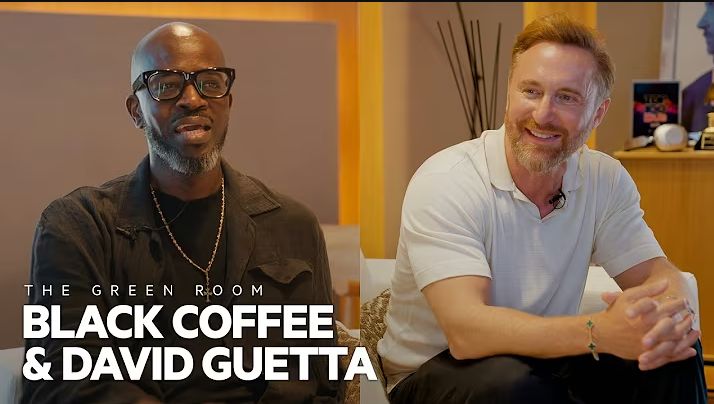
Their conversation, filmed in Ibiza for DJ Mag’s The Green Room, explores the realities that exist behind the lights: success, pressure, criticism, recorded sets, phones on the dancefloor, creative ambition, collaboration, and the emotional responsibility of performing for thousands of people. At a time when DJ culture is often reduced to short clips and viral drops, this exchange brings the focus back to the human side of the profession.
Ibiza as a Meeting Point Between Legacy and Reinvention
Ibiza remains one of the most symbolic locations in electronic music. For decades, the island has represented freedom, nightlife, experimentation, and the physical energy of the dancefloor. But Ibiza is no longer only a myth built around underground clubs and summer excess. It has become a global stage where artists, brands, venues, tourists, superclubs, and music trends meet at the highest level.
For Black Coffee, Ibiza has become a place where his sound can unfold with authority. His residency at Hï Ibiza has helped position Afro house as one of the defining sounds of modern club culture. His sets are not built only around obvious drops or fast impact. They rely on rhythm, atmosphere, patience, emotion, and tension. This gives his performances a spiritual and cinematic dimension, where the groove becomes a language of its own.
David Guetta’s Ibiza story follows a different but equally important path. His work at UNVRS with Galactic Circus reflects the spectacular side of the island’s evolution. Guetta has always understood how to transform dance music into a large-scale experience without losing its immediate physical appeal. His career sits at the intersection of club culture, pop songwriting, festival energy, and global entertainment.
Together, their presence in Ibiza shows how the island has changed. It is now a place where underground credibility, massive production, artistic identity, mainstream visibility, and international nightlife all exist in the same space. For DJs, that creates opportunity, but also pressure. Every performance becomes part of a larger narrative.
The Real Work Behind the DJ Booth
From the outside, the life of a superstar DJ can look effortless: private flights, huge stages, luxury hotels, sold-out shows, and thousands of people raising their hands in front of the booth. But the reality is much more demanding. Touring at that level requires discipline, resilience, preparation, and the ability to perform emotionally even when the body and mind are exhausted.
Black Coffee and David Guetta both understand that DJing is not simply about playing records. A real DJ set is a conversation with the crowd. It requires timing, instinct, taste, and the ability to sense what the room needs before the audience can even express it. The best moments happen when the artist and the crowd move together, when the music stops being a playlist and becomes a shared experience.
This is one of the key lessons of their exchange. DJ culture is built on connection. Technology can support it, visuals can amplify it, and production can frame it, but the emotional link between the booth and the dancefloor remains the heart of everything.
Recorded Sets and the Question of Authenticity
One of the most sensitive subjects in modern DJ culture is the question of recorded sets. For many club purists, DJing must remain spontaneous, reactive, and fully live. The artist must read the room, adjust the direction, take risks, and create a unique moment that can never be repeated exactly.
At the highest level of global production, the issue becomes more complicated. Large shows often involve synchronized visuals, lighting, stage effects, dancers, guest appearances, pyrotechnics, and strict technical coordination. In that context, some elements may need to be prepared with great precision. The bigger the production becomes, the more difficult total improvisation can be.
This creates a tension between two visions of electronic music performance. One comes from the club tradition, where the DJ follows the energy of the room in real time. The other belongs to the stadium and festival model, where the show becomes a complete audiovisual production. Neither approach is automatically superior, but both raise questions about what audiences expect from a DJ today.
The essential point is trust. Whether the set is intimate, improvised, highly produced, or technically synchronized, the audience needs to feel that the performance has emotional truth. People can accept technology. They can accept spectacle. What they reject is the feeling of emptiness, when the performance seems disconnected from the crowd.
Phones on the Dancefloor: Promotion or Distraction?
Another important subject is the role of phones in club culture. In almost every major venue or festival, part of the audience now experiences the performance through a screen. People film drops, record transitions, capture lights, post stories, and transform the night into social media content.
This has changed nightlife deeply. On one hand, phones can extend the life of a performance. A short video can travel across Instagram, TikTok, YouTube Shorts, and X within minutes. It can expose an unreleased track, generate excitement around a residency, or introduce a DJ to a new audience. For artists and promoters, this visibility has become valuable.
On the other hand, phones can weaken the physical energy of the dancefloor. Club culture was built on presence: bodies moving together, sound pressure, darkness, anonymity, sweat, and release. When too many people are filming, the dancefloor can become less collective and more observational. The audience stops living the moment fully and starts documenting it for later.
For artists like Black Coffee and David Guetta, this creates a strange contradiction. The same phones that help promote their shows can also reduce the intensity of the live experience. In modern DJ culture, visibility and presence are constantly fighting each other.
Online Criticism and the Weight of Success
Success in electronic music brings attention, but attention also brings judgment. Black Coffee and David Guetta have both experienced admiration and criticism on a massive scale. Their careers show that the higher an artist rises, the more their work becomes public property in the eyes of audiences, fans, critics, and social media commentators.
David Guetta has often been at the center of debates about commercial dance music. For some, he is a pioneer who helped electronic music reach a global public. For others, he represents the commercialization of a culture that once belonged mainly to clubs and underground scenes. That debate has followed him for years, even while his influence remains undeniable.
Black Coffee faces a different kind of pressure. His rise from South Africa to the top of the international electronic scene carries cultural meaning. He is not only judged as a DJ or producer. He is often seen as a representative of a sound, a continent, a movement, and a new global vision of house music. That symbolic responsibility can be powerful, but also heavy.
The conversation reminds us that artists are not machines built to absorb endless opinions. Online criticism can affect confidence, creativity, mental health, and artistic choices. Fame does not make negative attention painless. It only makes it louder.
Two Different Paths, One Shared Understanding of Dance Music
What makes the exchange between Black Coffee and David Guetta interesting is the contrast between their artistic paths. Black Coffee’s sound is rooted in atmosphere, groove, deep emotion, and African rhythmic identity. David Guetta’s career is built on powerful hooks, mass connection, pop structure, club impact, and global reach.
Yet both artists understand the same fundamental truth: dance music is about people. It is about movement, emotion, memory, and connection. Whether the sound is Afro house, progressive, commercial dance, underground house, or festival-oriented electronic music, the goal remains to create a moment where people feel something together.
Their conversation also shows how electronic music has become one of the most flexible genres in the world. It can be intimate or massive, underground or mainstream, spiritual or euphoric, minimal or spectacular. That flexibility is its strength, but it also creates constant tension between authenticity and expansion.
Collaboration as a Bridge Between Worlds
The discussion also touches on collaboration, a central force in modern electronic music. When artists from different backgrounds work together, they do more than combine audiences. They combine cultures, methods, instincts, and musical languages.
A collaboration between artists like Black Coffee and David Guetta carries symbolic weight because it brings together two different visions of global dance music. One is deeply connected to Afro house and emotional groove. The other is associated with global pop-dance production and large-scale electronic impact.
In the current music industry, this kind of bridge matters. Electronic music is no longer divided into simple categories. Genres communicate constantly. Afro house influences pop. Tech house enters radio. Underground sounds travel through TikTok. Festival producers borrow from club culture. Independent producers study mainstream structure. Everything circulates faster than before.
Collaboration can become a way to keep electronic music alive, not by erasing differences, but by allowing them to meet.
What This Conversation Says About the Future of DJ Culture
The exchange between Black Coffee and David Guetta reveals a culture in transition. DJing is now more visible, more global, more commercial, and more technologically complex than ever. The opportunities are enormous, but so are the risks.
The future of DJ culture will depend on balance. Artists must embrace technology without losing human instinct. They must use social media without letting it replace the dancefloor. They must build spectacular shows without emptying the performance of emotion. They must accept global visibility without forgetting the roots of the culture.
For younger DJs and producers, this conversation offers an important lesson. Success is not only about getting bigger. It is about staying connected to the reason people dance in the first place. The equipment changes. The platforms change. The clubs change. The industry changes. But the essential goal remains the same: create a moment that feels alive.
Conclusion: Behind the Superstar Image, the Dancefloor Still Matters
Black Coffee and David Guetta have reached a level of success that very few electronic artists ever experience. They play some of the biggest venues in the world, headline major events, and shape the sound of global dance music in different ways. But their conversation shows that even at the top, the essential questions remain deeply human.
How do you stay authentic when everything around you becomes bigger? How do you deal with criticism? How do you protect the emotional power of the dancefloor in an age of phones and constant recording? How do you use technology without letting it replace instinct? How do you keep evolving without losing yourself?
These questions matter far beyond Black Coffee and David Guetta. They speak to the future of electronic music itself. In a world of algorithms, viral clips, massive stages, and endless online judgment, the most powerful thing a DJ can still create is a real connection with the crowd.
That is what keeps club culture alive. Not the screen. Not the spectacle. Not the numbers. The moment.
YouTube link: Watch the full conversation between Black Coffee and David Guetta on YouTube