
Spotify Strengthens Artist Verification as AI Personas Raise New Questions
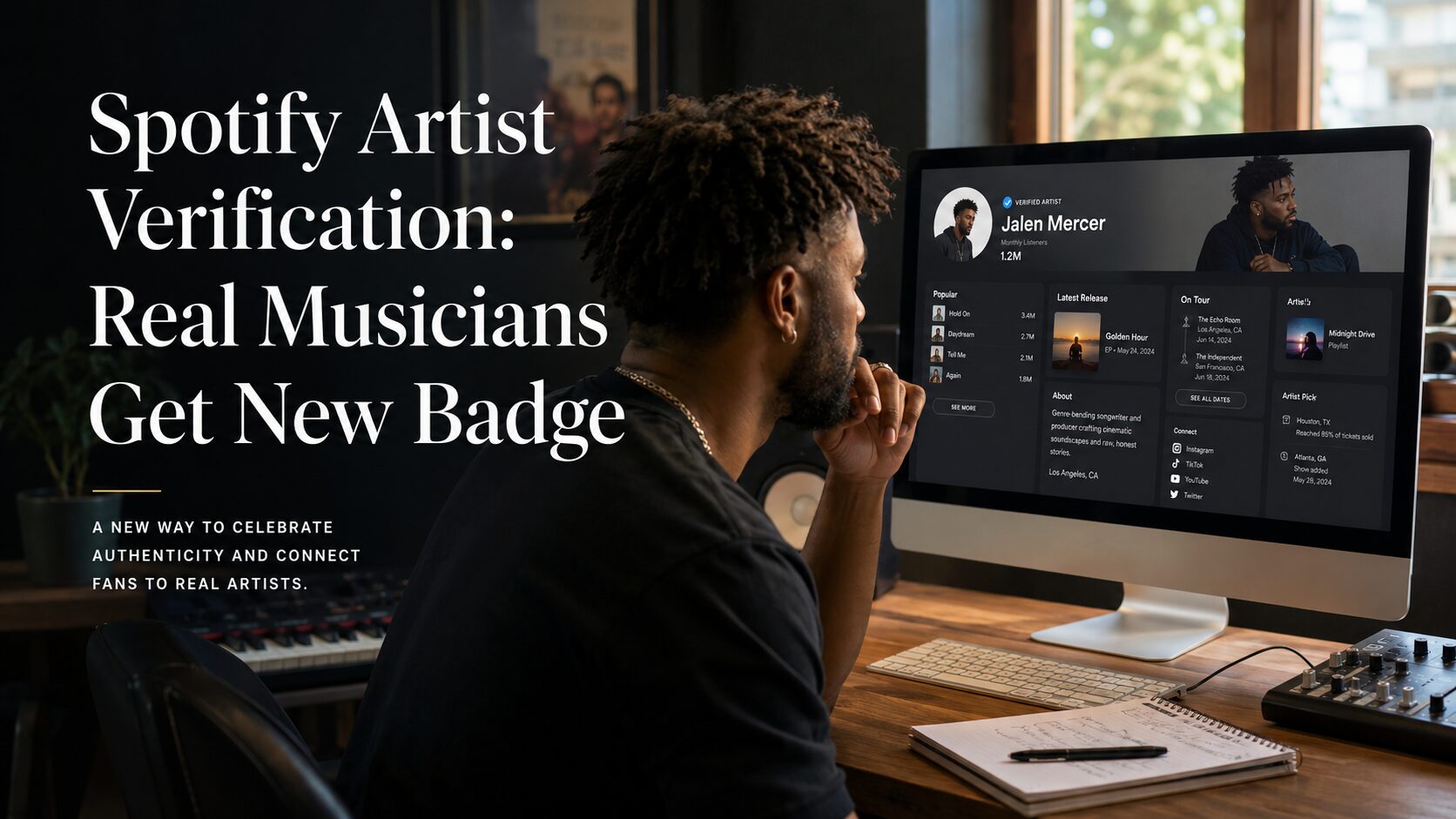
The idea is straightforward: Spotify wants to give fans more confidence that the artist profile they are visiting represents a real creative identity. To do that, the platform is adding new context around artists, including release activity, concert dates, merchandise, linked social accounts and other signs of a genuine presence both on and off the platform.
Why Artist Verification Matters Now
For years, verification on music platforms was mostly about recognition. Today, it is also about protection. AI-generated artist profiles, fake catalogs and artificial personas are becoming harder to ignore. When listeners cannot tell whether an artist is real, the trust between fans, platforms and musicians starts to weaken.
Spotify has made it clear that, at launch, profiles that appear to primarily represent AI-generated or AI-persona artists are not eligible for verification. That detail matters. The badge is not only a cosmetic feature. It becomes a way to separate authentic artist activity from synthetic content operations designed to look like real musicians.
A Stronger Signal for Independent Artists
For independent artists, this update is important. A verified profile can help reinforce credibility, especially in a crowded streaming environment where thousands of new tracks are uploaded every day. A clean artist page, active social links, real visuals, regular releases and live activity can now become stronger signals of legitimacy.
This does not mean every independent artist needs to be famous, touring internationally or selling merchandise to be considered real. But it does mean that artist identity is becoming more important. In the age of AI music, being visible as a real human creator is no longer just branding. It is part of survival.
Streaming Enters the Trust Era
Verified by Spotify arrives at a time when platforms are under pressure to deal with AI music, impersonation and streaming fraud. Spotify has also strengthened its position on unauthorized vocal impersonation, saying that voice cloning is only allowed when the impersonated artist has authorized it.
The message is clear: streaming platforms are no longer focused only on access and discovery. They are now trying to protect trust. Listeners want to know who they are hearing. Artists want to know their identity is protected. Platforms want cleaner catalogs and fewer fake profiles.
Conclusion
Verified by Spotify may look like a simple badge, but it reflects a much bigger shift in the music industry. As AI-generated content grows, authenticity is becoming one of the most valuable assets an artist can have.
For real musicians, especially independent artists, the lesson is simple: build a strong artist identity, keep your profile clear, connect your social presence and show that there is a real creative person behind the music. In the new streaming economy, being real is becoming a feature.