
Paid Music Streaming Subscribers Are Closing In on One Billion
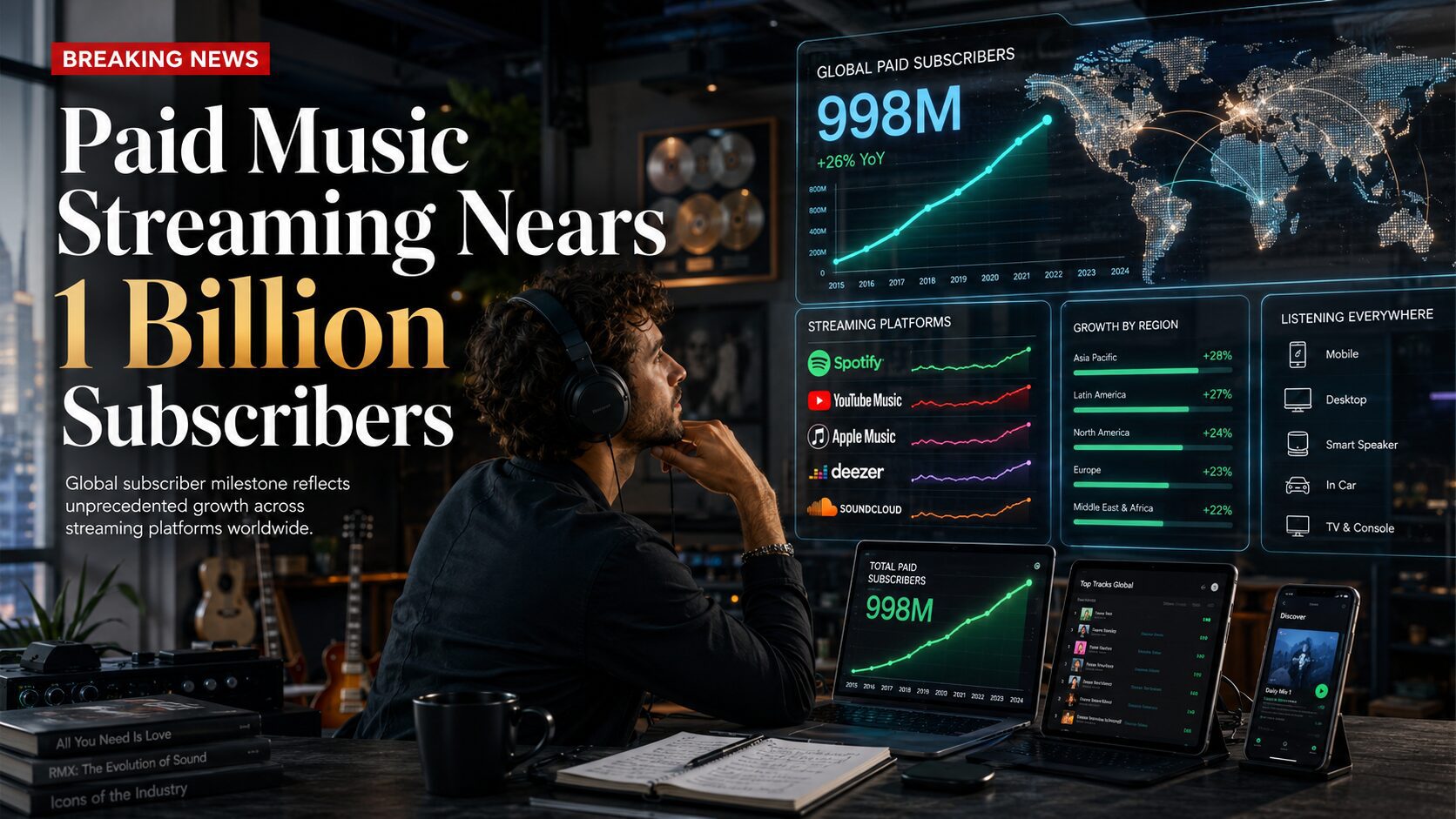
The global subscription market has entered a new phase of maturity. At 921.6 million subscribers, music streaming is now within reach of a psychological threshold that would have seemed distant only a few years ago. The subscriber count has nearly doubled since the end of 2020, when the global total was estimated at 472.2 million.
That growth reflects the continued shift from ownership to access. Listeners are no longer building music libraries in the old sense. They are paying for permanent access to vast catalogs, personalized recommendations, playlists, podcasts, videos, audiobooks and increasingly integrated entertainment ecosystems.
Streaming has become the default music format for hundreds of millions of people. The scale is historic, but it also sharpens a difficult industry debate: if nearly one billion people are paying for music access, why do so many artists still feel that streaming income does not match the cultural value they create?
Spotify Remains the Global Leader
Spotify remains the dominant subscription platform, with 293 million Premium subscribers reported in Q1 2026. The company also reported 761 million monthly active users during the same period, underlining the size of its global listening base across both free and paid tiers.
Spotify’s lead remains significant because subscription scale gives the company influence over music consumption, playlist visibility, recommendation systems and revenue flows. For artists and labels, Spotify is still one of the most important gateways to global discovery.
But leadership also brings pressure. As the platform grows, expectations around transparency, royalty distribution, fraud prevention, artificial intelligence, playlist integrity and artist support become louder. The bigger Spotify gets, the more closely the industry watches how that growth is shared.
YouTube Music Is Gaining Momentum
YouTube Music has emerged as one of the fastest-growing global music services in percentage terms. Its rise is especially important because it sits inside a broader YouTube ecosystem where music, video, creators, shorts, live performances and fan culture already overlap.
That gives YouTube Music a different kind of advantage. Spotify is built around audio-first discovery. Apple Music leans on premium catalog positioning and ecosystem loyalty. YouTube Music benefits from visual culture, user behavior and the massive reach of YouTube itself.
For younger audiences and emerging markets, that combination can be powerful. Many listeners discover music through video before they ever save a track on a streaming platform. YouTube Music is positioned directly at that intersection.
Why This Streaming Milestone Matters Now
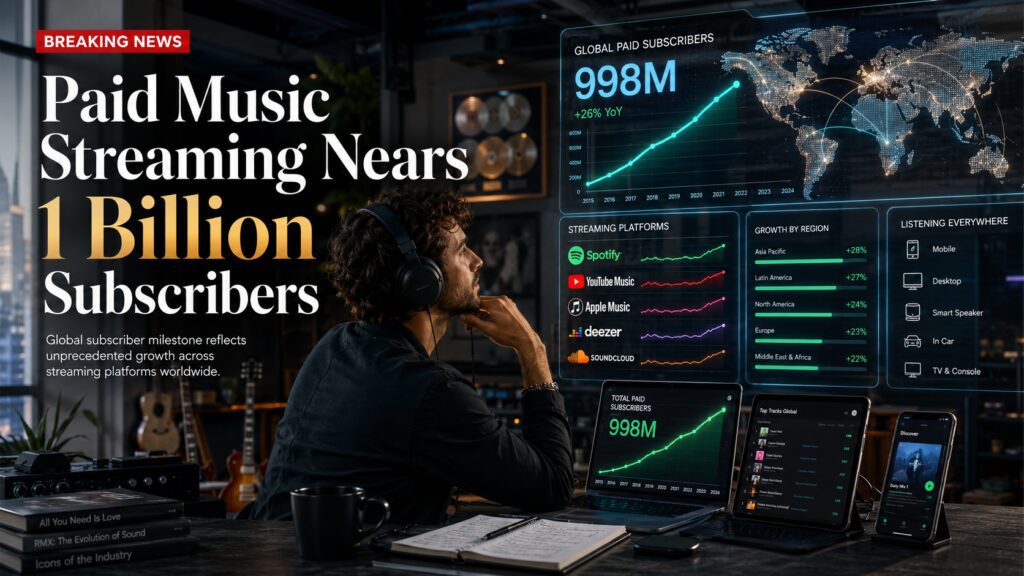
The push toward one billion paid music streaming subscribers comes at a tense moment for the music industry. On paper, the numbers are strong. Streaming revenue continues to dominate recorded music income, paid subscriptions keep expanding and major platforms are still adding users.
Yet beneath that growth, artists are asking harder questions. Independent musicians often face a crowded marketplace where attention is difficult to capture and per-stream income remains limited. The subscription economy is growing, but many creators still struggle to turn streaming activity into reliable income.
This is the central contradiction of the modern music business. Streaming has made music more accessible than at any point in history. It has also made competition almost infinite.
Every new subscriber adds value to the system, but that value does not automatically reach every artist in a meaningful way. The gap between platform growth and individual artist sustainability remains one of the most important issues in digital music.
Industry Impact: What Could Change for Platforms, Labels and Artists
Reaching one billion paid music streaming subscribers would give the industry a powerful headline. It would also increase pressure to rethink how streaming value is distributed.
For platforms, the next phase may focus less on pure subscriber growth and more on monetization per user. Price increases, premium tiers, bundles, video features, audiobooks, fan tools and artist services are likely to become more important as mature markets slow down.
For labels and publishers, the milestone strengthens the argument that subscription streaming remains the financial engine of recorded music. But it also raises strategic questions about catalog power, new artist development and the balance between global hits and niche communities.
For independent artists, the opportunity is real but uneven. Streaming offers global reach without traditional gatekeepers. A track can travel across borders overnight. But reach alone is not a business model. Artists still need audience ownership, direct fan relationships, live activity, merchandise, sync opportunities, social strategy and playlist visibility to build something durable.
The Royalty Debate Will Not Disappear
The closer the industry gets to one billion subscribers, the harder it becomes to ignore royalty debates. Many artists do not judge streaming by the total size of the market. They judge it by what arrives in their account after distributors, labels, publishers, collection societies and platform economics have all taken effect.
This is why alternative payout models, fraud controls and user-centric royalty discussions continue to matter. As subscription income grows, the industry will face renewed pressure to prove that growth benefits more than platforms and major rights holders.
The issue is not simply whether streaming pays. It is whether streaming can support a healthier middle class of artists, not only superstars and catalog owners.
What Happens Next
The next key moment will be whether the global market crosses the one billion subscriber line in the coming reporting cycle. If current growth continues, that threshold now appears within reach.
Platform competition will likely intensify around emerging markets, family plans, student plans, bundled subscriptions and premium experiences. Latin America, Asia Pacific and other high-growth regions are expected to remain central to future subscriber expansion.
At the same time, services will need to defend the quality of their catalogs. Artificial intelligence, fake streams, bot activity and mass-upload strategies are creating new pressure on platforms to protect royalties and listener trust.
The winners in the next phase of streaming may not be the platforms with the biggest catalogs, but the ones that can combine scale, trust, discovery and creator value.
Conclusion: Paid Music Streaming Subscribers Are Growing, But the Artist Question Remains
The rise of paid music streaming subscribers toward one billion is a defining moment for the global music industry. It confirms that subscription streaming has become the dominant commercial model for recorded music and that paid access to music is now a mainstream global habit.
But the milestone also comes with a warning. Bigger numbers do not automatically mean a healthier music economy. The platforms are growing. The market is expanding. The audience is paying. Now the industry must answer the harder question: how much of that value will reach the artists who make the music worth subscribing for in the first place?
Streaming has already changed how the world listens. Its next challenge is to prove that one billion subscribers can support not only the biggest platforms, but also the creators who give those platforms their cultural power.