Annulus by Jonas Eriksson, released under the Phase Fiasco name, is a free polyphonic resonator VST plugin designed for sound designers, ambient producers, electronic musicians, cinematic composers and experimental artists who want to turn simple notes, loops or incoming audio into resonant textures full of space, movement and tension.
Built around a physical modeling engine inspired by Mutable Instruments Rings, Annulus combines six resonator modes with an integrated effects chain that includes stereo tape delay, algorithmic reverb and distortion. The result is not a conventional synth, not a standard effect and not another safe preset machine. It is a texture engine for producers who like sound to behave, misbehave and occasionally stare into the void.
What Is Annulus by Jonas Eriksson?
Annulus is a free polyphonic resonator and effects engine from Jonas Eriksson, the developer behind Tape Fiasco. The plugin is built for macOS and Windows, with VST3 and AU support on macOS, and VST3 support on Windows.
At its core, Annulus uses a physical modeling approach inspired by the legendary Mutable Instruments Rings Eurorack module. Instead of generating sound through classic subtractive synthesis, sample playback or wavetable scanning, it focuses on resonant structures, simulated strings, modal behavior, FM-like interactions and acoustic-style responses.
The plugin can be used as an instrument or as a creative processor, depending on the setup. It responds to MIDI and can transform input material into plucked tones, metallic textures, sympathetic string layers, chord-like resonances, ambient washes and evolving sound design beds.
Why This Free Polyphonic Resonator VST Plugin Matters
The free polyphonic resonator VST plugin category is not crowded. Most free instruments give producers a synth, a sampled piano, a drum machine or a basic effect. Annulus offers something more unusual: a physical modeling engine built for texture, resonance and movement.
This matters because many producers are looking for sounds that do not feel like standard presets. A resonator can take a small musical idea and give it physical depth. A single note can become a struck string, a metallic bell, a wooden pluck, a shimmering cluster or a drifting harmonic cloud.
Annulus is especially interesting for producers working in ambient, cinematic, modular-inspired electronic music, experimental pop, game audio, sound design and atmospheric scoring. It gives them access to a kind of sound normally associated with modular systems, physical modeling synths and deeper experimental instruments.
Main Features
- Free polyphonic resonator plugin from Jonas Eriksson / Phase Fiasco.
- Built around a physical modeling engine inspired by Mutable Instruments Rings.
- Six resonator modes: Morphosis, Sympatheia, Bathmos, Anomalia, Donisis and Antron.
- Eight voices spread across the stereo field with organic variation.
- Four linked processors: Rings, Spiral, Velvet and Distortion.
- Spiral stereo tape delay with tempo sync, ping-pong routing, wobble modulation and saturated feedback.
- Velvet algorithmic reverb with shimmer, diffusion, ducking and a four-second tail.
- Distortion section with 12 waveshaping models and 2x oversampling.
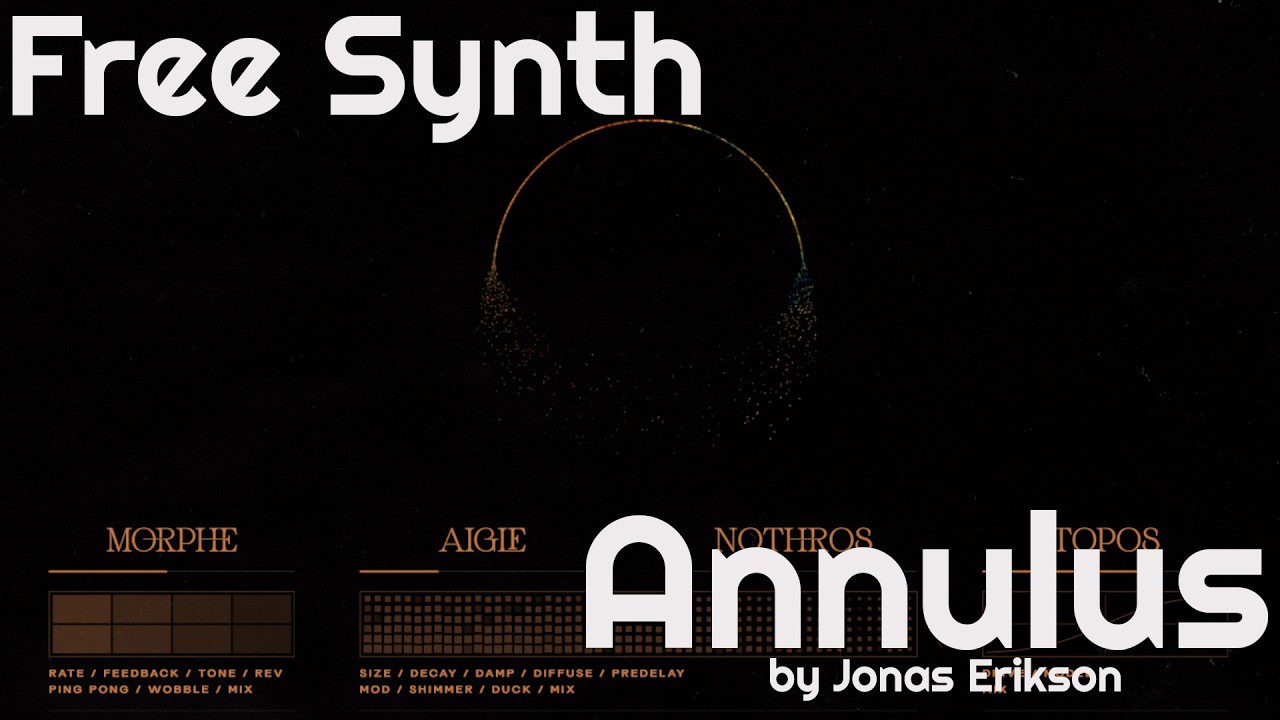
- Four macro controls: Morphe, Aigle, Nothros and Topos.
- Macro-based sound shaping across resonator, delay, reverb and distortion.
- Dynamic visual interface designed to react with the sound.
- Free download, currently offered with a warning that it has not gone through a formal public beta.
- macOS support for Apple Silicon and Intel in VST3 and AU formats.
- Windows support in VST3 format.
A Resonator Engine Inspired by Mutable Instruments Rings
The heart of Annulus is its resonator section, inspired by one of the most influential Eurorack modules ever made: Mutable Instruments Rings. Rings became loved by modular users because it could turn simple triggers, notes or audio into resonant plucks, strings, bells, modal textures and physical modeling tones.
Annulus brings that spirit into a plugin format. It does not simply behave like a subtractive synth with oscillators and filters. Instead, it focuses on resonant behavior: how a virtual object vibrates, rings, decays and responds.
That makes it valuable for producers who want sounds that feel partly acoustic and partly unreal. It can create the impression of struck metal, vibrating strings, bowed resonances, impossible instruments and hybrid textures that sit beautifully between organic and electronic music.
Six Physical Modeling Modes
Annulus includes six resonator modes, each with a distinct identity. These modes are not just presets. They represent different physical modeling behaviors and sound worlds.
Morphosis
Morphosis is the modal resonator mode, closest to the classic Rings-style behavior. It can produce stable, musical resonances, harmonic clusters and inharmonic shimmer. This is a strong starting point for plucked tones, bells, mallets and resonant melodic textures.
Sympatheia
Sympatheia is based on sympathetic string behavior. It creates the feeling of multiple strings reacting to incoming pitch, producing swelling unison textures and shimmering movement. This mode is ideal for ambient music, cinematic tension and emotional sound beds.
Bathmos
Bathmos uses a Karplus-Strong string approach, moving from wooden plucked tones toward metallic, bell-like behavior. It is useful when a producer wants a sound that begins naturally but gradually becomes less predictable.
Anomalia
Anomalia brings FM-style behavior into the resonator. It can move from clean harmonic intervals to harsher sideband-rich tones, making it useful for bells, marimbas, metallic textures and more abstract sound design.
Donisis
Donisis turns sympathetic strings into a chord-oriented engine. It can lock resonances into fixed chord shapes, making it useful for harmonic beds, tonal drones and chordal textures that feel more alive than a static pad.
Antron
Antron combines string behavior with internal reverb character, creating softer and more diffuse tones. It is especially useful for ambient pads, blurred plucks and textures where the instrument and the space should feel connected.
The Four Linked Processors
Annulus routes sound through four linked sections: Rings, Spiral, Velvet and Distortion. This is what makes the plugin feel like more than a basic resonator.
Rings
The Rings section handles the main physical modeling engine. This is where the resonant body of the sound is created, shaped and voiced.
Spiral
Spiral is a stereo tape delay with tempo sync, ping-pong routing, wobble modulation and saturated feedback. It can add rhythmic echoes, drifting repeats and unstable movement to the resonator output.
Velvet
Velvet is an algorithmic reverb with shimmer, diffusion, ducking and a four-second tail. It gives Annulus its spatial side, helping resonant tones bloom into larger ambient textures.
Distortion
The distortion section includes 12 waveshaping models with 2x oversampling. It can move from soft tube-style warmth to asymmetric fuzz, giving the resonator more edge, density and aggression when needed.
Four Macros for Big Sound Changes
Annulus uses four macro controls: Morphe, Aigle, Nothros and Topos. These are designed to reach across multiple parts of the engine at once, shaping the resonator, delay, reverb and distortion together.
This is a smart workflow choice. Physical modeling can become technical very quickly, and Annulus avoids turning the interface into a spreadsheet of parameters. The macro system makes it easier to perform large sonic changes with fewer gestures.
For sound designers, this is especially useful. A single macro movement can shift the instrument from soft pluck to metallic shimmer, from intimate resonance to wide ambient bloom, or from clean physical tone to distorted chaos.
Sound and Creative Use
Annulus is strongest when used for texture, resonance and movement. It can produce delicate plucks, metallic percussion, strange bells, ambient drones, harmonic swells, chordal resonance and unstable physical modeling tones.
In ambient music, it can turn simple MIDI notes into evolving soundscapes. In cinematic scoring, it can create tension beds, mysterious plucks and emotional textures. In electronic music, it can add modular-style resonance to beats, synth lines and transitions. In sound design, it can process incoming audio into strange resonant material for resampling.
The integrated effects chain makes it easier to create finished textures without immediately loading three more plugins. Delay adds rhythm. Reverb adds scale. Distortion adds pressure. Together, they make Annulus feel like a complete environment rather than a single sound source.
Why Physical Modeling Still Feels Fresh
Physical modeling remains exciting because it behaves differently from most synthesis methods. It does not simply play back samples or cycle through waveforms. It simulates how a resonant object might respond to energy.
That gives the sound a sense of behavior. Notes can bloom, ring, decay, wobble or react in ways that feel less mechanical than standard synth patches. This is why physical modeling works so well for bells, strings, plucks, mallets, metallic tones and hybrid acoustic-electronic textures.
Annulus benefits from that approach. It can create sounds that feel familiar enough to be musical, but strange enough to avoid sounding generic.
Important Warning: Free but Untested
Jonas Eriksson clearly states that Annulus is offered free of charge and has not gone through a formal public beta or structured testing phase. That means the plugin may contain bugs or behave unpredictably on some systems and DAWs.
This does not make it unusable, but it does mean producers should test it carefully before putting it into important sessions. Save your work, render important parts when needed and report bugs to the developer with clear system information.
In other words, treat Annulus like an exciting experimental machine, not like a conservative mastering limiter that has spent five years in quality control wearing a tie.
Who Should Use Annulus?
Annulus is ideal for ambient producers, sound designers, cinematic composers, modular-inspired musicians, experimental electronic artists, game audio creators and anyone who wants a free VST plugin for resonant textures and physical modeling sound design.
It is especially useful for producers who like sound sources that can become pads, plucks, bells, drones, transitions and atmospheres depending on how they are played and processed.
It is less suited to users looking for a traditional subtractive synth, a preset-heavy workstation, a polished commercial rompler or a finished all-purpose instrument. Annulus is more exploratory. It rewards curiosity and patience.
Best Use Cases for Producers
Ambient Soundscapes
Use Antron, Sympatheia or Morphosis with Velvet reverb to create evolving pads, drones and soft resonant atmospheres.
Cinematic Tension
Use metallic or inharmonic modes with delay and subtle distortion to build suspenseful textures for film, trailers, game audio and dark electronic music.
Modular-Style Plucks
Send MIDI notes into the resonator and shape Morphosis or Bathmos for struck, plucked and bell-like tones inspired by modular synthesis.
Experimental Chord Textures
Use Donisis to create resonant chord behavior from simple notes, ideal for harmonic drones and strange evolving beds.
Sound Design Resampling
Record Annulus into audio, then reverse, stretch, chop or process the result to create unique transitions and atmospheric layers.
Electronic Music Details
Add small resonant motifs behind drums, bass or synths to give a track a more organic and unusual signature.
Game Audio and Interactive Music
Use Annulus for magical tones, mysterious environments, strange objects, memory scenes, menu music or evolving environmental cues.
Compatibility and Download Details
Annulus is available as a free download from Jonas Eriksson’s website under the Phase Fiasco project. It supports macOS on Apple Silicon and Intel systems in VST3 and AU formats. Windows users get a VST3 version.
- Official website: Annulus by Jonas Eriksson
- Download: Download Annulus for free
- Formats: macOS VST3/AU, Windows VST3
- Platforms: macOS Apple Silicon, macOS Intel and Windows
Industry Impact: Modular Ideas Are Moving Deeper Into Free Plugins
Annulus shows how modular synthesis ideas continue to influence software production. Physical modeling, resonators, macro control, evolving textures and unusual visual design are no longer locked inside expensive hardware systems.
For independent producers, that matters. A free plugin like Annulus gives access to resonant synthesis ideas that can help tracks sound less predictable. It is the kind of tool that can create a signature detail, a strange intro, a memorable texture or a full ambient bed from a very small musical input.
It also reflects a growing freeware culture where experimental developers are releasing tools that feel personal and concept-driven. These plugins may not always be as polished as commercial products, but they often bring more character than safe market-tested instruments.
What Happens Next
Annulus is still early in its public life. Its future will depend on stability, user feedback, bug reports and how Jonas Eriksson continues developing the Phase Fiasco ecosystem after Tape Fiasco.
The best way to test it is simple: load Annulus, send a few sparse MIDI notes, choose Morphosis or Sympatheia, then slowly adjust the macros while listening to the delay and reverb respond. After that, try processing audio through it and record the result. If the sound becomes stranger, deeper and more alive than expected, the plugin is doing its job.
Final Verdict
Annulus by Jonas Eriksson is a fascinating free polyphonic resonator VST plugin for producers who want physical modeling textures, modular-inspired tones and an integrated effects chain inside the DAW.
With six resonator modes, eight-voice stereo behavior, Spiral tape delay, Velvet reverb, 12 distortion models, four macro controls and macOS/Windows support, it offers a powerful creative environment for ambient, cinematic, experimental and electronic sound design.
It is still untested in the wider public and may contain bugs, so it should be approached with curiosity and caution. But for producers who enjoy resonant textures, strange plucks, metallic atmospheres, evolving drones and modular-style sound design, Annulus is absolutely worth downloading. It is free, unusual and full of character, the kind of plugin that makes one quiet MIDI note suddenly feel like it has a secret life.