Luch by Moloko Instruments is a free sampled metallophone VST plugin for producers, composers, sound designers and home studio musicians who want something more personal than another polished piano, synth pad or cinematic bell library. Built from a Soviet-era children’s metallophone and shaped with vintage microphones, wire-recorder color and analog Soviet synth textures, Luch turns a modest found instrument into a delicate, atmospheric and deeply characterful sound source.
This is not the kind of free VST plugin that tries to impress with size alone. Its strength is mood. Luch captures imperfection, age, mechanical noise, unstable tone and a sense of memory. For ambient music, cinematic scoring, lo-fi production, experimental pop, neoclassical sketches and sound design, it offers a fragile acoustic voice that feels human, tactile and slightly haunted.
What Is Luch by Moloko Instruments?
Luch is a free AU and VST3 instrument from Moloko Instruments. It is based on a rare Soviet-era children’s metallophone found at a flea market and recorded through vintage Oktava microphones and period hardware. The result is a sampled instrument that can sound like a quiet metallophone, an aged wire-recorder memory, or a slow unstable texture blended with Soviet synth layers.
The plugin does not require Kontakt, Decent Sampler or any external sampler. It runs as its own instrument inside compatible DAWs, making it easy to load, play and use in real production sessions.
Luch is available for macOS and Windows, with AU and VST3 support. It includes 4,815 samples, 15 recorded notes, 5 round robins, 6 velocity layers and a 2.5 GB unpacked sample library. That makes it much more detailed than the minimal interface might first suggest.
Why This Free Sampled Metallophone VST Plugin Matters
The free sampled metallophone VST plugin category is not exactly overpopulated. Most free instruments focus on pianos, synths, strings, drums or broad rompler-style sounds. Luch is more specific, and that is exactly what makes it interesting.
Modern productions often suffer from the opposite problem: too many sounds are clean, stable and interchangeable. A fragile instrument with real noise, vintage recording character and unusual source material can instantly give a track a more personal identity.
Luch matters because it feels like an instrument with a story. The source is small and imperfect, but the sampling approach turns it into something flexible. It can be intimate, nostalgic, cinematic, dreamy, broken or experimental depending on how the acoustic layer, wire tone, synth textures and modulation are used.
Main Features
- Free sampled instrument based on a Soviet-era children’s metallophone.
- AU and VST3 support for macOS and Windows.
- No sampler required, the plugin runs as a standalone instrument inside your DAW.
- 4,815 samples with a 2.5 GB unpacked sample library.
- 15 recorded notes with 5 round robins and 6 velocity layers.
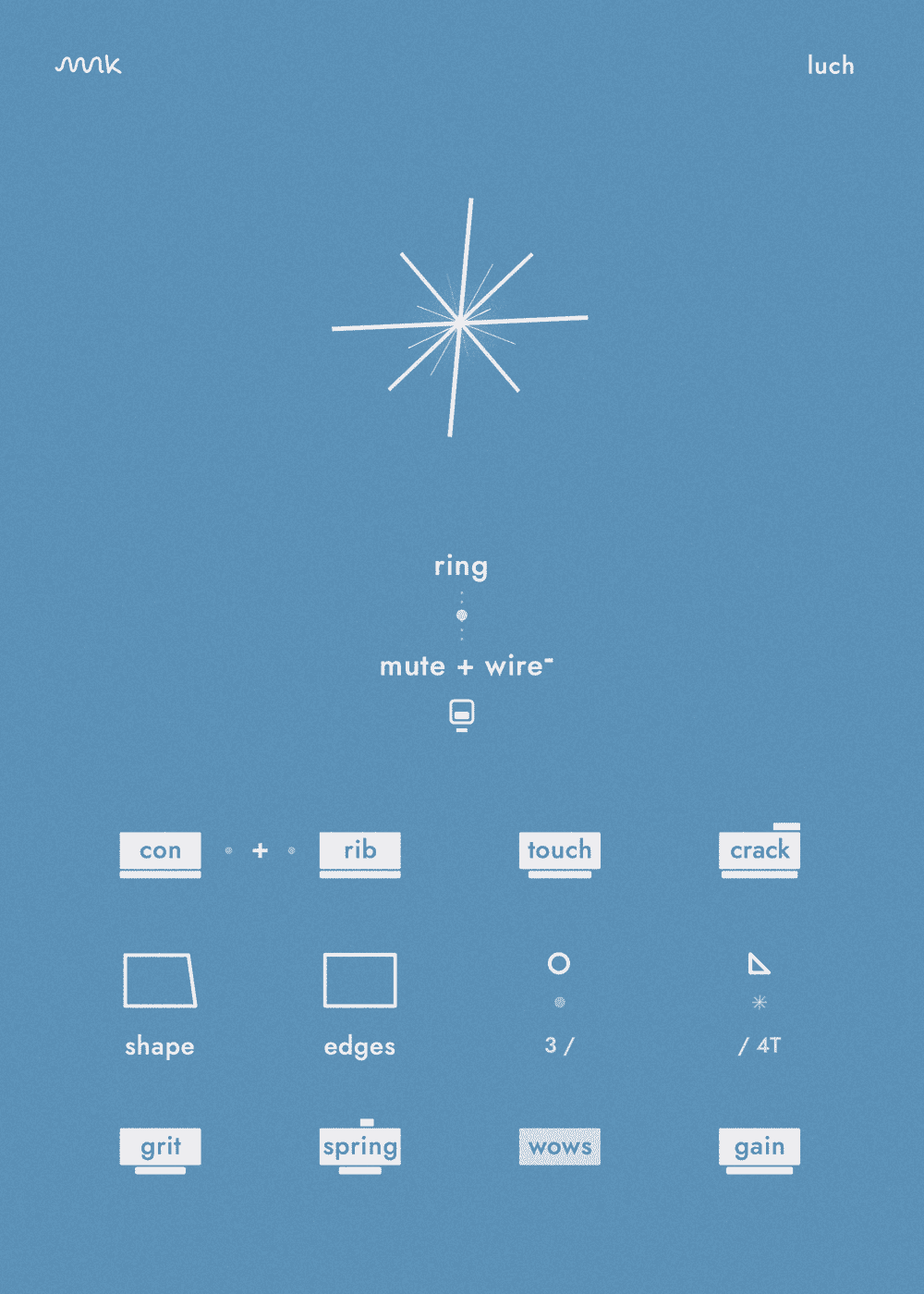
- Mute and ring articulations for damped and sustained playing styles.
- Wire-recorder mode for aged, unstable and time-worn tone.
- Chaos variations recorded as free-rhythm takes for each note.
- Two vintage Oktava microphones, condenser and ribbon, with tonal and spatial contrast.
- Two Soviet synth texture sources, RITM-2 and Elektronika EM-04.
- Central blend control for moving between acoustic material and synth textures.
- Tempo-synced LFOs for movement between articulations and textures.
- Touch and noise layers including mallet taps, clock tick, wire hiss and crackle.
- Shape, edges, grit, space, wows and gain controls for tone shaping.
- Preset browser and color themes for quick workflow and visual variation.
A Small Instrument With a Strong Identity
The heart of Luch is a Soviet children’s metallophone. That source matters. It is not a pristine concert percussion instrument designed for perfect tuning and flawless sustain. It is small, uneven and full of personality.
That imperfection becomes the musical point. The notes feel simple and fragile, but not empty. They have the kind of organic instability that can sit beautifully in intimate arrangements, ambient pieces and cinematic sketches.
For producers tired of glossy preset libraries, Luch offers a very different energy. It does not sound like a generic “bells” patch trying to fit every genre. It sounds like an object with age, dust and memory attached to it. Sometimes that is worth more than a hundred polished presets pretending to be emotional.
Vintage Microphones, Wire Recorder and Soviet Texture
Luch was recorded through two vintage Oktava microphones: a condenser microphone for a clearer center and a ribbon microphone for softer body and room tone. The mic section allows users to choose between these perspectives or open the instrument into a wider mid-side image.
The wire-recorder character is one of the plugin’s strongest elements. In wire mode, the metallophone takes on a rougher, aged tone, as if the sound has been pulled through old magnetic memory. This is ideal for lo-fi textures, nostalgic cues, fragile intros, ambient passages and sound design beds.
The plugin also includes touch and noise details, including mallet taps, an uneven clock tick, wire hiss and crackle. These layers give the sound physical context. They make the instrument feel less like a clean sample and more like a little recorded world.
The Two Main Blends: Acoustic and Texture
Luch is built around two main blend ideas. The first is the relationship between mute and ring articulations. Mute gives shorter, damped notes, while ring gives more open sustain. Both can stay clean, move into wire-recorder tone or use chaos variations.
The second is the central ray-shaped blend control, which moves between the acoustic metallophone layer and paired synth textures. This is where Luch becomes more than a sampled percussion instrument. It can evolve into pads, drones, unstable tonal clouds and hybrid acoustic-electronic textures.
Two tempo-synced LFOs can animate these blends over time. This makes the plugin especially useful for ambient composers and sound designers who want motion without building a large modulation chain.
Sound and Creative Use
Luch can be used as a quiet melodic instrument, a texture generator or a hybrid sound design source. At its simplest, it works beautifully for sparse melodies, delicate arpeggios and fragile top lines. A few notes can add emotional weight without sounding overproduced.
In ambient and cinematic music, the wire mode, noise layers and synth blends can create slow, unstable atmospheres. The sound can feel nostalgic, distant and slightly damaged, which makes it useful for intros, transitions, background textures and emotional cues.
In lo-fi and experimental production, Luch can replace more predictable keys or bell sounds. Its imperfections help a beat feel less sterile. In electronic music, it can be resampled, reversed, stretched, filtered or processed through delays and granular effects to create original textures.
Important Controls Explained
Mute and Ring
The mute and ring section controls the main acoustic character. Mute gives shorter, damped notes. Ring gives more sustained open notes. Moving between them changes how sharp, intimate or resonant the instrument feels.
Wire and Chaos Variations
Wire mode adds aged recorder color, while chaos variations introduce more unstable, free-rhythm behavior. These modes are useful when the instrument needs to feel less clean and more alive.
Texture Blend
The texture blend moves from the acoustic metallophone toward paired Soviet synth textures. This control can transform Luch from a simple percussion instrument into a dreamy hybrid pad source.
Touch and Noise
Touch adds physical mallet detail, while the noise section brings clock tick, wire hiss or crackle. Used subtly, these details can make the instrument feel more intimate and real.
Grit
Grit adds saturation. It can make the tone warmer, rougher or more present, especially when the sound needs to cut through a denser arrangement.
Space
The space section provides echo, delay or reverb impulses. This helps Luch move from dry, close notes to more atmospheric and cinematic textures.
Wows
Wows introduces slow pitch instability and detune. This is useful for aged tape-like movement, dreamlike drift and lo-fi character.
Who Should Use Luch?
Luch is ideal for composers, ambient producers, sound designers, lo-fi beatmakers, cinematic artists, experimental musicians and anyone who wants a free VST plugin with a strong emotional signature.
It will appeal to producers who like imperfect acoustic sounds, vintage recording character and instruments with a sense of history. It is especially useful for artists working in ambient, neoclassical, downtempo, film scoring, game audio, indie electronic music, post-rock textures and introspective pop.
It is less suited to users looking for a huge general-purpose percussion library or a perfectly clean orchestral metallophone. Luch is not trying to be neutral. It has a personality, and honestly, that is the whole point.
Best Use Cases for Producers
Ambient Melodies
Use Luch for sparse melodic phrases over pads, drones or field recordings. Its fragile tone works well when the arrangement needs space and emotion.
Cinematic Textures
Blend the metallophone with synth textures and wire tone to create atmospheric cues for film, video, trailers or game audio.
Lo-Fi Beats
Use the wire, wows, noise and grit controls to create aged melodic loops that feel more organic than a standard bell preset.
Neoclassical Sketches
Pair Luch with felt piano, strings, soft pads or tape noise for intimate neoclassical arrangements.
Sound Design Layers
Resample notes, stretch them, reverse them or process them through granular effects to create unique transitions and background textures.
Experimental Pop Details
Add small Luch motifs behind vocals to create a nostalgic or dreamlike color without overcrowding the song.
Game Audio and Interactive Music
Use Luch for fragile environmental cues, memory scenes, quiet menu music or emotional narrative moments.
Compatibility and Download Details
Luch is available as a free download from Moloko Instruments. It supports macOS 11 or higher and Windows 10 or higher in AU and VST3 formats. The plugin does not require an external sampler.
Because the sample library is 2.5 GB unpacked, users should keep the sample folder in a stable location after installation. If the plugin asks for the sample folder, select it once, then reload the plugin or restart the session if needed.
- Official website: Luch by Moloko Instruments
- Download: Download Luch for free
Industry Impact: Free Instruments With Real Personality
Luch is a reminder that free plugins do not need to be generic. The most exciting freeware instruments often come from a strong concept, a meaningful source and a clear artistic direction.
In a plugin world full of clean interfaces, synthetic perfection and endless preset recycling, Luch brings something more tactile. It is built from a real object, recorded with real imperfections, then expanded into a musical instrument that feels both old and modern.
This type of release is important for independent producers. It gives them access to sounds that do not feel mass-produced. A free instrument with a distinctive voice can help a track stand apart much more than another safe all-purpose library.
What Happens Next
Luch is the first release from Moloko Instruments, and it gives the project a strong identity immediately. If future instruments follow the same philosophy, real sources, careful sampling, vintage texture and unusual design, the developer could become very interesting for producers who value character over polish.
The best way to test Luch is simple: load it, play a few slow notes, increase the wire tone, add a little space and let the texture blend move. If the result feels like a forgotten memory glowing in the corner of the room, the plugin is doing exactly what it should.
Final Verdict
Luch by Moloko Instruments is a beautiful free sampled metallophone VST plugin for producers who want fragile acoustic tone, vintage Soviet-era color and atmospheric sound design potential inside their DAW.
With 4,815 samples, mute and ring articulations, wire-recorder tone, chaos variations, Soviet synth textures, noise layers, tempo-synced movement, saturation, space effects and AU/VST3 compatibility, it offers far more depth than its minimal interface suggests.
For ambient music, cinematic scoring, lo-fi production, neoclassical sketches, game audio and experimental sound design, Luch is absolutely worth downloading. It is small in concept, large in atmosphere and full of the kind of imperfection that makes music feel less manufactured and more alive.