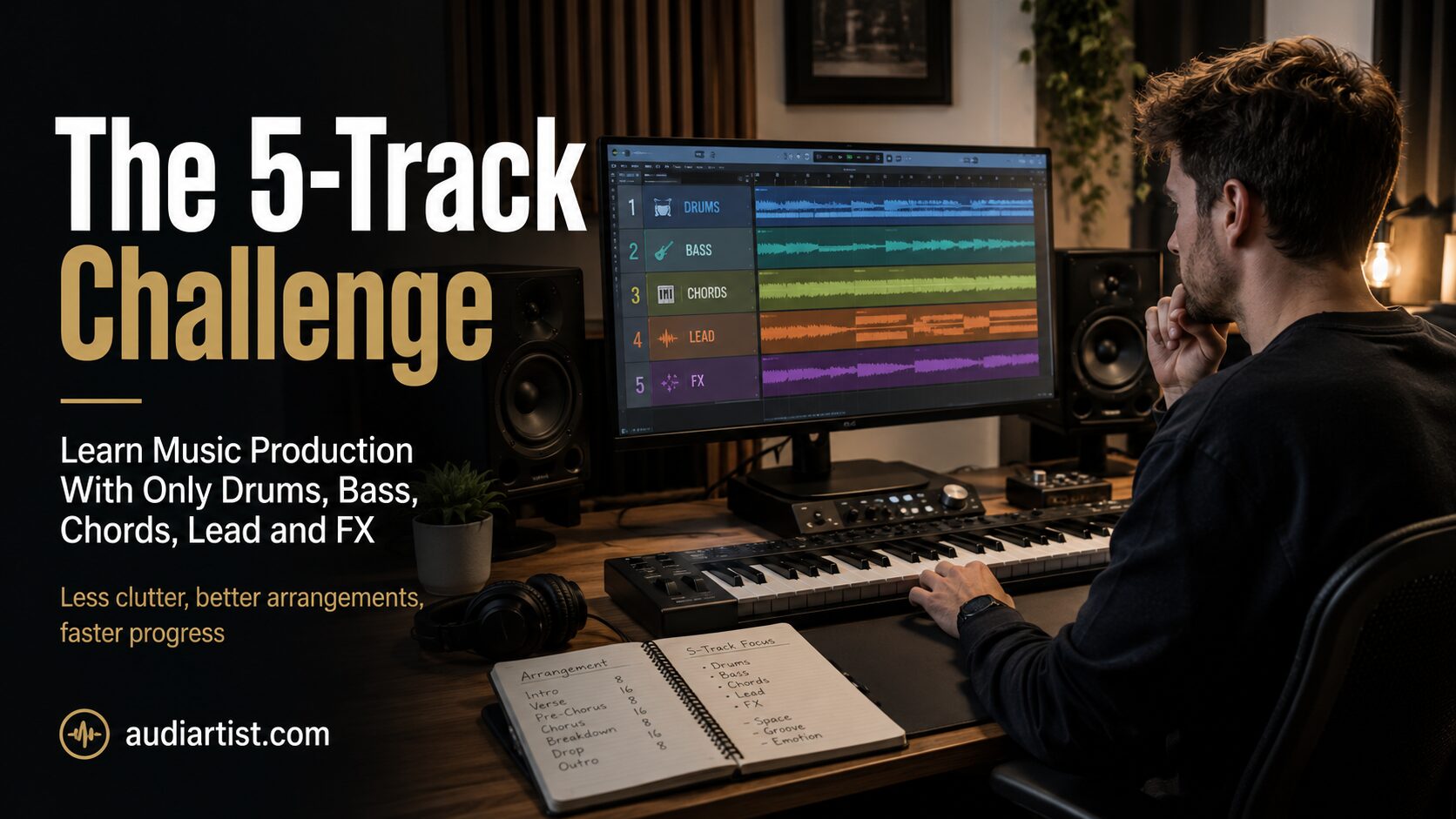

More drums. More synths. More layers. More risers. More atmospheres. More plugins. More automation. More everything. Then the session grows into a crowded digital apartment where every sound wants its own room, the bass is arguing with the kick, the chords are standing in front of the lead, the FX are spilling reverb all over the floor, and the producer is wondering why the mix feels small despite having 86 channels.
The truth is less glamorous, but much more useful: great production begins with clear roles.
The 5-Track Challenge is a practical exercise designed to teach music production by limitation. The rule is simple. Build a complete track using only five musical lanes: drums, bass, chords, lead, and FX. No extra layers. No endless duplicate tracks. No “just one more pad” because the loop feels slightly lonely. Five lanes. Full arrangement. Finished export.
This challenge works for beginners because it removes the noise. It also works for experienced producers because it exposes weak decisions immediately. When you only have five tracks, every sound must earn its place. Every part must serve the song. Every arrangement move becomes intentional.
Limitation is not the enemy of creativity. It is often the fastest way to hear what the music actually needs.
Why Five Tracks Are Enough to Learn Real Production
A finished record can contain dozens or even hundreds of tracks, but the musical foundation is usually much simpler. Most productions are built around a few essential roles: rhythm, low end, harmony, melody, and movement.
The 5-Track Challenge turns those roles into a clear structure:
- Drums: groove, pulse, rhythm, impact.
- Bass: foundation, weight, movement, connection with the kick.
- Chords: harmony, emotion, tonal color.
- Lead: hook, identity, main musical focus.
- FX: transitions, atmosphere, tension, depth.
That is enough to create a complete piece of music. Not a sketch. Not a loop. A real track with an intro, development, tension, release, variation, and ending.
The challenge forces you to understand the difference between a sound and a role. A sound is what you hear. A role is why it exists.
The Real Goal: Finish the Arrangement
This is not a mixing challenge. It is not a sound design competition. It is not a race to create the most impressive drop using the least equipment. The goal is to finish an arrangement.
Many beginner producers can make an exciting eight-bar loop. Fewer can turn that loop into a track that holds attention for two, three, or four minutes. The difficulty is not always musical talent. It is structure.
With only five tracks, arrangement becomes visible. You can no longer hide behind layers. If the energy drops, you must solve it with rhythm, silence, automation, contrast, or better part writing. If the chorus feels weak, adding six synth layers is not allowed. You must improve the hook, the bass movement, the chord rhythm, or the transition into the section.
This is where learning happens.
The Basic 5-Track Template
Open your DAW and create five tracks only. Name them clearly:
- 01 Drums
- 02 Bass
- 03 Chords
- 04 Lead
- 05 FX
You can use MIDI or audio. You can use stock instruments or free VST plugins. You can process each track lightly, but avoid turning every lane into a hidden folder of 12 secret layers. The point is not to cheat the limitation. The point is to learn from it.
A strong beginner arrangement could look like this:
- Intro: FX, filtered chords, light drums.
- First groove: drums, bass, chords.
- Main hook: drums, bass, chords, lead.
- Breakdown: chords, FX, small lead variation.
- Return: full groove with stronger lead or bass movement.
- Outro: drums and FX gradually reduced.
Simple does not mean boring. Simple means readable.
Track 1: Drums
The drum track defines movement. It does not need 17 separate channels at first. A complete drum part can be built from a kick, snare or clap, hi-hat, percussion, and a few fills. The important thing is groove, not quantity.
Your drums should answer three questions:
- Where is the pulse?
- Where is the bounce?
- Where does the energy change?
For a beginner, the biggest mistake is keeping the same drum loop from start to finish. Even small variations can make the arrangement feel alive: remove the kick before a transition, change the hi-hat pattern in the second section, add a short fill every 16 bars, or mute percussion during the breakdown.
Recommended Free Tool: Sitala
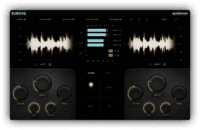
Sitala is a simple drum sampler that works well for this challenge because it encourages speed. It gives you pads, sample loading, basic controls, and a clean workflow without making drum programming feel like operating a small aircraft.
Use it for: one-shot drums, simple kits, beat sketches, fast groove building, beginner drum programming.
Official website
Download Sitala
Track 2: Bass
The bass is not just low end. It is the connection between rhythm and harmony. It tells the listener where the track stands physically and musically.
A good bass part should lock with the drums, support the chord progression, and leave enough space for the kick. In dance music, the kick and bass relationship can define the entire track. In hip-hop, trap, pop, lo-fi, and cinematic electronic music, the bass often carries emotion as much as weight.
When writing bass for the 5-Track Challenge, keep it focused:
- Use a simple rhythm first.
- Make sure the root notes support the chords.
- Leave space around the kick.
- Change note length to create groove.
- Add variation only when the arrangement needs it.
Do not create a bass part that tries to be a lead, a pad, a percussion loop, and a subwoofer stress test at the same time. Give it one job: foundation with movement.
Recommended Free Tool: Vital
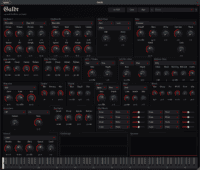
Vital is a powerful visual wavetable synthesizer that can create basses, leads, pads, plucks, and textures. For this challenge, use it with discipline. One bass patch is enough. Choose or design a sound that fits the track, then write the part instead of browsing presets forever.
Use it for: synth bass, plucks, pads, leads, electronic hooks, modulation-based sound design.
Official website
Download / Get Vital
Track 3: Chords
The chord track gives the production emotional color. It can be a piano, pad, synth stab, guitar sample, Rhodes-style key sound, string layer, or simple sustained harmony. The instrument matters less than the role.
Chords answer the emotional question of the track. Is it dark, hopeful, tense, nostalgic, uplifting, intimate, cold, warm, dreamy, aggressive, melancholic, or euphoric?
For the 5-Track Challenge, avoid overplaying. One strong chord part can do more than three competing harmonic layers. Think about rhythm, register, and space.
- Long chords create atmosphere.
- Short stabs create groove.
- Broken chords create motion.
- Filtered chords create tension.
- Simple voicings can leave more space for the lead.
One of the best tests is to mute the lead and listen to the drums, bass, and chords together. If the track already has movement, you are building on a strong foundation. If it feels frozen, the chord rhythm or voicing may need more intention.
Track 4: Lead
The lead is the part the listener remembers. It can be a melody, vocal chop, synth hook, guitar phrase, sampled texture, sax line, piano motif, or any sound that gives the track identity.
Beginners often make two mistakes with leads. The first is choosing a sound that is too thin and then trying to fix it with effects. The second is writing too many lead ideas at once. A memorable hook usually needs clarity, repetition, and variation, not constant replacement.
A good lead should be easy to identify even at low volume. It should not need to be painfully loud to feel important. It should sit naturally above the rhythm and harmony without fighting the chords.
For this challenge, create one lead idea and develop it across the arrangement:
- Introduce a shorter version early.
- Use the full version in the main section.
- Remove it during the breakdown.
- Bring it back with a small variation.
- End with a simplified version or echo.
This creates narrative without adding new tracks.
Track 5: FX
The FX track is not a garbage bin for random risers. It is the lane that helps the arrangement breathe, move, and transition.
FX can include sweeps, impacts, reverse sounds, noise, delay throws, reverb tails, uplifters, downlifters, atmospheric textures, field recordings, or tiny ear-candy moments. But every FX sound must serve a structural purpose.
Use FX to answer these questions:
- How does the intro pull the listener in?
- How does the track move into the main groove?
- How does tension build before a drop or hook?
- How does the breakdown feel different from the main section?
- How does the ending feel intentional?
FX should guide the listener, not distract them.
Recommended Free Tool: Valhalla Supermassive
Valhalla Supermassive is a free reverb and delay plugin that can create wide spaces, atmospheric echoes, huge transitions, and cinematic tails. In the 5-Track Challenge, it is especially useful on the FX lane, but use it with restraint. A little atmosphere can create depth. Too much atmosphere can turn the mix into fog with a tempo.
Use it for: delay throws, atmospheric reverb, breakdowns, transitions, dreamy tails, sound design.
Official website
Download Valhalla Supermassive
The Hidden Sixth Element: Silence
The challenge has five tracks, but there is one invisible element that matters just as much: silence.
Silence creates contrast. A short gap before the hook can make the drop feel stronger. Removing drums for two bars can make their return more exciting. Muting the bass during a breakdown can make the low end feel larger when it comes back. Cutting the lead for a moment can make the listener miss it.
Beginner producers often try to create energy by adding. Experienced producers often create energy by removing.
In the 5-Track Challenge, silence is your arrangement weapon. Use it.
The 8-Bar Movement Rule
A five-track arrangement can still become boring if nothing changes. A useful rule is to create some kind of movement every 8 bars.
The movement does not need to be dramatic. It can be simple:
- Add or remove a hi-hat.
- Change the bass rhythm slightly.
- Open the chord filter.
- Introduce the lead earlier in a smaller form.
- Add a reverse FX before a new section.
- Mute the kick for one beat.
- Change the chord voicing.
- Automate delay feedback for a transition.
This keeps the listener engaged without overcrowding the track.
How to Mix the Five Tracks Without Overprocessing
Once the arrangement works, the mix should be simple. Start with volume. Then pan if needed. Then use EQ only to solve real problems. Then add compression or saturation only if the track clearly needs more control, tone, or weight.
The order matters:
- Balance first.
- Arrangement clarity second.
- EQ correction third.
- Dynamics fourth.
- Creative effects last.
Many beginners reverse this order. They add plugins before balancing the track. They compress before deciding whether the part is too loud. They EQ before choosing the right octave. They widen before asking whether the sound should be wide.
The 5-Track Challenge makes this easier because there are fewer elements to manage. If the mix still feels messy with only five tracks, the problem is probably sound selection or arrangement, not plugin shortage.
Recommended Free Tool: TDR Nova
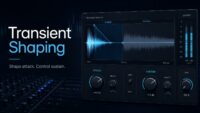
TDR Nova is a free dynamic EQ that can work as a clean equalizer, a dynamic problem solver, and a precise tone-shaping tool. In this challenge, use it sparingly. One or two thoughtful EQ moves can be more valuable than a complicated chain.
Use it for: reducing mud, controlling harshness, shaping bass, cleaning chords, taming resonances.
Official website
Download TDR Nova Free
Genre Examples for the 5-Track Challenge
House or Tech House
- Drums: kick, clap, hats, groove percussion.
- Bass: short rolling bass or sub groove.
- Chords: stabs, organ-style chords, filtered synth chords.
- Lead: vocal chop, pluck, acid line, synth motif.
- FX: noise sweeps, impacts, delay throws.
In house music, the challenge teaches groove discipline. The kick and bass must work together, and the percussion must create motion without overcrowding the rhythm.
Afro House
- Drums: kick, shaker, clap, organic percussion.
- Bass: warm rolling low end.
- Chords: emotional synth pad or marimba-inspired harmony.
- Lead: vocal phrase, flute, pluck, ethnic-inspired melodic motif.
- FX: atmospheric sweeps, reverb tails, transitional textures.
In afro house, the challenge highlights the importance of rhythm, space, and call-and-response. Percussion should breathe, not become a traffic jam in 4/4.
Lo-Fi
- Drums: dusty beat, soft snare, simple hat groove.
- Bass: warm sub or mellow electric-style bass.
- Chords: piano, Rhodes, guitar, or sampled harmony.
- Lead: soft melody, vocal texture, tape-style motif.
- FX: vinyl noise, room tone, reverse tail, ambience.
In lo-fi, the challenge teaches restraint. The emotion often comes from small details, not from adding 27 textures named “warm crackle final final 2.”
Trap or Hip-Hop
- Drums: kick, snare, hats, rolls.
- Bass: 808 or sub bass.
- Chords: dark keys, pad, sample, guitar loop.
- Lead: counter-melody, vocal chop, bell, flute, synth line.
- FX: risers, drops, impacts, tape stops.
In trap and hip-hop, the challenge shows whether the beat has a strong identity without depending on endless decoration.
The “No Duplicate Track” Rule
The hardest part of the challenge is resisting duplication. You will want to duplicate the chord track and add another pad. You will want a second lead. You will want a secret percussion lane. You will want a hidden vocal chop track.
Do not do it.
Instead, solve the problem inside the five lanes:
- Need more energy? Change drum rhythm or velocity.
- Need more width? Adjust the chord sound or FX send.
- Need more impact? Create silence before the drop.
- Need more movement? Automate filters or note length.
- Need more emotion? Improve the chord voicing or lead phrase.
- Need more depth? Use the FX lane with purpose.
This trains production thinking. You stop adding by habit and start changing by intention.
The 30-Minute Loop Phase
Start with a 30-minute loop phase. Do not arrange yet. Build the strongest possible core loop using only the five tracks.
- 10 minutes for drums.
- 5 minutes for bass.
- 5 minutes for chords.
- 5 minutes for lead.
- 5 minutes for FX or transition ideas.
This time limit prevents overthinking. The first goal is not perfection. It is momentum.
At the end of 30 minutes, the loop should already communicate the genre, mood, groove, and main idea. If it does not, do not add more tracks. Improve the five parts.
The 90-Minute Arrangement Phase
Once the loop works, arrange the track in 90 minutes. Use the five lanes to create contrast.
A simple arrangement map:
- 0:00 to 0:30: intro with FX, chords, partial drums.
- 0:30 to 1:00: groove enters with bass.
- 1:00 to 1:30: lead appears.
- 1:30 to 2:00: breakdown or reduced section.
- 2:00 to 2:45: full return with variation.
- 2:45 to end: outro or simplified ending.
The exact timing can change depending on genre, but the principle stays the same: introduce, develop, reduce, return, resolve.
The Final Export Rule
The challenge only counts if you export the track.
Do not leave it as a project file. Do not call it “almost done.” Do not save it as “final idea maybe mix 7.” Export it. Listen the next day. Take notes. Then move on.
Write three notes after every export:
- What worked?
- What felt weak?
- What will improve in the next track?
This turns every finished production into training. You are not just making a track. You are building judgment.
What This Challenge Teaches Beginners
For beginners, the 5-Track Challenge teaches the fundamentals that matter most:
- How to build a full arrangement.
- How to give every sound a role.
- How to avoid overcrowding the mix.
- How to hear the relationship between drums and bass.
- How to create hooks with limited material.
- How to use FX for structure, not decoration.
- How to finish music without waiting for the perfect plugin.
These are not beginner-only lessons. They are production fundamentals. Professionals return to them constantly.
What This Challenge Teaches Advanced Producers
For experienced producers, the challenge is a reset button. It reveals habits that may be slowing down the workflow.
Advanced producers can use the challenge to test arrangement strength, sound selection, and decision speed. If a track works with five lanes, it will probably survive expansion. If it fails with five lanes, adding 40 more tracks may only create a more expensive failure.
The limitation forces sharper decisions:
- Is the main idea strong enough?
- Does the groove carry the track?
- Can the arrangement create contrast without extra layers?
- Does the lead have real identity?
- Are FX supporting transitions or hiding weak structure?
- Can the track hold attention with fewer moving parts?
This is why limitation is not just a beginner exercise. It is a professional discipline.
Final Thoughts: Five Tracks, Better Decisions
The 5-Track Challenge is not about making small music. It is about making clear music.
Five tracks are enough to teach rhythm, low end, harmony, melody, texture, contrast, arrangement, and restraint. They are enough to reveal whether a production idea is strong. They are enough to finish a track. And finishing is where real progress begins.
More tracks can be useful later. More plugins can be inspiring later. More layers can create power later. But if the foundation is weak, more will only make the weakness louder.
Start with drums, bass, chords, lead, and FX. Give each part a job. Build the arrangement. Export the track. Listen. Learn. Repeat.
A producer who can finish a strong five-track arrangement is already ahead of the producer with 120 tracks and no ending. The session may look smaller, but the music will speak more clearly.
« `